

You will not be allowed to compare more than 4 products at a time
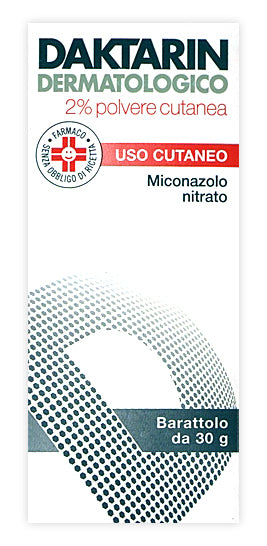
View compareDAKTARIN*DERMAL POWDER 30G 20MG/G
DAKTARIN*DERMAL POWDER 30G 20MG/G
Regular price
€13,21 EUR
Sale price
€13,21 EUR
Regular price
€15,55 EUR
Unit price
per
Tax included.
SKU
041411012In stock
Vendor
JOHNSON & JOHNSON SpADelivery time: 48/72 hours
Free Shipping: Orders over €70
Description
DAKTARIN DERMATOLOGICO 20 mg/g cutaneous powder
Miconazole nitrate
What it is and what it is used for
DAKTARIN DERMATOLOGICO cutaneous powder contains miconazole nitrate, which belongs to a group of medicines called antifungals used to treat fungal infections.
DAKTARIN DERMATOLOGICO cutaneous powder is a medicine for dermatological use indicated for the treatment of skin infections caused by fungi (dermatophytes) or yeasts (Candida) that may be complicated by bacterial infections.
Consult your doctor if you do not feel better or if you feel worse.
What you need to know before taking the medicine
DO NOT use DAKTARIN DERMATOLOGICO cutaneous powder
- If you are allergic to miconazole, or other similar antifungal medicines or any of the other ingredients of this medicine (listed in section 6).
- In infants and children up to 12 years of age.
Warnings and precautions
Consult your doctor or pharmacist before using DAKTARIN DERMATOLOGICO cutaneous powder.
If sensitisation or irritation occurs, especially with prolonged use, discontinue treatment and contact your doctor.
Avoid contact with eyes. Wash your hands thoroughly after each application, unless the treatment involves the hands themselves.
DAKTARIN DERMATOLOGICO cutaneous powder contains talc: avoid inhaling the powder, which could cause respiratory irritation.
It is advisable to apply the following hygiene measures to avoid sources of infection or reinfection (new infections by the same fungus):
• keep towels and underwear separate for personal use to avoid infecting other people;
• regularly change clothing that comes into contact with the infected area to avoid reinfection.
DAKTARIN DERMATOLOGICO cutaneous powder does not stain skin or clothes.
Possible side effects
Like all medicines, DAKTARIN DERMATOLOGICO cutaneous powder can cause side effects, although not everybody gets them.
In rare cases, redness, irritation, mild burning or itching may occur at the application site. In these cases, discontinue treatment and consult your doctor or pharmacist.
Other side effects reported are listed below.
Very rare side effects (may affect up to 1 in 10,000 people) include:
• Severe allergic reaction that appears quickly (anaphylactic reaction)
• Allergy
• Swelling of the face, mouth, lips and/or tongue (angioedema)
• Skin rash (urticaria; rash)
• Contact dermatitis (skin inflammation)
• Erythema
• Itching
• Burning sensation of the skin
• Irritation
• Other reactions at the application site
Reporting of side effects
If you get any side effects, including those not listed in this leaflet, talk to your doctor or pharmacist. You can also report side effects directly via the national reporting system at: https://www.aifa.gov.it/content/segnalazionireazioni-avverse.
By reporting side effects you can help provide more information on the safety of this medicine.
