

You will not be allowed to compare more than 4 products at a time
View compareDERMIRIT*CREAM 20G 0.5%
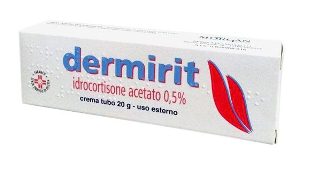
DERMIRIT*CREAM 20G 0.5%
Regular price
€11,85 EUR
Sale price
€11,85 EUR
Regular price
€11,20 EUR
Unit price
per
Tax included.
SKU
028968016In stock
Vendor
MORGAN SrlDelivery time: 48/72 hours
Free Shipping: Orders over €70
Description
Dermirit
Hydrocortisone acetate 0.5% Cream
What it is and what it is used for
Dermirit contains the active ingredient hydrocortisone acetate, a corticosteroid with anti-inflammatory, anti-allergic, and anti-itch activity.
Dermirit is used in the treatment of insect bites, itching, localized erythema or burns, and eczema (inflammatory skin reactions with itching).
Consult your doctor if you do not feel better or if you feel worse after 7 days.
What you need to know before taking the medicine
Do not use Dermirit
- if you are allergic to hydrocortisone or any of the other ingredients of this medicine (listed in paragraph 6);
- if you have a skin infection or disease caused by viruses, bacteria or fungi;
- on skin ulcers, wounds or skin tumors;
- on facial skin, the anogenital area or large lesions;
- to treat infectious diseases (such as syphilis), viral infectious diseases (such as herpes and chickenpox), skin rashes localized around the mouth and nose, acne, rosacea, skin reactions after vaccination, pustular psoriasis;
- in infants and children under 2 years of age.
Warnings and precautions
Consult your doctor or pharmacist before using Dermirit if you:
- are an elderly person (especially if you suffer from osteoporosis, high blood pressure, low blood potassium levels, diabetes mellitus);
- suffer from subcutaneous atrophy (thinning of subcutaneous tissues);
- suffer from liver or kidney failure.
The use, especially if prolonged, of medicines for topical use can cause irritation or allergic reactions. In this case, stop the treatment and consult your doctor.
Avoid contact of the cream with areas adjacent to the eyes as penetration of the medicine into the eyes can cause glaucoma (increased intraocular pressure) and cataracts. If this happens, rinse the affected area thoroughly with water.
Avoid prolonged use because it can cause vasodilation and skin thinning.
Avoid prolonged use of the cream, especially on a large area of skin, or its application to broken skin, as the medicine can be absorbed into the blood and cause systemic effects (which can affect various parts of the body).
Do not cover the treated area with occlusive (non-breathable) dressings as this could also promote the absorption of the medicine into the blood, causing the appearance of undesirable effects that occur with systemic administration (e.g., oral or intravenous) of corticosteroids. For the same reason, avoid applying the cream to children in the diaper area.
Children
Do not use Dermirit in infants and children under two years of age.
Particular caution is recommended during the use of the medicine in children due to the greater risk, compared to adults, of systemic effects induced by corticosteroids (for example, Cushing's syndrome).
Prolonged use of corticosteroids in children can cause growth and development disorders.
Possible side effects
Like all medicines, this medicine can cause side effects, although not everybody gets them.
The side effects reported are listed below; their frequency is not known.
During the application of the cream, you may experience acne, lesions similar to hematomas due to capillary rupture under the skin surface, thinning of the skin, dry skin, increased hair growth, skin discoloration, striae (stretch marks), dilation of capillaries that appear on the skin as fine red or bluish streaks, dermatitis affecting the areas around the mouth and nose, infection involving the upper part of the hair follicle (folliculitis), itching.
Actions that promote the absorption of the cream (e.g., an occlusive dressing) can cause systemic side effects such as swelling (edema), increased blood pressure, and impairment of the immune system.
Prolonged use, especially on large areas, of creams containing cortisone can lead to the development of hypercortisolism (excessive increase in certain hormones).
Prolonged use of corticosteroids in children can cause growth and development disorders.
The application of the cream to the eyelid area has occasionally caused increased intraocular pressure (glaucoma) or cataracts.
Reporting of side effects
If you get any side effects, including any not listed in this leaflet, talk to your doctor or pharmacist. You can also report side effects directly via the national reporting system at: https://www.aifa.gov.it/content/segnalazionireazioni-avverse.
By reporting side effects, you can help provide more information on the safety of this medicine.