

You will not be allowed to compare more than 4 products at a time
View compareDIBASELAB*30CAPS 1000IU
DIBASELAB*30CAPS 1000IU
Regular price
€11,50 EUR
Sale price
€11,50 EUR
Regular price
€11,50 EUR
Unit price
per
Tax included.
SKU
045440017Low stock
Vendor
ABIOGEN PHARMA SpADelivery time: 48/72 hours
Free Shipping: Orders over €70
Description
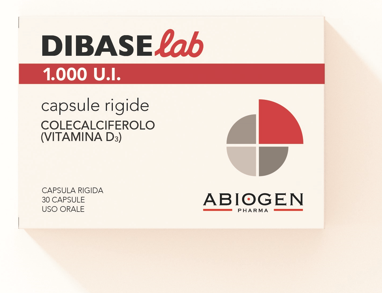
DIBASELAB hard capsules
Cholecalciferol (vitamin D3)
What it is and what it is used for
DIBASELAB contains cholecalciferol, better known as vitamin D.
DIBASELAB is indicated in adolescents over 12 years of age and in adults to prevent low vitamin D levels due to conditions involving insufficient skin production and/or increased vitamin D requirements (see paragraph 3 How to take DIBASELAB).
What you need to know before taking the medicine
Do not take DIBASELAB
- if you are allergic to cholecalciferol (vitamin D) or any of the other ingredients of this medicine (listed in paragraph 6);
- if you have high levels of calcium in your blood (hypercalcaemia) and/or urine (hypercalciuria);
- if you have kidney stones (nephrolithiasis) or calcium deposits in your kidneys (nephrocalcinosis);
- if you have severe kidney disease (severe renal insufficiency). See paragraph Warnings and precautions;
- if you have high levels of vitamin D.
Warnings and precautions
Talk to your doctor or pharmacist before taking DIBASELAB.
Inform your doctor in the following cases:
- if you take DIBASELAB for a long period;
- if you are elderly and are already being treated with medicines for certain heart conditions (cardiac glycosides) or with medicines that lower blood pressure by increasing urine production (diuretics) (see paragraph Other medicines and DIBASELAB);
- if you have mild to moderate kidney disease (mild to moderate renal insufficiency);
- if you suffer from severe kidney disease (severe renal insufficiency), medical supervision is necessary. See paragraph Do not take DIBASELAB;
- if you have or have had kidney stones (nephrolithiasis) or calcium deposits in your kidneys (nephrocalcinosis), medical supervision is necessary. See paragraph Do not take DIBASELAB;
- inform your doctor in the following cases, as a revision of the dosages compared to those indicated in paragraph 3. How to take DIBASELAB may be necessary:
• if you are taking medicines to treat infections, such as rifampicin, isoniazid (see paragraph Other medicines and DIBASELAB);
• if you are taking medicines used for the treatment of epilepsy (antiepileptics) or barbiturates (see paragraph Other medicines and DIBASELAB);
• if you are taking corticosteroids, medicines to treat inflammation (see paragraph Other medicines and DIBASELAB);
• if you are taking medicines to lower blood fats such as colestipol, cholestyramine (see paragraph Other medicines and DIBASELAB);
• if you are taking a medicine to treat obesity called orlistat (see paragraph Other medicines and DIBASELAB);
• if you are taking aluminium-containing antacids, medicines to treat excessive acid in the stomach that can also rise into the oesophagus (see paragraph Other medicines and DIBASELAB);
• if you are obese;
• if you suffer from digestive disorders (intestinal malabsorption, mucoviscidosis or cystic fibrosis);
• if you suffer from liver disease (hepatic insufficiency).
- if you suffer from sarcoidosis (an inflammatory disease that can affect the whole body and leads to the formation of nodules) and primary hyperparathyroidism (a disease that leads to an increase in calcium levels in the blood and urine).
Children
DIBASELAB is not suitable for children aged 0 to 12 years.
Possible side effects
Like all medicines, this medicine can cause side effects, although not everybody gets them.
The possible side effects are listed below by frequency:
uncommon (may affect up to 1 in 100 people)
- increased levels of calcium in the blood (hypercalcaemia) and urine (hypercalciuria).
rare (may affect up to 1 in 1,000 people)
- allergic reactions
- weakness, loss of appetite (anorexia), thirst
- drowsiness, confused state
- constipation, gas (flatulence), abdominal pain, nausea, diarrhoea
- skin rash, itching, hives
not known (frequency cannot be estimated from the available data)
- headache
- vomiting, metallic taste, dry mouth
- excessive calcium deposition in the kidneys (nephrocalcinosis), increased amount of urine excreted (polyuria), intense thirst (polydipsia), kidney disease (renal insufficiency)
Reporting of side effects
If you get any side effects, including any not listed in this leaflet, talk to your doctor or pharmacist. You can also report side effects directly via the national reporting system at: https://www.aifa.gov.it/content/segnalazionireazioni-avverse.
By reporting side effects you can help provide more information on the safety of this medicine.
