

You will not be allowed to compare more than 4 products at a time
View compareECOSOL CARDEPAT DROPS 50 ML
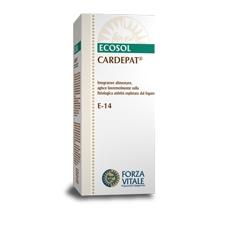
ECOSOL CARDEPAT DROPS 50 ML
Regular price
€22,04 EUR
Sale price
€22,04 EUR
Regular price
€24,00 EUR
Unit price
per
Tax included.
SKU
906831680In stock
Vendor
FORZA VITALE ITALIA SrlDelivery time: 48/72 hours
Free Shipping: Orders over €70
Description
ECOSOL
CARDEPAT
Dietary supplement that favorably acts on the physiological function performed by the liver.Milk Thistle (Silybum marianum)
Silymarin, the active ingredient in Milk Thistle, has a proven action against the hepatotoxic effects of various hepatotoxic agents. Silymarin is able to act on lysosomal and mitochondrial lesions caused by ethanol. Silymarin therefore acts as a membrane protector. In the phytotherapeutic treatment of hepatitis, it can be considered a particularly valid agent that, in addition to ensuring gentle choleresis and stimulation of the body's defenses, promotes the regeneration of liver cells. In viral hepatitis, silymarin is believed to act by limiting the attachment of the viral agent through the protection of hepatocyte membranes. Due to its bitter-tonic-choleric characteristics, its use is recommended in forms of gastric atony.
Artichoke (Cynara scolymus)
Artichoke acts on lipid metabolism by decreasing the production of endogenous cholesterol and triglycerides and increasing their excretion or redistribution in natural deposits. Thanks to its hepatoprotective activity, there is a decrease in azotemia through the stimulation of the hepatic transformation of nitrogen molecules imperfectly processed by the insufficient liver.
Dandelion (Taraxacum officinale)
Stimulating action on liver functions. It acts by increasing gallbladder contraction (cholagogue action) and increasing bile secretion (choleric action); all its properties justify its use as a purifying and draining plant for excretory organs.
Chrysanthemum A. (Chrysanthellum americanum)
American chrysanthemum improves the activity of digestive liver enzymes, consequently promoting the elimination of cholesterol and triglycerides and inhibiting their production in the liver.
Barberry (Berberis vulgaris)
The bark of the plant, containing berberine, is used as a bitter stomachic and liver function stimulant.
Boldo (Peumus boldus)
Boldine exerts an elective action on bile secretion and, in particular, on the thinning of bile as it would be able to modify its physico-chemical characteristics, decreasing its density, viscosity and increasing its aqueous content.
Combretum (Combretum micranthum)
Promotes bile production by the liver and food digestion.
Mint (Mentha piperita)
Its mercurial effect, entirely devoted to facilitating all exchanges involving the respiratory system, extends to the digestive system where its quality of curbing flatulence, bloating and irregularities can be appreciated.
Rosemary (Rosmarinus officinalis)
On a physical level, it is useful for containing nervous somatizations: esophagitis, gastritis, duodenitis, liver and biliary pain, colitis.
Gold-Vitale and Iron-Vitale
Forza Vitale uses specific blends in its compounds obtained from a spagyric-alchemical process of plants characterized by an energetic macrocosmic signature, naturally containing traces of colloidal trace elements, such as to amplify the effect of the product on the specific organ or system concerned. These naturally obtained food additives act as support for the conveyance of the biochemical principles of the extract and this information is reserved for operators in the sectors that guarantee the energetic stability of the spagyric product.
Ingredients
| per daily dose | |
| Milk Thistle (Silybum marianum) seeds | 0.08 g |
| Artichoke (Cynara scolymus) leaves | 0.08 g |
| Dandelion (Taraxacum officinale) root | 0.06 g |
| Rhubarb (Rheum officinale) rhizome | 0.06 g |
| American Chrysanthemum (Chrysanthellum americanum) flowers | 0.04 g |
| Boldo (Peumus boldus) leaves | 0.04 g |
| Combretum (Combretum micranthum) leaves | 0.04 g |
| Mint (Mentha piperita) essential oil | 2 µl |
| Rosemary (Rosmarinus officinalis) essential oil | 2 µl |
| Clove* (Eugenia caryophyllata) fruits | 12 µg |
| Echinacea* (Echinacea angustifolia) root | 12 µg |
| Ginseng (Panax ginseng) root | 12 µg |
| Cat's Claw* (Uncaria tomentosa) root | 12 µg |
| Orange* (Citrus sinensis) essential oil | 12 µg |
| Cumin* (Cuminum cyminum) essential oil | 12 µg |
| Barberry** (Berberis vulgaris) bark | 12 µg |
| Nettle** (Urtica dioica) leaves | 12 µg |
| Other ingredients: water; alcohol; honey. | |
** Constituents of the blend obtained from Iron-Vitale spagyric preparation.
Directions for use
Adults: 25 drops 3 times a day in a little water, before meals.
Up to 12 years: 10 drops 3 times a day in a little water or fruit juice, before meals.
Recommended dosage for individuals of normal weight.
Warnings
For pregnant or breastfeeding women and children, it is recommended to consult a doctor.
Format
50 ml bottle
Bibliography
- A.V., PDR Integratori nutrizonali, CEC Edizioni, Milano 2003; Brigo B., Fitoterapia e gemmoterapia nella pratica clinica, La Grafica Briantea, Como 1991.
- Campanini E., Manuale pratica di gemmoterapia, Tecniche Nuove, Milano 1996.
- Campanini E., Dizionario di fitoterapia e piante medicinali, Tecniche Nuove, Milano 2004.
- Camporoese A., Oli essenziali e malattie infettive, Tecniche Nuove, Milano 1998.
- European Scientific Commission on Phytotherapy., Monographs on the medicinal use of plant drugs 1997.
- Rossi M., Tinture Madri in Fitoterapia, Studio Edizioni, Milano, 1992.
- Ross J., Combining western herbs and chinese medicine, Greenfield Press, Seattle 2003.
- Palamidessi T., Il corso degli atri e le malattie nell’uomo, Edizioni Arkeios, Roma 1990.
- Pizzorno J, Murray M., Joiner-Bey H., Guida clinica alla medicina naturale, Tecniche Nuove, Milano 2008.
- Bigo B., Oligoelementi e litoterapici nelal pratica clincia, Tecniche Nuove, Milano 1999.
- Camporese A., Oli essenziali e malattie infettive Tecniche Nuove, Milano 1998.
- Campanini E., Ricettario medico di fitorerapia, Tecniche Nuove, Milano 2000