

You will not be allowed to compare more than 4 products at a time
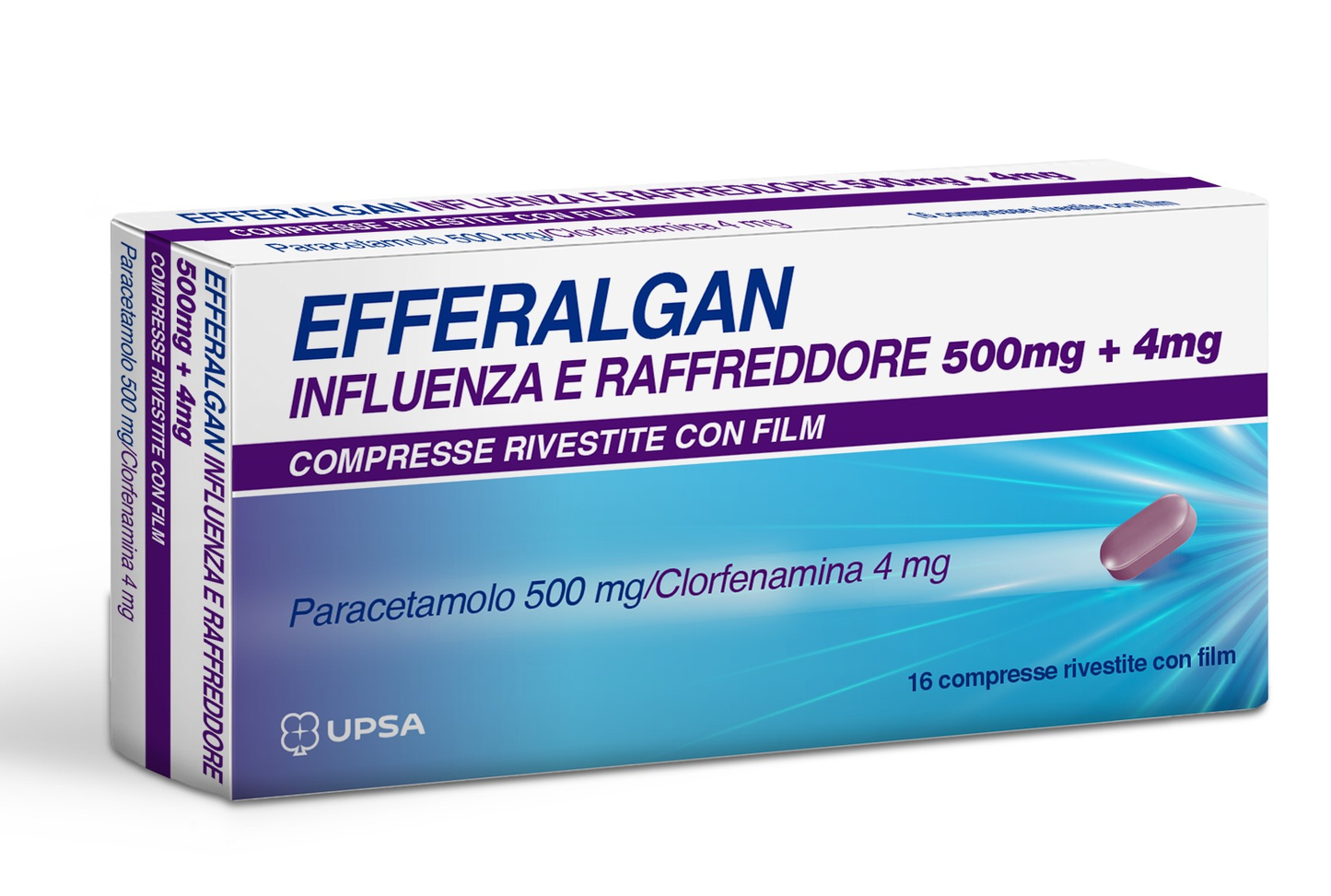
View compareEFFERALGAN FLU AND COLD*16 TABLETS
EFFERALGAN FLU AND COLD*16 TABLETS
Regular price
€8,58 EUR
Sale price
€8,58 EUR
Regular price
€10,90 EUR
Unit price
per
Tax included.
SKU
046837047In stock
Vendor
UPSA ITALY SrlDelivery time: 48/72 hours
Free Shipping: Orders over €70
Description
EFFERALGAN FLU AND COLD 500 mg + 4 mg film-coated tablets
Paracetamol 500 mg/Chlorphenamine 4 mg
What it is and what it is used for
Pharmacotherapeutic category: ANALGESIC ANTIPYRETICS ANTIHISTAMINES H1 RECEPTOR INHIBITORS, ATC code: R05X
This medicine contains 2 active ingredients:
• paracetamol, which relieves pain and reduces fever;
• chlorphenamine maleate, which reduces nasal discharge, watery eyes and sneezing.
This medicine is indicated, in cases of common cold, rhinitis, rhinopharyngitis and flu-like conditions in adults and adolescents over 15 years of age, for the treatment of:
• clear nasal discharge and watery eyes;
• sneezing;
• headaches and/or fever.
For children under 15 years of age, other medicines are available: ask your doctor or pharmacist for advice.
Consult your doctor if you do not feel better or if you feel worse after 5 days.
What you need to know before taking the medicine
Do not take EFFERALGAN FLU AND COLD:
- if you are allergic to the active ingredients or any of the other ingredients of this medicine (listed in section 6);
- if you are under 15 years of age;
- if you have severe liver disease;
- if you have a risk of glaucoma (increased pressure inside the eye);
- if you have difficulty urinating due to prostate problems or other causes.
Warnings and precautions
Talk to your doctor, pharmacist or nurse before taking EFFERALGAN FLU AND COLD.
In case of overdose or if you have accidentally taken an excessive dose, consult your doctor immediately.
This medicine contains paracetamol and chlorphenamine maleate. Other medicines also contain them.
Check that you are not taking other medicines containing paracetamol and/or chlorphenamine maleate, including those obtained without a prescription.
Do not combine these medicines so as not to exceed the recommended daily dose. If you need to take other medicines containing these substances, you should first ask your doctor or pharmacist for advice.
(See section 3 How to take EFFERALGAN FLU AND COLD.)
In case of purulent nasal discharge or fever or pain that persists for more than 3 days or if symptoms do not improve after 5 days of treatment, consult your doctor.
The dosage, the 5-day treatment duration and the contraindications must be strictly observed.
Related to the presence of paracetamol:
Before taking this medicine, you must inform your doctor or pharmacist in case of:
- body weight less than 50 kg;
- mild to moderate hepatocellular insufficiency (liver disease);
- renal impairment (kidney disease);
- glucose-6-phosphate dehydrogenase deficiency;
- chronic alcoholism;
- anorexia, bulimia, cachexia (state of severe body weakening) or chronic malnutrition (low hepatic glutathione reserves);
- dehydration and hypovolemia (reduction in total blood volume).
Alcohol consumption during treatment is not recommended.
Paracetamol can cause severe skin reactions. If you experience a rash or other signs of allergy, stop treatment and contact your doctor immediately.
Related to the presence of chlorphenamine maleate:
You must stop treatment and contact your doctor or pharmacist immediately if one (or more) of the following side effects occurs:
- diarrhea, vomiting, tachycardia, high body temperature (>38℃) sweating, tremors, muscle rigidity, confusion, agitation.
Such adverse reactions may be observed, especially if you are already taking antidepressants and/or a product containing dextromethorphan.
Use with caution in individuals (especially the elderly) with prostate problems, severe hepatic and/or renal impairment, predisposition to chronic constipation, orthostatic hypotension, dizziness or drowsiness.
Children and adolescents
Not applicable.
Possible side effects
Like all medicines, this medicine can cause side effects, although not everybody gets them.
RELATED TO PARACETAMOL
Rare side effects: may affect up to 1 in 1,000 people
• redness or allergic reactions with sudden swelling of the face and neck, or sudden malaise with a drop in blood pressure. Treatment must be stopped immediately, the doctor must be informed and you must never take medicines containing paracetamol again.
• skin redness, skin rashes, hives. Treatment must be stopped immediately, the doctor must be informed and you must never take medicines containing paracetamol again.
• blood spots on the skin. Treatment must be stopped immediately, consult your doctor before taking any medicine containing paracetamol.
Very rare side effects: may affect up to 1 in 10,000 people
• biological changes that require a blood test: liver function disorders, abnormally low levels of certain white blood cells or certain blood components such as platelets, which can cause nosebleeds or bleeding gums. In this case, consult a doctor.
• severe skin reactions. Treatment must be stopped immediately, the doctor must be informed and you must never take medicines containing paracetamol again.
Frequency Not known: frequency cannot be estimated from the available data
• diarrhea, abdominal pain.
• increased liver enzymes.
RELATED TO CHLORPHENAMINE MALEATE
• Abnormally low levels of certain white or red blood cells or certain blood components such as platelets.
• Swelling, more rarely allergic reactions with sudden swelling of the face and neck or sudden malaise with a drop in blood pressure. Treatment must be stopped immediately, the doctor must be informed and you must never take medicines containing chlorphenamine maleate again.
• Skin redness, skin rashes, hives. Treatment must be stopped immediately, the doctor must be informed and you must never take medicines containing chlorphenamine maleate again.
• Blood spots on the skin. Treatment must be stopped immediately, consult your doctor before taking any medicine containing chlorphenamine maleate.
Other side effects may occur:
• drowsiness, altered state of alertness, more marked at the beginning of treatment,
• reduction in blood pressure when standing, which may be accompanied by dizziness,
• dry mouth, visual disturbances, urinary retention, constipation, palpitations,
• memory or concentration disorders (more common in elderly patients), confusion, balance disorders, dizziness, hallucinations,
• difficulty coordinating movements, tremors,
• more rarely, excitation effects: agitation, nervousness and insomnia.
Reporting of side effects
If you get any side effects, including any not listed in this leaflet, talk to your doctor or pharmacist. You can also report side effects directly via the national reporting system at: https://www.aifa.gov.it/content/segnalazionireazioni-avverse.
By reporting side effects you can help provide more information on the safety of this medicine.
