

You will not be allowed to compare more than 4 products at a time
View compareENANTYUM*20FC 25MG
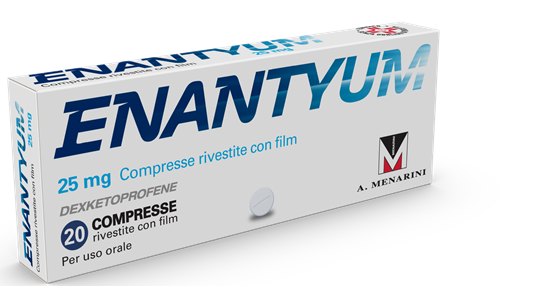
ENANTYUM*20FC 25MG
Regular price
€7,41 EUR
Sale price
€7,41 EUR
Regular price
€12,30 EUR
Unit price
per
Tax included.
SKU
033656442In stock
Vendor
A.MENARINI IND.FARM.RIUN.SrlDelivery time: 48/72 hours
Free Shipping: Orders over €70
Description
Enantyum 25 mg film-coated tablets
Dexketoprofen
What it is and what it is used for
Enantyum is a painkiller belonging to the group of medicines called non-steroidal anti-inflammatory drugs (NSAIDs).
It is used for the treatment of mild to moderate pain, such as muscle pain, painful menstruation (dysmenorrhea), toothache.
Consult your doctor if you do not feel better or if you feel worse after 3 - 4 days.
What you need to know before taking the medicine
Do not take Enantyum:
• If you are allergic to dexketoprofen or any of the other ingredients of this medicine (listed in section 6);
• If you are allergic to acetylsalicylic acid or other non-steroidal anti-inflammatory drugs;
• If you have asthma or have suffered from asthma attacks, acute allergic rhinitis (a short period of inflammation of the nasal mucosa), nasal polyps (polypoid masses in the nose due to allergy), urticaria (skin rash), angioedema (swelling of the face, eyes, lips, or tongue, or difficulty breathing) or wheezing in the chest, after taking acetylsalicylic acid or other non-steroidal anti-inflammatory drugs;
• If you have suffered from photoallergic or phototoxic reactions (a particular form of skin redness and/or blistering following exposure to sunlight) during treatment with ketoprofen (a non-steroidal anti-inflammatory drug) or with fibrates (drugs used to reduce blood fat levels);
• If you suffer from peptic ulcer/bleeding of the stomach or intestine or if you have suffered in the past from stomach or intestinal bleeding, ulceration or perforation;
• If you suffer from chronic digestive problems (e.g. indigestion, heartburn);
• If you have suffered in the past from stomach or intestinal bleeding or perforation due to previous use of non-steroidal anti-inflammatory drugs (NSAIDs) used for pain;
• If you suffer from chronic inflammatory bowel diseases (Crohn's disease or ulcerative colitis);
• If you suffer from severe heart failure, or have moderate to severe kidney problems or serious liver problems;
• If you have bleeding problems or clotting disorders;
• If you are severely dehydrated (you have lost a large amount of body fluids) due to vomiting, diarrhea or insufficient fluid intake;
• If you are in the third trimester of pregnancy or are breastfeeding.
Warnings and precautions
Talk to your doctor or pharmacist before using Enantyum:
• If you suffer from allergies, or have had problems due to allergies in the past;
• If you have kidney disorders, liver or heart problems (hypertension and/or heart failure) or fluid retention, or have previously suffered from any of these disorders;
• If you are being treated with diuretics or have very poor hydration problems or have a reduced blood volume due to excessive fluid loss (for example, due to excessive urination, diarrhea, vomiting);
• If you suffer from heart disorders, if you have had a stroke or if you think you may be at risk for these conditions (for example, if you have high blood pressure, diabetes or high cholesterol or if you are a smoker) you should discuss the therapy with your doctor or pharmacist; medicines like Enantyum may be associated with a small increased risk of heart attack (myocardial infarction) or stroke. These risks are more likely with high doses of the drug and with prolonged therapy. Do not exceed the recommended dose or duration of treatment;
• If you are elderly: there is a greater probability of being subject to side effects (see section 4);
In the event that these occur, consult your doctor immediately;
• If you are a woman with fertility problems (this medicine may reduce your fertility, therefore you should not take the medicine if you are planning a pregnancy or if you are undergoing fertility investigations);
• If you suffer from a disorder of blood and blood cell formation;
• If you suffer from systemic lupus erythematosus or mixed connective tissue disease (immune system disorders affecting connective tissue);
• If you have previously suffered from chronic inflammatory bowel disease (ulcerative colitis, Crohn's disease);
• If you have or have previously suffered from other stomach or intestinal disorders;
• If you have an infection - see Infections section below;
• If you are taking other medicines that increase the risk of peptic ulcer or bleeding, such as oral steroids, some antidepressants (of the SSRI type, i.e. Selective Serotonin Reuptake Inhibitors), medicines that prevent blood clots from forming such as aspirin or anticoagulants such as warfarin. In these cases, consult your doctor before taking this medicine: this may prescribe an additional medicine to protect your stomach (for example misoprostol or other medicines that block the production of gastric acids);
• If you suffer from asthma associated with chronic rhinitis, chronic sinusitis, and/or nasal polyposis as you have a greater risk of allergy to acetylsalicylic acid and/or NSAIDs compared to the rest of the population. The administration of this medicine can cause asthma attacks or bronchospasm, particularly in subjects allergic to acetylsalicylic acid or NSAIDs.
Infections
Dexketoprofen can mask the symptoms of infection such as fever and pain. It is therefore possible that this medicine may delay adequate treatment of the infection, which could increase the risk of complications. This has been observed in pneumonia caused by bacteria and in bacterial skin infections related to chickenpox. If you take this medicine while you have an infection and the symptoms of the infection persist or worsen, contact your doctor immediately.
The use of this medicine is not recommended during chickenpox virus infection.
Children and adolescents
This medicine has not been studied in children and adolescents. Therefore, safety and efficacy have not been established and the product should not be used in children and adolescents.
Possible side effects
Like all medicines, this medicine can cause side effects, although not everybody gets them.
The possible side effects are listed below, ordered by their probability of occurring.
Common side effects: may affect up to 1 in 10 patients
Nausea and/or vomiting, abdominal pain mainly in the upper quadrants, diarrhea, digestive problems (dyspepsia).
Uncommon side effects: may affect up to 1 in 100 patients
Dizziness, light-headedness, drowsiness, sleep disturbances, nervousness, headache, palpitations, hot flashes, inflammation of the stomach lining (gastritis), constipation, dry mouth, flatulence, skin rash, fatigue, pain, feeling of fever and chills, general feeling of malaise.
Rare side effects: may affect up to 1 in 1,000 patients
Peptic ulcer, bleeding or perforated peptic ulcer (which may manifest with traces of blood in vomit or stools), fainting, high blood pressure, slow breathing, fluid retention and peripheral edema (e.g. swollen ankles), laryngeal edema, loss of appetite (anorexia), altered sensation (paresthesia), itchy rash, acne, increased sweating, back pain, frequent urination, menstrual disorders, prostate problems, abnormal liver function tests (blood tests), hepatocellular damage (hepatitis), acute kidney failure.
Very rare side effects: may affect up to 1 in 10,000 patients
Anaphylactic reaction (hypersensitivity reaction that can also lead to collapse), ulceration of the skin, mouth, eyes and genital area (Stevens-Johnson and Lyell syndromes), facial edema or swelling of the lips and throat (angioedema), difficulty breathing due to contraction of the muscles surrounding the airways (bronchospasm), shortness of breath, rapid heartbeat, low blood pressure, pancreatitis, blurred vision, ringing in the ears (tinnitus), skin reactions, light hypersensitivity, itching, kidney problems. Decrease in white blood cells in the blood (neutropenia), decrease in platelets in the blood (thrombocytopenia).
Inform your doctor immediately if you notice side effects in the stomach or intestine at the beginning of treatment (for example stomach pain, acidity or bleeding), if you have previously suffered from any of these side effects due to prolonged use of anti-inflammatory drugs, and particularly if you are elderly.
Stop using this medicine as soon as you notice the appearance of a skin rash, or any lesion on the inner surface of the mouth or genitals, or any sign of allergy.
During treatment with non-steroidal anti-inflammatory drugs, fluid retention and swelling (particularly of the ankles and legs), increased blood pressure and heart failure have been reported.
Medicines like this may be associated with a small increased risk of heart attack (myocardial infarction) or cerebrovascular accidents (stroke).
In patients with immune system disorders affecting connective tissue (systemic lupus erythematosus or mixed connective tissue disease), anti-inflammatory medicines can rarely cause fever, headache and neck stiffness.
The most frequently observed adverse events are gastrointestinal in nature. Peptic ulcers, perforation or gastrointestinal bleeding may occur, sometimes fatal, especially in the elderly. Nausea, vomiting, diarrhea, flatulence, constipation, dyspepsia, abdominal pain, melena, hematemesis, ulcerative stomatitis, worsening of colitis and Crohn's disease have been reported following administration. Less frequently, inflammation of the stomach wall (gastritis) has been observed.
As with other NSAIDs, hematological reactions may occur (purpura, aplastic and hemolytic anemia and rarely agranulocytosis and bone marrow hypoplasia).
Reporting of side effects
If you get any side effects, including any not listed in this leaflet, talk to your doctor or pharmacist. You can also report side effects directly via the national reporting system at: https://www.aifa.gov.it/content/segnalazionireazioni-avverse.
By reporting side effects you can help provide more information on the safety of this medicine.
