

You will not be allowed to compare more than 4 products at a time
View compareEVANTE*1FC TAB 30MG
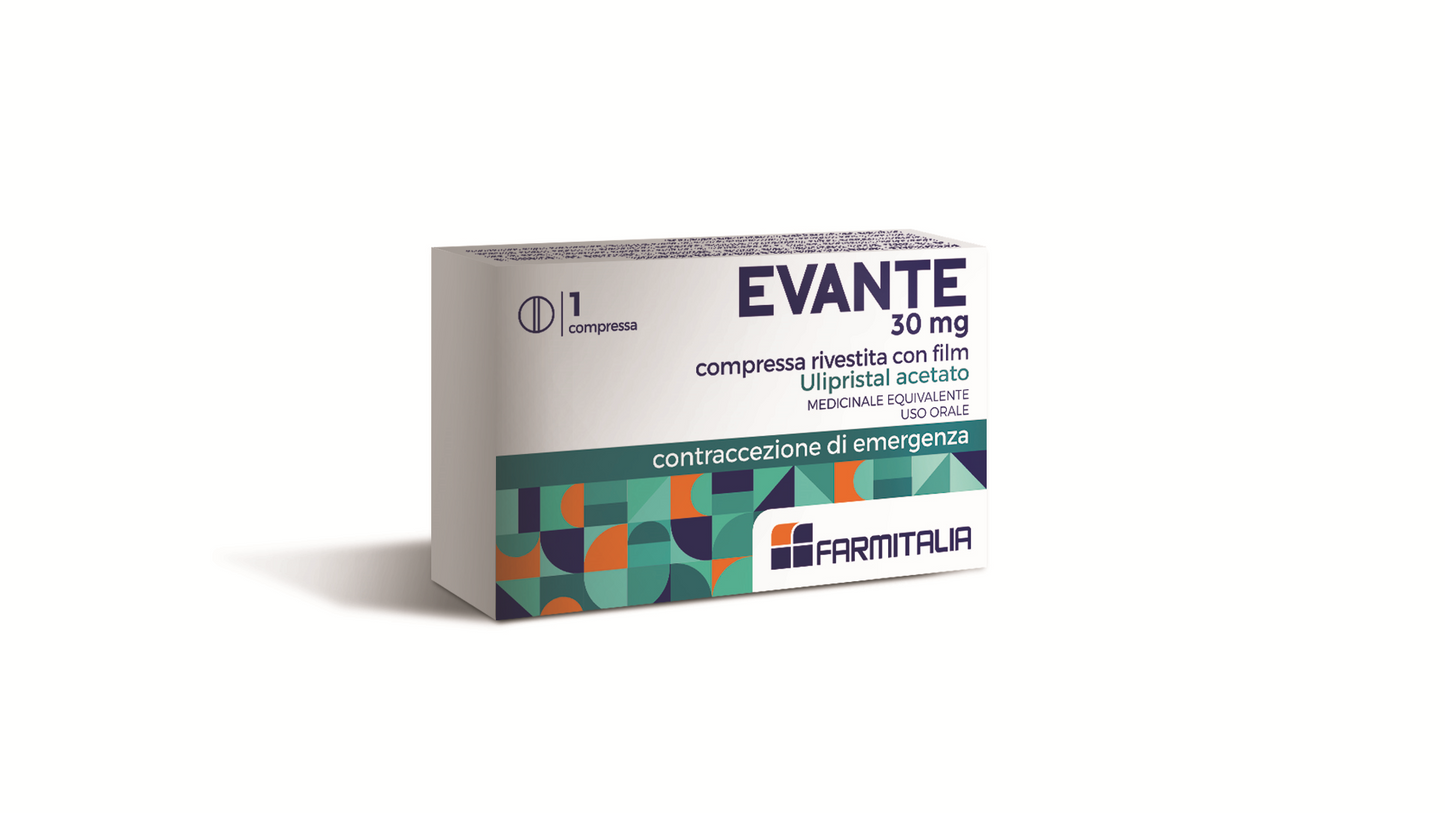
EVANTE*1FC TAB 30MG
Regular price
€25,81 EUR
Sale price
€25,81 EUR
Regular price
€28,50 EUR
Unit price
per
Tax included.
SKU
046058018In stock
Delivery time: 48/72 hours
Free Shipping: Orders over €70
Description
EVANTE 30 mg film-coated tablet
Ulipristal acetate
Equivalent medicinal product
What it is and what it is used for
EVANTE is an emergency contraceptive
EVANTE is a contraceptive used to prevent pregnancy after unprotected sex or contraceptive failure. For example:
• if you have had unprotected sex;
• if your or your partner's condom broke or slipped off, or if you forgot to use it;
• if you did not take your contraceptive pill as instructed.
You should take the tablet as soon as possible after sexual intercourse, and no later than 5 days (120 hours).
This is because sperm can survive up to 5 days inside the body after intercourse.
This medicine is suitable for any woman of childbearing age, including adolescents.
The tablet can be taken at any time during your menstrual cycle.
EVANTE does not work if you are already pregnant.
If your period is delayed, there is a possibility of pregnancy. If your period is delayed or if you have symptoms of pregnancy (heavy breasts, morning sickness), you should consult a doctor or healthcare professional before taking the tablet.
If you have unprotected sex after taking the tablet, the medicine will not prevent pregnancy.
Unprotected sex at any time in the cycle can result in pregnancy.
EVANTE should not be used as a regular contraceptive
If you do not use a regular method of contraception, talk to a doctor or healthcare professional to choose one that is right for you.
How EVANTE works
EVANTE contains the substance ulipristal acetate, which works by modifying the activity of the natural hormone progesterone, which is necessary for ovulation to occur. As a result, this medicine works by delaying ovulation. Emergency contraception is not effective in all cases. Among 100 women who take this medicine, approximately 2 pregnancies occur.
This medicine is a contraceptive used to prevent pregnancy from establishing. If you are already pregnant, it will not terminate an existing pregnancy.
Emergency contraception does not protect against sexually transmitted infections
Only the use of condoms provides protection against sexually transmitted infections. This medicine does not offer protection against HIV infection or other sexually transmitted diseases (e.g., Chlamydia, genital Herpes, genital warts, gonorrhoea, hepatitis B and syphilis). If you are concerned about this, please speak to a healthcare professional.
Further information on contraception can be found at the end of this leaflet.
What you need to know before taking the medicine
Do not take EVANTE
• if you are allergic to ulipristal acetate or any of the other ingredients of this medicine (listed in section 6).
Warnings and precautions
Talk to your pharmacist, doctor or other healthcare professional before taking EVANTE if your period is delayed or if you have symptoms of pregnancy (heavy breasts, morning sickness), as you may already be pregnant (see section Pregnancy, breastfeeding and fertility):
• if you suffer from severe asthma;
• if you suffer from severe liver disease.
For all women, emergency contraception should be taken as soon as possible after unprotected intercourse. Some data suggest that this medicine may be less effective with increasing body weight or body mass index (BMI), but these data are limited and inconclusive. Therefore, EVANTE is recommended for all women regardless of weight or BMI.
If you are concerned about problems related to taking emergency contraception, talk to a healthcare professional.
If you become pregnant despite taking this medicine, it is important that you see a doctor. See the section Pregnancy, breastfeeding and fertility for more information.
Possible side effects
Like all medicines, this medicine can cause side effects, although not everybody gets them.
Some symptoms, such as breast pain and abdominal pain (stomach ache), vomiting and feeling unwell (nausea) are also possible signs of pregnancy. If you miss a period and experience these symptoms after taking EVANTE, you should take a pregnancy test (see section 2 Pregnancy, breastfeeding and fertility).
Common side effects (may affect up to 1 in 10 people)
• nausea, abdominal pain (stomach ache) or discomfort, vomiting
• painful periods, pelvic pain, breast pain
• headache, dizziness, mood swings
• muscle aches, back pain, fatigue
Uncommon side effects (may affect up to 1 in 100 people)
• diarrhoea, heartburn, flatulence (intestinal gas), dry mouth
• unusual or irregular vaginal bleeding, heavy/prolonged periods, premenstrual syndrome, vaginal irritation or discharge, decreased or increased libido (sex drive)
• hot flushes
• changes in appetite, emotional disturbances, anxiety, agitation, difficulty falling asleep, somnolence, migraine, visual disturbances
• flu
• acne, skin lesions, itching
• fever, chills, malaise
Rare side effects (may affect up to 1 in 1,000 people)
• genital pain or itching, pain during sexual intercourse, rupture of ovarian cyst, unusually light periods
• loss of concentration, vertigo, tremors, disorientation, fainting
• abnormal eye sensation, eye redness, light sensitivity
• dry throat, taste disturbances
• urticaria (itchy rash), feeling of thirst
• allergic reactions such as skin rash, urticaria or facial swelling.
Reporting of side effects
If you get any side effects, including any not listed in this leaflet, talk to your doctor or pharmacist. You can also report side effects directly via the national reporting system at: https://www.aifa.gov.it/content/segnalazionireazioni-avverse.
By reporting side effects you can help provide more information on the safety of this medicine.