

You will not be allowed to compare more than 4 products at a time
View compareFEXALLEGRA NASAL*SPRAY FL10ML
FEXALLEGRA NASAL*SPRAY FL10ML
Regular price
€10,42 EUR
Sale price
€10,42 EUR
Regular price
€14,90 EUR
Unit price
per
Tax included.
SKU
027910013In stock
Vendor
OPELLA HEALTHCARE ITALY SrlDelivery time: 48/72 hours
Free Shipping: Orders over €70
Description
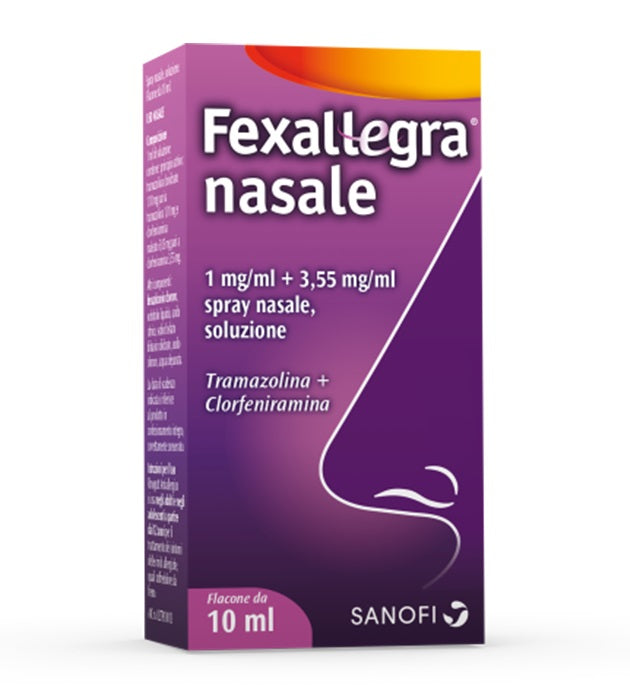
Fexallegra nasal 1 mg/ml + 3.55 mg/ml nasal spray, solution
Tramazoline + chlorpheniramine
What it is and what it is used for
Fexallegra nasal is a nasal spray containing tramazoline and chlorpheniramine. Fexallegra nasal is used in adults and adolescents from 12 years of age for the treatment of symptoms of allergic rhinitis (e.g., "hay fever").
Allergic rhinitis causes runny nose, sneezing, and swelling of the nasal mucous membranes, leading to a feeling of obstruction. Fexallegra nasal reduces nasal swelling and irritation and relieves sneezing, itching, blocked nose, and runny nose.
Consult your doctor if you do not feel better or if you feel worse after 4 days.
What you need to know before taking the medicine
Do not use Fexallegra nasal
- if you are allergic to tramazoline, chlorpheniramine, benzalkonium chloride, or any of the other ingredients of this medicine (listed in section 6);
- if you suffer from inflammation of the nasal cavities with little or no nasal secretion (rhinitis sicca);
- if you suffer from heart disease and very high blood pressure (severe arterial hypertension);
- if you suffer from a disease characterized by an increase in the pressure of the fluid inside the eye (acute angle glaucoma);
- if you suffer from a disease characterized by increased hormone production by the thyroid (hyperthyroidism);
- if you suffer from a disease characterized by an increase in prostate volume (prostatic hypertrophy);
- if you have undergone head surgery performed nasally;
- if you are under 12 years of age;
- if you are pregnant or breastfeeding (see section "Fertility, pregnancy and breastfeeding").
Warnings and precautions
Use Fexallegra nasal only after consulting your doctor:
- if you are elderly (you may have an increased risk of side effects, particularly dizziness, sedation, confusion, low blood pressure, and dry mouth; male patients in particular may also have an increased risk of urinary retention);
- if you suffer from diabetes mellitus;
- if you suffer from pheochromocytoma (a tumor of the adrenal glands);
- if you suffer from porphyria (a disease that interferes with the production of hemoglobin, a substance that allows red blood cells to carry oxygen in the blood);
- if you suffer from mild or moderate high blood pressure (mild-moderate arterial hypertension). Consult your doctor even if these disorders have occurred in the past.
Prolonged use of locally administered products can lead to irritation and inflammation of the nasal and paranasal sinus mucosa. Prolonged use can also lead to drug habituation. When the effect of the drug ceases, swelling of the nasal mucosa (nasal edema) may occur.
Do not take Fexallegra nasal orally as it can be toxic.
Avoid contact of the liquid with the eyes to avoid irritation.
Children
Do not give this medicine to children under 12 years of age.
Warning for athletes: this product contains substances prohibited for doping. Any intake different from those reported in terms of dosage regimen and route of administration is prohibited.
Possible side effects
Like all medicines, this medicine can cause side effects, although not everyone gets them.
If irritation, inflammation, and thinning of the nasal mucosa occur during treatment, stop treatment and consult your doctor to initiate appropriate therapy.
The following side effects may occur following the use of Fexallegra nasal; the frequency of these side effects is not known.
Immune system disorders:
- allergy (swelling of the skin and mucous membranes).
Psychiatric disorders:
- perception of things not existing in reality (hallucinations);
- insomnia;
- restlessness.
Nervous system disorders:
- drowsiness;
- sedation;
- headache;
- dizziness;
- altered taste (dysgeusia).
Cardiac disorders:
- heart rhythm disturbances (arrhythmias);
- increased heart rate (tachycardia);
- accentuated perception of heartbeats (palpitations).
Respiratory and thoracic disorders:
- nosebleed (epistaxis);
- swelling of the nasal mucosa (nasal edema);
- burning in the nose;
- dry nasal mucosa;
- runny nose (rhinorrhea);
- sneezing.
Gastrointestinal disorders:
- nausea.
Skin and subcutaneous tissue disorders:
- skin rash;
- itching.
Systemic disorders and conditions at the administration site:
- fatigue.
Abnormal diagnostic test results:
- increased blood pressure.
Reporting of side effects
If you get any side effects, including those not listed in this leaflet, talk to your doctor or pharmacist. You can also report side effects directly via the national reporting system at: https://www.aifa.gov.it/content/segnalazionireazioni-avverse.
By reporting side effects you can help provide more information on the safety of this medicine.
