

You will not be allowed to compare more than 4 products at a time
View compareFLOMAX*OS GRANULES 20SACHETS 350MG
FLOMAX*OS GRANULES 20SACHETS 350MG
Regular price
€10,29 EUR
Sale price
€10,29 EUR
Regular price
€12,97 EUR
Unit price
per
Tax included.
SKU
027244072In stock
Vendor
CHIESI FARMACEUTICI SpADelivery time: 48/72 hours
Free Shipping: Orders over €70
Description
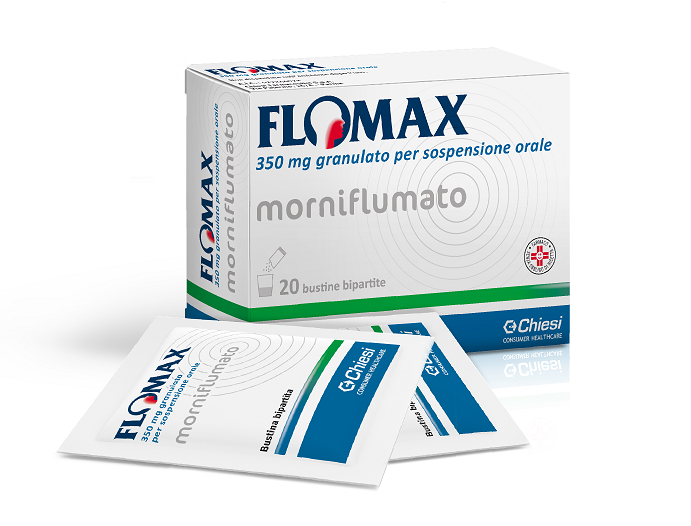
FLOMAX 350 mg granules for oral suspension
FLOMAX 700 mg tablets
Morniflumate
What it is and what it is used for
This medicine contains the active ingredient morniflumate and belongs to a class of drugs called NSAIDs (non-steroidal anti-inflammatory drugs) that act against pain, fever and inflammation.
FLOMAX is used:
in ADULTS and adolescents from 15 years of age, to treat pain of various origins and natures, even accompanied by fever, particularly in cases of ear inflammation (otitis), paranasal sinuses (sinusitis), tonsils (tonsillitis), throat (pharyngitis, laryngitis).
Consult your doctor if you do not feel better or if you feel worse after 5 days of treatment.
What you need to know before taking the medicine
Do not take FLOMAX:
• if you are allergic to the active ingredient or any of the other ingredients of this medicine (listed in paragraph 6);
• if you have had an allergy or asthma after taking other NSAIDs such as acetylsalicylic acid known as aspirin;
• if you have a stomach and/or duodenal (gastroduodenal) ulcer;
• if you have had two or more separate episodes of stomach or intestinal ulcer or bleeding (including blood in vomit or during evacuation or black and tarry stools);
• if you have had even a single episode of ulcer, perforation or bleeding in the stomach or intestines caused by taking medicines;
• if you have severe liver, kidney or heart problems;
• after the sixth month of pregnancy.
FLOMAX is contraindicated in children and adolescents under 15 years of age and in adolescents with a history of rectal inflammation (proctitis), rectal bleeding or ulcer.
Do not take FLOMAX granules for oral suspension if you suffer from phenylketonuria.
Warnings and precautions
Consult your doctor or pharmacist before taking FLOMAX if:
• you are taking other NSAIDs;
• you have had stomach or intestinal diseases, for example ulcer or bleeding, stomach hernia (hiatal), Crohn's disease, ulcerative colitis;
• you are taking medicines that may increase the risk of ulcers and bleeding (see paragraph Other medicines and FLOMAX);
• you are elderly or feel very weak (debilitated) or have a reduced body weight, as you are more likely to develop side effects;
• you have asthma associated with chronic inflammation of the nose or nasal cavities as a whole (sinusitis) and/or nasal polyps;
• you have chickenpox, as NSAIDs could worsen the severity of skin lesions caused by it;
• you must undergo urine tests that detect the presence of drugs such as marijuana and hashish, as this medicine can give positive results even in the absence of these substances.
In particular, consult your doctor carefully if:
• you have reduced kidney function;
• you have recently undergone surgery that caused significant blood loss;
• you have liver problems;
• you have or have had heart or blood circulation problems, such as a stroke, heart attack or heart failure or are at risk for these conditions (for example if you have high blood pressure, diabetes or increased triglycerides or smoke), as medicines like FLOMAX may be associated with a modest increased risk of heart attack (myocardial infarction) or stroke.
IN ALL THESE CASES, THE DOCTOR WILL EVALUATE THE NEED FOR FOLLOW-UP EXAMINATIONS.
PAY ATTENTION, because during treatment with all NSAIDs:
• at any time, with or without warning symptoms, even in patients without previous serious stomach or intestinal (gastrointestinal) problems, bleeding, ulceration or perforation of the stomach or intestines have been reported, which can be fatal (see paragraph 4.8);
• although very rarely, severe skin reactions have been reported, some of which are fatal, which manifest with redness, blistering and exfoliation (e.g. exfoliative dermatitis, Stevens-Johnson syndrome and toxic epidermal necrolysis). In the early stages of therapy, patients appear to be at higher risk: such reactions occur in most cases within the first month of treatment (see paragraph 4.8);
• the signs of an infection can be masked.
The risk of side effects increases with high doses and prolonged treatments. Do not exceed the dose of FLOMAX and do not take it for long periods; always carefully follow your doctor's instructions.
STOP treatment and contact your doctor if:
• you notice any stomach or intestinal (gastrointestinal) symptoms, especially if it is bleeding;
• a skin rash, mucosal lesions or any other sign of an allergic reaction appears (e.g. redness, itching, swelling of the face and throat, sudden drop in blood pressure).
Children and adolescents
Do not give this medicine to children and adolescents under 15 years of age.
FLOMAX should be administered in cases of actual need and under the direct supervision of a doctor as adolescents are more likely to develop side effects to this medicine.
Possible side effects
Like all medicines, this medicine can cause side effects, although not everyone gets them.
Stop taking FLOMAX immediately and contact your doctor if you experience any of the following conditions:
• severe allergic reactions such as: swelling (angioedema) of the face, eyes, lips, throat with difficulty breathing, sudden drop in blood pressure (anaphylactic shock);
• severe breathing difficulties (asthma attacks);
• severe stomach problems, heartburn or abdominal pain due to a stomach or duodenal (peptic) or abdominal ulcer;
• violent and sudden pain in the pit of the stomach (ulcer perforation);
• vomiting blood (hematemesis) or black stools (melena), associated with stomach or intestinal (gastrointestinal) bleeding or abnormal fatigue with reduced urine output (due to non-visible bleeding);
• severe skin rashes with redness, blistering and exfoliation (e.g. Steven-Johnson syndrome, toxic epidermal necrolysis).
Other side effects with unknown frequency (frequency cannot be estimated from the available data)
• worsening of skin infections caused by chickenpox;
• decrease in platelets (thrombocytopenia), decrease in white blood cells (leukopenia);
• headache and dizziness;
• heart attack (myocardial infarction) or stroke, swelling (edema), high blood pressure (hypertension), inability of the heart to adequately supply blood to the body (heart failure), low blood pressure (hypotension), inflammation of blood vessels (vasculitis);
• nausea, vomiting, diarrhea, intestinal gas (flatulence), constipation, indigestion (dyspepsia), abdominal pain, inflammation of the oral mucosa with ulcers (ulcerative stomatitis), worsening of colon inflammation (colitis) and Crohn's disease, gastritis;
• more or less sudden appearance of skin lesions, even after sun exposure (photosensitivity dermatitis), e.g. patchy or diffuse color changes (rashes, purpura, erythema multiforme and dermatitis), urticaria, itching;
• alterations in kidney function (kidney failure) which can cause swelling (edema), protein loss in the urine, decreased protein in the blood (nephrotic syndrome), inflammation of the kidney (interstitial nephritis), presence of blood in the urine (hematuria);
• alterations in liver tests;
• alterations in tests (false positive) that detect the presence of drugs such as marijuana and hashish; further analyses are required to confirm the positive result;
• fluoride poisoning (fluorosis), especially if FLOMAX is taken at high doses and for several years.
Reporting of side effects
If you get any side effects, including any not listed in this leaflet, tell your doctor or pharmacist. You can also report side effects directly via the national reporting system at: https://www.aifa.gov.it/content/segnalazionireazioni-avverse.
By reporting side effects, you can help provide more information on the safety of this medicine.