

You will not be allowed to compare more than 4 products at a time
View compareGUNAMINOFORMULA 24 SACHETS 156 G
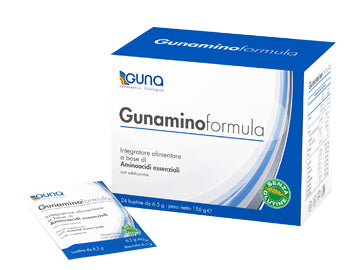
GUNAMINOFORMULA 24 SACHETS 156 G
Regular price
€45,27 EUR
Sale price
€45,27 EUR
Regular price
€55,00 EUR
Unit price
per
Tax included.
SKU
932711789In stock
Vendor
GUNA SpADelivery time: 48/72 hours
Free Shipping: Orders over €70
This product page, including its Product Information Leaflet, has been automatically translated.
Description
Gunamino formula
Description
A dietary supplement based on the 8 essential amino acids (3 branched-chain amino acids + 5 non-branched-chain amino acids), present in a qualitative-quantitative ratio specifically designed for humans.
Due to its characteristics, Gunamino formula:
-is rapidly absorbed;
-requires minimal digestive effort;
-produces only a minimal amount of nitrogenous waste;
-does not overload kidney and liver functions.
The amino acids in Gunamino formula are obtained by biofermentation on plants (cereals) and are ultra-purified and crystallized.
Ingredients
Blend of essential amino acids (L-leucine, L-valine, L-isoleucine, L-lysine hydrochloride, L-phenylalanine, L-threonine, L-methionine, L-tryptophan), maltodextrin; acidity regulator: citric acid; flavourings; emulsifier: sucrose esters of fatty acids; sweetener: sucralose.
Nutritional characteristics
Directions for use
It is recommended to take 1 sachet per day unless otherwise directed by a doctor. Dissolve the contents of the sachet in a glass of water (200 ml) or fruit juice and mix thoroughly.
Warnings
Keep out of reach of children under 3 years of age. Do not exceed the recommended daily dose. Supplements should not be considered as substitutes for a varied, balanced diet and a healthy lifestyle. Do not use during pregnancy or in children, or for prolonged periods without consulting a doctor.
Storage
Store the product in a cool, dry place, away from light. The expiry date refers to the product stored correctly, in an unopened package.
Format
Pack of 42 sachets of 6.5 g.
Net weight: 273 g.
Bibliography
1. Murlin, JR. Biological value of proteins in relation to the essential amino acids which they contain. Mellon lecture 28. Pitts burgh, 1946. p. 533-64, 715-36.
2. Kadowaki M, Kanazawa T. Amino acids as regulators of proteolysis. J Nutr . 2003;133(6 Suppl 1):2052S-2056S.4.
3. Munro HN. Second Boyd Orr Memorial Lecture. Regulation of body protein metabolism in relation to diet. Proc Nutr Soc. 1976;35(3):297-308.
4. Young VR. Amino acids and proteins in relation to the nutrition of elderly people. Age Ageing. 1990;19(4):S10-24.
5. Volpi E, Kobayashi H, Shef field-Moore M, Mittendor fer B, Wolfe RR. Essential amino acids are primarily responsible for the amino acid stimulation of muscle protein anabolism in healthy elderly adults. Am J Clin Nutr. 2003;78(2):250-8.
6. Dunstan RH, Sparkes DL, Macdonald MM, De Jonge XJ, Dascombe BJ, Gottfries J, Gottfries CG, et al. Diverse characteristics of the urinary excretion of amino acids in humans and the use of amino acid supplementation to reduce fatigue and sub-health in adults. Nut r J. 2017;16(1):19.
7. Vidal-Lletjós S, Beaumont M, Tomé D, Benamouzig R, Blachier F, Lan A. Dietar y Protein and Amino Acid Supplementation in Inflammatory Bowel Disease Course: What Impact on the Colonic Mucosa? Nutr ients. 2017;9(3). pii: E310.
8. Dickinson JM, Rasmussen BB. Amino acid transporters in the regulation of human skeletal muscle protein metabolism. Curr Opin Clin Nutr Metab Care. 2013;16(6):638-44.
9. Bohé J, Low JF, Wolfe RR, Rennie MJ. Latency and duration of stimulation of human muscle protein synthesis during continuous infusion of amino acids. J Physiol. 2001;532(Pt 2):575-9.
10. Cholewa JM, Dardevet D, Lima-Soares F, de Araújo Pessôa K, Oliveira PH, Dos Santos Pinho JR, Nicastro H, et al. Dietary proteins and amino acids in the control of the muscle mass during immobilization and aging: role of the MPS response. Amino Acids. 2017;49(5):811-20.
11. Mitchell WK, Wilkinson DJ, Phillips BE, Lund JN, Smith K, Atherton PJ. Human Skeletal Muscle Protein Metabolism Responses to Amino Acid Nutrition. Adv Nutr. 2016;7(4):828S-38S.
12. Coker RH, Deutz NE, Schutzler S, Beggs M, Miller S, Wolfe RR, Wei J. Nutritional Supplementation with Essential Amino Acids and Phytosterols May Reduce Risk for Metabolic Syndrome and Cardiovascular Disease in Over weight Individuals with Mild Hyperlipidemia. J Endocrinol Diabetes Obes. 2015;3(2). pii: 106 9.
A dietary supplement based on the 8 essential amino acids (3 branched-chain amino acids + 5 non-branched-chain amino acids), present in a qualitative-quantitative ratio specifically designed for humans.
Due to its characteristics, Gunamino formula:
-is rapidly absorbed;
-requires minimal digestive effort;
-produces only a minimal amount of nitrogenous waste;
-does not overload kidney and liver functions.
The amino acids in Gunamino formula are obtained by biofermentation on plants (cereals) and are ultra-purified and crystallized.
Ingredients
Blend of essential amino acids (L-leucine, L-valine, L-isoleucine, L-lysine hydrochloride, L-phenylalanine, L-threonine, L-methionine, L-tryptophan), maltodextrin; acidity regulator: citric acid; flavourings; emulsifier: sucrose esters of fatty acids; sweetener: sucralose.
Nutritional characteristics
| Average values | per 100 g | per sachet |
| Energy | 1,649 kJ 388 kcal |
107 kJ 25 kcal |
| Fats of which saturates |
0.40 g 0 g |
0.03 g 0 g |
| Carbohydrates of which sugars |
16.23 g 1.37 g |
1.05 g 0.09 g |
| Proteins | 0 g | 0 g |
| Salt | 0.01 g | 0 g |
| L-leucine | 15.4 g | 1,000 mg |
| L-valine | 12.3 g | 800 mg |
| L-isoleucine | 11.5 g | 750 mg |
| L-lysine | 10.8 g | 700 mg |
| L-phenylalanine | 10.0 g | 650 mg |
| L-threonine | 8.5 g | 550 mg |
| L-methionine | 5.4 g | 350 mg |
| L-tryptophan | 3.1 g | 200 mg |
Directions for use
It is recommended to take 1 sachet per day unless otherwise directed by a doctor. Dissolve the contents of the sachet in a glass of water (200 ml) or fruit juice and mix thoroughly.
Warnings
Keep out of reach of children under 3 years of age. Do not exceed the recommended daily dose. Supplements should not be considered as substitutes for a varied, balanced diet and a healthy lifestyle. Do not use during pregnancy or in children, or for prolonged periods without consulting a doctor.
Storage
Store the product in a cool, dry place, away from light. The expiry date refers to the product stored correctly, in an unopened package.
Format
Pack of 42 sachets of 6.5 g.
Net weight: 273 g.
Bibliography
1. Murlin, JR. Biological value of proteins in relation to the essential amino acids which they contain. Mellon lecture 28. Pitts burgh, 1946. p. 533-64, 715-36.
2. Kadowaki M, Kanazawa T. Amino acids as regulators of proteolysis. J Nutr . 2003;133(6 Suppl 1):2052S-2056S.4.
3. Munro HN. Second Boyd Orr Memorial Lecture. Regulation of body protein metabolism in relation to diet. Proc Nutr Soc. 1976;35(3):297-308.
4. Young VR. Amino acids and proteins in relation to the nutrition of elderly people. Age Ageing. 1990;19(4):S10-24.
5. Volpi E, Kobayashi H, Shef field-Moore M, Mittendor fer B, Wolfe RR. Essential amino acids are primarily responsible for the amino acid stimulation of muscle protein anabolism in healthy elderly adults. Am J Clin Nutr. 2003;78(2):250-8.
6. Dunstan RH, Sparkes DL, Macdonald MM, De Jonge XJ, Dascombe BJ, Gottfries J, Gottfries CG, et al. Diverse characteristics of the urinary excretion of amino acids in humans and the use of amino acid supplementation to reduce fatigue and sub-health in adults. Nut r J. 2017;16(1):19.
7. Vidal-Lletjós S, Beaumont M, Tomé D, Benamouzig R, Blachier F, Lan A. Dietar y Protein and Amino Acid Supplementation in Inflammatory Bowel Disease Course: What Impact on the Colonic Mucosa? Nutr ients. 2017;9(3). pii: E310.
8. Dickinson JM, Rasmussen BB. Amino acid transporters in the regulation of human skeletal muscle protein metabolism. Curr Opin Clin Nutr Metab Care. 2013;16(6):638-44.
9. Bohé J, Low JF, Wolfe RR, Rennie MJ. Latency and duration of stimulation of human muscle protein synthesis during continuous infusion of amino acids. J Physiol. 2001;532(Pt 2):575-9.
10. Cholewa JM, Dardevet D, Lima-Soares F, de Araújo Pessôa K, Oliveira PH, Dos Santos Pinho JR, Nicastro H, et al. Dietary proteins and amino acids in the control of the muscle mass during immobilization and aging: role of the MPS response. Amino Acids. 2017;49(5):811-20.
11. Mitchell WK, Wilkinson DJ, Phillips BE, Lund JN, Smith K, Atherton PJ. Human Skeletal Muscle Protein Metabolism Responses to Amino Acid Nutrition. Adv Nutr. 2016;7(4):828S-38S.
12. Coker RH, Deutz NE, Schutzler S, Beggs M, Miller S, Wolfe RR, Wei J. Nutritional Supplementation with Essential Amino Acids and Phytosterols May Reduce Risk for Metabolic Syndrome and Cardiovascular Disease in Over weight Individuals with Mild Hyperlipidemia. J Endocrinol Diabetes Obes. 2015;3(2). pii: 106 9.