

You will not be allowed to compare more than 4 products at a time
View compareGYNOCANESTEN*12VAG TABS 100MG
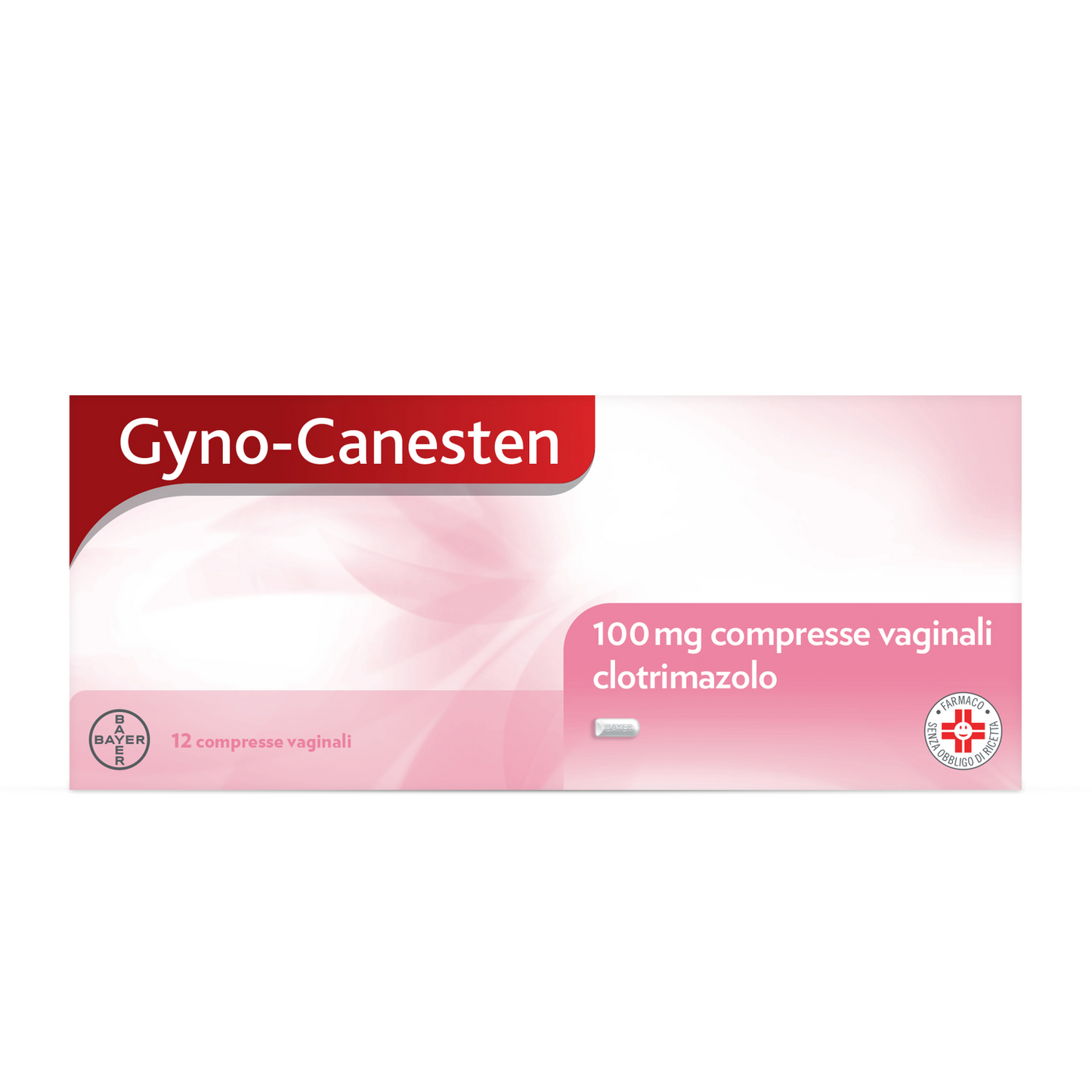
GYNOCANESTEN*12VAG TABS 100MG
Regular price
€17,20 EUR
Sale price
€17,20 EUR
Regular price
€20,25 EUR
Unit price
per
Tax included.
SKU
025833029Low stock
Vendor
BAYER SpADelivery time: 48/72 hours
Free Shipping: Orders over €70
This product page, including its Product Information Leaflet, has been automatically translated.
Description
Gyno-Canesten 100 mg vaginal tablets
Clotrimazole
What it is and what it is used for
Gyno-Canesten contains clotrimazole, an antifungal that inhibits the growth of fungi.
Gyno-Canesten is used for the treatment of localized symptoms resulting from vulvovaginal infections caused by diagnosed candida, in adults and adolescents over 12 years of age. These symptoms include itching, leucorrhea (whitish vaginal discharge), redness and a sensation of swelling of the vaginal mucosa, burning during urination.
Consult your doctor if you do not feel better or if you feel worse after 7 days of treatment.
What you need to know before taking the medicine
Do not use Gyno-Canesten
- if you are allergic to clotrimazole or any of the other ingredients of this medicine (listed in section 6).
Warnings and precautions
Consult your doctor or pharmacist before using Gyno-Canesten if:
- you have suffered from the same symptoms less than 2 months ago,
- you have fever, lower abdominal pain, back pain, foul-smelling vaginal discharge, nausea, vaginal bleeding and/or shoulder pain.
The use, especially prolonged use, of topical products (applied to the skin) can cause sensitization phenomena (acquisition of increased sensitivity); in this case, it is necessary to discontinue treatment and consult your doctor or pharmacist.
Avoid contact with eyes. Do not swallow.
It is preferable to start and end treatment during the intermenstrual period.
While using this medicine, avoid vaginal intercourse, as the infection could be transmitted to your partner.
Furthermore, in order to avoid re-infection, particularly in the presence of Candida vulvitis or balanitis, local treatment of the partner with Gyno-Canesten cream is recommended.
During therapy with Gyno-Canesten, do not use tampons, vaginal douches, spermicides or other vaginal products.
During pregnancy, use Gyno-Canesten vaginal tablets and insert them without an applicator.
During treatment with Gyno-Canesten, the effectiveness and safety of latex products, such as condoms and diaphragms, may be reduced.
Possible side effects
Like all medicines, this medicine can cause side effects, although not everybody gets them.
The following side effects may occur with the use of this medicine with an unknown frequency (frequency cannot be estimated from the available data):
- anaphylactic reaction (severe allergic reaction),
- angioedema (swelling of the face, lips, mouth, tongue and throat which may cause breathing and swallowing difficulties),
- hypersensitivity (allergy),
- syncope (fainting),
- hypotension (low blood pressure),
- dyspnea (difficulty breathing),
- abdominal pain,
- nausea,
- rash,
- urticaria (skin irritation),
- exfoliation in the genital area,
- vaginal discharge,
- vaginal bleeding,
- discomfort in the genital area,
- erythema (redness) in the genital area,
- burning in the genital area,
- itching in the genital area,
- pain in the genital area,
- irritation, pain and edema (fluid accumulation) at the application site.
Adhering to the instructions in the package leaflet reduces the risk of side effects.
Reporting of side effects
If you get any side effects, including any not listed in this leaflet, talk to your doctor or pharmacist. You can also report side effects directly via the national reporting system at: https://www.aifa.gov.it/content/segnalazionireazioni-avverse.
By reporting side effects, you can help provide more information on the safety of this medicine.
