

You will not be allowed to compare more than 4 products at a time
View compareIBUPROFEN ZEN*20CAPS 400MG
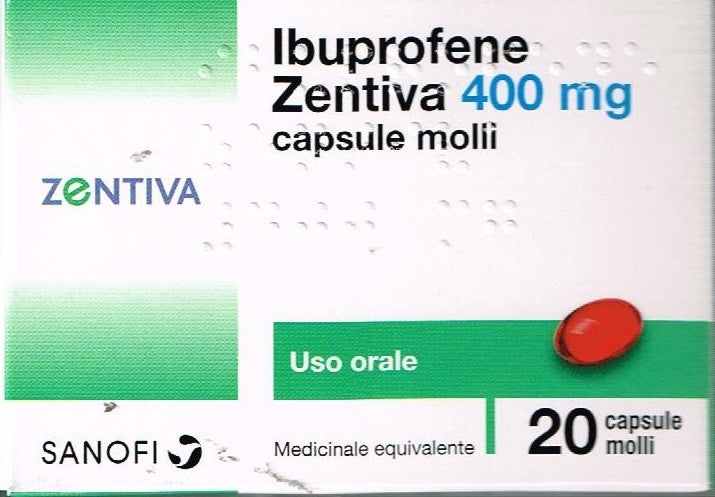
IBUPROFEN ZEN*20CAPS 400MG
Regular price
€8,68 EUR
Sale price
€8,68 EUR
Regular price
€11,20 EUR
Unit price
per
Tax included.
SKU
043555059In stock
Vendor
ZENTIVA ITALIA SrlDelivery time: 48/72 hours
Free Shipping: Orders over €70
This product page, including its Product Information Leaflet, has been automatically translated.
Description
IBUPROFENE ZENTIVA 200 mg soft capsules
IBUPROFENE ZENTIVA 400 mg soft capsules
Equivalent medicine
What it is and what it is used for
The name of the medicine is IBUPROFENE ZENTIVA 200 mg or IBUPROFENE ZENTIVA 400 mg.
The active ingredient (which makes the medicine effective) is ibuprofen. It belongs to a group of medicines known as non-steroidal anti-inflammatory drugs (NSAIDs). NSAIDs relieve pain by modifying the body's response to pain, swelling and high temperature.
IBUPROFENE ZENTIVA in the form of soft capsules with liquid content dissolves easily in the body, the active ingredient is absorbed more quickly into the bloodstream and therefore rapidly reaches the site of pain.
IBUPROFENE ZENTIVA is used to relieve headaches, migraines, toothaches, backaches, menstrual pain, muscle pain, fever and cold and flu symptoms.
In addition, on medical prescription, IBUPROFENE ZENTIVA is also used to relieve pain experienced along the nerves (neuralgia), joint swelling and pain (rheumatic pain) and non-severe joint inflammation (non-severe arthritis).
IBUPROFENE ZENTIVA 400 mg is recommended for adults and adolescents over 12 years of age (body weight of at least 40 kg).
Given the amount of active ingredient contained in one capsule, IBUPROFENE ZENTIVA 200 mg is recommended for adults and children over 6 years of age (body weight of at least 20 kg).
What you need to know before taking the medicine
Do not take IBUPROFENE ZENTIVA
- if you are allergic to ibuprofen (the active ingredient of IBUPROFENE ZENTIVA) or any of the other ingredients of this medicine (listed in section 6);
- if you are hypersensitive to non-steroidal anti-inflammatory drugs and experience shortness of breath, asthma, runny nose, swelling or hives;
- if you have an active or recurrent stomach or duodenal ulcer or bleeding or have ever had this problem repeatedly (i.e. at least twice) in the past;
- if you have ever had gastrointestinal bleeding or perforation related to previous NSAID therapy;
- if you suffer from a blood formation disorder or a blood clotting disorder;
- if you suffer from severe heart, liver or kidney failure;
- if you are a woman in the third trimester of pregnancy.
Warnings and precautions
You should discuss your treatment with your doctor or pharmacist before taking IBUPROFENE ZENTIVA if:
- you suffer from kidney or liver disease;
- you suffer from bronchial asthma;
- you suffer from allergic rhinitis, nasal polyps or chronic obstructive respiratory disorders, due to the increased risk of allergic reactions;
- you are also taking medicines that could increase the risk of gastric toxicity or bleeding (see below);
- you suffer from systemic lupus erythematosus (an immune system disease) or mixed connective tissue disease (risk of aseptic meningitis);
- you suffer from an inflammatory ulcer disease of the digestive tract such as Crohn's disease or ulcerative colitis;
- you have heart problems, including heart failure, angina (chest pain), or if you have had a heart attack, bypass surgery, peripheral artery disease (poor circulation in the legs and feet due to narrowed or blocked arteries), or any type of stroke (including mini-stroke or transient ischemic attack TIA);
- you have high blood pressure, diabetes or high cholesterol, or have a family history of heart disease or stroke, or if you are a smoker;
- you have an infection - see the Infections section below.
Infections
Ibuprofen can mask signs of infections such as fever and pain. It is therefore possible that ibuprofen may delay appropriate treatment of the infection, which can lead to an increased risk of complications. This has been observed in pneumonia caused by bacteria and bacterial skin infections related to chickenpox. If you take this medicine while you have an infection and the symptoms of the infection persist or worsen, consult a doctor immediately.
Anti-inflammatory/pain relief medicines such as ibuprofen may be associated with a small increased risk of heart attack or stroke, especially when used at high doses. Do not exceed the recommended dose or duration of treatment. Any risks are more likely in case of high dosages or prolonged treatment. Gastrointestinal bleeding, ulceration or perforation can occur at any time during treatment, with or without warning symptoms or a previous history of severe gastrointestinal events. With increasing dosages, the risk of gastrointestinal bleeding, ulceration or perforation is higher in patients with a history of ulcer and in the elderly. Some concomitant medicines may increase the risk of gastric toxicity or bleeding (other non-steroidal anti-inflammatory drugs, corticosteroids, anticoagulants such as warfarin, selective serotonin reuptake inhibitors (SSRIs) or antiplatelet agents such as acetylsalicylic acid).
In patients at higher risk of gastrointestinal toxicity, the concomitant use of protective agents (e.g. misoprostol or proton pump inhibitors) should be considered.
Prolonged use of any type of analgesic for headache can worsen the disorder. If you suffer from frequent or daily headaches despite (or as a result of) regular use of headache medicines, consult your doctor before taking another analgesic. Treatment should be stopped if headache caused by overuse of medicines is diagnosed.
Skin reactions
Severe skin reactions have been reported in association with IBUPROFENE ZENTIVA treatment. Stop taking IBUPROFENE ZENTIVA and consult your doctor immediately if you experience rash, mucosal lesions, blisters or other signs of allergy, as these may be the first signs of a very severe skin reaction. See section 4.
Children and adolescents
There is a risk of kidney impairment in dehydrated children and adolescents.
Possible side effects
Like all medicines, this medicine can cause side effects, although not everybody gets them.
Stop using the medicine and seek immediate medical attention if any hypersensitivity reactions occur such as skin rashes, mucosal lesions, hives, appearance of purple spots on the skin, sudden swelling around the eyes, feeling of tightness in the chest with difficulty breathing or swallowing, epigastric pain or bleeding from the digestive tract (vomiting blood or black stools).
The side effects that may occur are listed below according to frequency:
Uncommon (may affect up to 1 in 100 people):
• headache;
• abdominal pain, discomfort (nausea), indigestion;
• various skin rashes, hypersensitivity reactions (such as hives and itching).
Rare (may affect up to 1 in 1,000 people):
• discomfort (vomiting), diarrhea, constipation, flatulence.
Very rare (may affect up to 1 in 10,000 people):
• problems in the production of blood cells (the first signs are: fever, sore throat, superficial ulcers in the mouth, flu-like symptoms, exhaustion, nosebleeds and skin bleeding);
• sterile inflammation of the meninges (particularly in patients with connective tissue diseases or systemic lupus erythematosus);
• inflammation, ulceration or perforation of the mucous membrane of the digestive tract (black stools and vomiting blood), inflammation of the mouth;
• inability of the kidneys to eliminate waste products (acute kidney failure), blood in the urine and fever may be signs of kidney damage (papillary necrosis);
• disorders of liver function;
• severe forms of skin reactions, including rashes with redness and blisters;
severe hypersensitivity reactions (edema of the face, tongue and larynx, dyspnea, tachycardia, hypotension, severe shock).
Not known (frequency cannot be estimated from the available data):
• hearing disorders;
• heart failure, edema, arterial hypertension;
• worsening of an existing intestinal disease (colitis or Crohn's disease);
• kidney failure;
• difficulty breathing (mainly in patients with bronchial asthma), worsening of asthma;
• a severe skin reaction known as DRESS syndrome may occur. Symptoms of DRESS include: rash, fever, swollen lymph nodes and increased eosinophils (a type of white blood cell);
• increased skin sensitivity to the sun;
• a widespread, red, scaly rash, with pus-filled bumps under the skin and blisters located mainly on the skin folds, trunk and upper limbs accompanied by fever at the beginning of treatment (acute generalised exanthematous pustulosis). Stop using IBUPROFENE ZENTIVA if you develop these symptoms and contact your doctor immediately. See also section 2.
Medicines containing ibuprofen (or some other NSAIDs), such as ibuprofen, may be associated with a small increased risk of heart attack (myocardial infarction) or stroke.
Reporting side effects
If you get any side effects, including any not listed in this leaflet, tell your doctor or pharmacist. You can also report side effects directly via the national reporting system at: https://www.aifa.gov.it/content/segnalazionireazioni-avverse.
By reporting side effects you can help provide more information on the safety of this medicine.