

You will not be allowed to compare more than 4 products at a time
View compareIBUPROFEN ZEN*24TAB 200MG
IBUPROFEN ZEN*24TAB 200MG
Regular price
€6,88 EUR
Sale price
€6,88 EUR
Regular price
€8,90 EUR
Unit price
per
Tax included.
SKU
042324032In stock
Vendor
ZENTIVA ITALIA SrlDelivery time: 48/72 hours
Free Shipping: Orders over €70
This product page, including its Product Information Leaflet, has been automatically translated.
Description
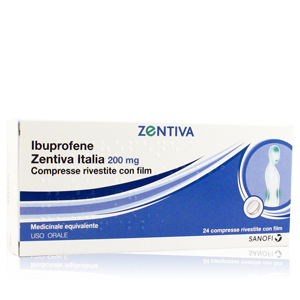
IBUPROFENE ZENTIVA ITALIA 200 mg film-coated tablets
Ibuprofen
Equivalent medicine
What it is and what it is used for
IBUPROFENE ZENTIVA ITALIA 200 mg contains ibuprofen, a medicine belonging to a class of medicines called NSAIDs (non-steroidal anti-inflammatory drugs) which act by reducing pain, inflammation, and fever.
IBUPROFENE ZENTIVA ITALIA 200 mg is used in adults, adolescents, and children from 6 years of age to provide relief in case of:
- mild to moderate pain (such as headache, including that caused by migraine, toothache, and fever).
IBUPROFENE ZENTIVA ITALIA 200 mg is used in adults and adolescents from 12 years of age to provide relief in case of:
- menstrual pain (primary dysmenorrhea).
Contact your doctor if you do not feel better or if you feel worse after 3 days (in children and adolescents) or after 7 days (in adults).
What you need to know before taking the medicine
Do not take IBUPROFENE ZENTIVA ITALIA 200 mg
- if you are allergic to ibuprofen or any of the other ingredients of this medicine (listed in section 6). If you are allergic to other non-steroidal anti-inflammatory drugs;
- if you have suffered allergic reactions such as asthma, abundant nasal discharge (rhinitis), itchy skin rashes (urticaria), or swelling of the lips, face, tongue, or throat (angioedema) after taking medicines containing acetylsalicylic acid or other pain relievers or anti-inflammatory drugs (NSAIDs);
- if you have suffered from lesions (ulcers) or bleeding of the stomach or intestine related to previous use of pain relievers or anti-inflammatory drugs (NSAIDs);
- if you suffer from lesions (ulcers) or bleeding of the stomach or intestine or have suffered two or more episodes of this type in the past;
- if you suffer or have suffered from ulcerative colitis, Crohn's disease, peptic ulcer, or recurrent gastrointestinal bleeding (defined as two or more distinct episodes of confirmed ulceration or haemorrhage);
- if you suffer or have suffered from a congenital disorder of porphyrin metabolism (e.g. acute intermittent porphyria);
- chronic alcoholism (14 to 20 drinks/week or more);
- if you suffer from severe liver problems (hepatic insufficiency), kidney problems (renal insufficiency) or heart problems (cardiac insufficiency) or a coronary artery alteration, the vessels that carry blood to the heart (coronary artery disease);
- if you are in the last three months of pregnancy or are breastfeeding (see section Pregnancy, breastfeeding, and fertility);
- if you suffer from a significant fluid loss from the body (dehydration) caused by vomiting, diarrhoea, or insufficient fluid intake;
- if you have active bleeding (including in the brain);
- if you suffer from a disease of unknown origin that causes abnormal blood cell formation (dyshematopoiesis);
- if you are under 6 years of age.
Warnings and precautions
Severe skin reactions, including exfoliative dermatitis, erythema multiforme, Stevens-Johnson syndrome, toxic epidermal necrolysis, drug reaction with eosinophilia and systemic symptoms (DRESS), acute generalised exanthematous pustulosis (AGEP), have been reported in association with IBUPROFENE ZENTIVA ITALIA treatment. Stop using IBUPROFENE ZENTIVA ITALIA and contact your doctor immediately if you notice any of the symptoms related to these severe skin reactions described in section 4.
Signs of an allergic reaction to this medicine, including breathing problems, swelling of the face and neck region (angioedema), and chest pain, have been reported with ibuprofen.
Stop treatment with IBUPROFENE ZENTIVA ITALIA immediately and contact your doctor or emergency medical service immediately if you notice any of these signs.
Anti-inflammatory/pain relief medications such as ibuprofen may be associated with a modest increase in the risk of heart attack or stroke, especially when administered in high doses. Do not exceed the recommended dose or duration of treatment.
Consult your doctor or pharmacist before taking IBUPROFENE ZENTIVA ITALIA 200 mg if:
- you have heart problems including heart attack, angina (chest pain) or if you have a history of heart attack, coronary bypass surgery, peripheral arterial disease (poor circulation to the legs or feet due to narrowing or obstruction of the arteries) or any type of stroke (including mini-stroke or TIA, transient ischemic attack);
- you have high blood pressure, diabetes, high cholesterol, a family history of heart disease or stroke, or if you are a smoker;
- you suffer from congestive heart failure;
- you suffer from an autoimmune disease called systemic lupus erythematosus (SLE) or other diseases affecting the immune system if you suffer from a hereditary disorder affecting haemoglobin, a substance that carries oxygen in the blood (acute intermittent porphyria);
- you are significantly dehydrated (caused by vomiting, diarrhoea, or insufficient fluid intake);
- you suffer from chronic inflammatory bowel diseases such as inflammation of the intestine with ulcers (ulcerative colitis), inflammation of the digestive tract (Crohn's disease) or other stomach and intestinal diseases;
- you have suffered from a stomach or intestinal lesion (ulcer), especially if it has been complicated by perforation or accompanied by bleeding. Report any unusual stomach or intestinal symptoms (especially bleeding or ulceration) to your doctor immediately, particularly if these symptoms occur at the beginning of treatment. These symptoms are more common in the elderly. See section Possible side effects;
- you suffer from disorders of blood cell formation (hematopoiesis disorder);
- you suffer from problems related to the normal blood clotting mechanism;
- you suffer from allergies, a disease affecting the nasal mucous membranes (hay fever), asthma, chronic swelling of the nasal passages (adenoids) or chronic obstructive respiratory diseases (asthma);
- you suffer from liver, kidney, or heart problems or high blood pressure (especially if you are elderly);
- you have recently undergone surgery;
- you are in the first six months of pregnancy;
- you are breastfeeding;
- you have blurred vision or other eye symptoms, skin rash, weight gain or fluid retention (oedema);
- you have an infection - see section Infections below.
Respiratory disorders
Special precautions should be taken in asthmatic patients or those with a history of asthma, bronchial diseases, chronic rhinitis, or respiratory diseases, as ibuprofen can trigger bronchospasm, urticaria, or angioedema in these patients.
Allergic reactions
Severe acute hypersensitivity reactions (e.g. anaphylactic shock) have been observed rarely. At the first signs of a hypersensitivity reaction after taking Ibuprofene Zentiva Italia, therapy should be interrupted. Medically necessary measures, depending on the symptoms, should be initiated by specialized personnel. Caution is required in patients who have suffered allergic reactions or hypersensitivity to other substances, as they may have an increased risk of drug reactions, hypersensitivity to ibuprofen. Caution is required in patients with hay fever, nasal polyps, or chronic obstructive respiratory tract infections as this increases the risk of allergic reactions. These can occur in asthma attacks (so-called analgesic asthma), Quincke's oedema, or urticaria.
Cardiac, renal, or hepatic disorders
Precautions should be taken in patients with renal, hepatic, or cardiac insufficiency, as the use of NSAIDs may impair renal function. The habitual concomitant ingestion of several pain relievers further increases this risk. In these patients, the dose should be as low as possible and for the shortest possible time (see section Do not take Ibuprofene Zentiva Italia).
Effects on the kidneys
At the start of treatment, ibuprofen, like other NSAIDs, should be administered with caution in patients with significant dehydration (there is a risk of renal insufficiency, especially in dehydrated children, adolescents, and the elderly). As with other NSAIDs, prolonged administration of ibuprofen has resulted in papillary renal necrosis and other pathological renal changes. Cases of renal toxicity in patients where prostaglandins have a compensatory function in maintaining renal perfusion. In these patients, NSAID administration may cause a dose-dependent decrease in prostaglandin formation and, secondarily, renal blood flow, which may precipitate overt renal decompensation. Most patients at risk for this reaction are those with renal dysfunction, heart failure, liver disease, those taking diuretics and ACE inhibitors, and elderly patients.
Discontinuation of NSAID therapy is generally followed by restoration of the pre-treatment state.
Aseptic meningitis
On rare occasions, aseptic meningitis has been observed in patients treated with ibuprofen. Although it is more likely to occur in patients with systemic lupus erythematosus and connective tissue diseases, cases of aseptic meningitis have been reported in patients without underlying chronic conditions.
Haematological effects
Ibuprofen, like other NSAIDs, can inhibit platelet aggregation and prolong bleeding time in normal patients.
Exceptionally, chickenpox can cause severe complications, severe skin or soft tissue infections. To date, a role for NSAIDs in worsening these infections cannot be excluded. Therefore, it is advisable to avoid the use of Ibuprofene Zentiva Italia in case of chickenpox.
Elderly population
The elderly have a higher frequency of adverse reactions to NSAIDs, particularly gastrointestinal bleeding and perforation, which can be fatal.
Gastrointestinal bleeding, ulceration, and perforation:
Ibuprofen should be administered with caution to patients with a history of peptic ulcer or other gastrointestinal diseases as these conditions may be exacerbated. Cases of potentially fatal gastrointestinal bleeding, ulceration, and perforation have been reported with all NSAIDs at various stages of treatment, with or without warning symptoms or a history of serious gastrointestinal events. The risk of bleeding, ulceration, or perforation is higher with higher doses of ibuprofen, in patients with a history of peptic ulcer, especially if associated with bleeding or perforation, and in elderly patients. In these patients, treatment should be initiated with the lowest effective dose. Concomitant administration of protective agents (e.g., misoprostol or proton pump inhibitors) should be considered in these patients, as well as in those who need to simultaneously take low-dose acetylsalicylic acid, or other drugs that may increase the gastrointestinal risk. Precautions should be taken in patients who need to simultaneously take other drugs that may increase the risk of ulcers or bleeding, such as oral corticosteroids, anticoagulants (such as warfarin), selective serotonin reuptake inhibitors, or antiplatelet agents such as acetylsalicylic acid. In case of gastrointestinal bleeding or ulceration in patients taking Ibuprofene Zentiva Italia, treatment should be discontinued. Concomitant administration of Ibuprofene Zentiva Italia with other NSAIDs, including selective cyclooxygenase-2 inhibitors, should be avoided due to the increased risk of ulceration or bleeding. Patients with a history of gastrointestinal diseases, particularly the elderly, should report unusual abdominal symptoms (especially gastrointestinal bleeding) early in treatment.
Infections
Ibuprofene Zentiva Italia can mask the symptoms of infections such as fever and pain. It is therefore possible that Ibuprofene Zentiva Italia may delay adequate treatment of the infection, which could increase the risk of complications. This has been observed in pneumonia caused by bacteria and in bacterial skin infections related to chickenpox. If you take this medicine while you have an infection and the symptoms of the infection persist or worsen, contact your doctor immediately.
Medicines such as IBUPROFENE ZENTIVA ITALIA 200 mg may be associated with a modest increase in the risk of blood clot formation (arteriovenous thrombotic events) such as heart attack (myocardial infarction) or stroke (lack of blood flow to the brain): this risk is more likely with high doses and prolonged treatments.
Ibuprofen can temporarily increase the tendency to bleed.
Skin reactions
Severe skin reactions have been reported in association with treatment with IBUPROFENE ZENTIVA ITALIA. Stop taking IBUPROFENE ZENTIVA ITALIA and consult your doctor immediately if a rash, mucosal lesions, blisters, or other signs of allergy occur, as these may be the first signs of a very severe skin reaction. See section 4.
Children and Adolescents
In dehydrated children and adolescents, there is a risk of impaired kidney function.
Possible side effects
Like all medicines, this medicine can cause side effects, although not everybody gets them.
Infections and infestations
Exacerbations of inflammation related to skin infections (e.g., development of necrotizing fasciitis) coinciding with NSAID use. If signs of infection occur or worsen during ibuprofen use, the patient should be advised to consult a doctor immediately.
Skin and subcutaneous tissue disorders
In exceptional cases, severe skin infections and soft tissue complications may occur during varicella infection (see also infections and infestations).
Cardiovascular and cerebrovascular effects
Clinical studies suggest that ibuprofen administration, especially at high doses (2400 mg per day) and in long-term treatment, may be associated with a slightly increased risk of arterial thrombotic events (e.g., myocardial infarction or stroke) (see Warnings and precautions).
Gastrointestinal disorders
The most frequently observed adverse reactions are gastrointestinal in nature. Nausea, dyspepsia, vomiting, hematemesis, flatulence, abdominal pain, diarrhea, constipation, melena, aphthous stomatitis, gastrointestinal bleeding, exacerbation of colitis, and Crohn's disease have been reported following administration of these medicines. Less frequently, cases of gastritis, duodenal and gastric ulcers, and gastrointestinal perforation have been observed.
Side effects are more likely with higher doses and longer treatment duration. Side effects are listed below according to their frequency.
The following side effects are important and require immediate attention if they occur.
STOP treatment with IBUPROFENE ZENTIVA ITALIA 200 mg and consult your doctor immediately if you notice any of the following symptoms:
Very common (affects more than 1 in 10 people): • digestive tract disorders, such as heartburn (pyrosis), indigestion (dyspepsia), abdominal pain, nausea, vomiting, excessive gas production in the abdomen (flatulence), diarrhea, constipation.
Common (affects 1 to 10 in 100 people):
• intestinal inflammation and worsening of inflammation of the colon, a part of the intestine (colitis) and digestive tract (Crohn's disease)
• complication of diverticula, small pouches that form in the terminal part of the intestine (perforation or fistula)
• stomach and intestinal lesions (gastrointestinal ulcers), sometimes with blood loss, which can cause anemia (reduction of hemoglobin in the blood, a substance that carries oxygen in the blood), melena (black stools), hematemesis (presence of blood in vomit), ulcerative stomatitis (inflammation of the oral mucosa), colitis. Generally, these effects increase with increasing dose of ibuprofen or if you are taking certain other medicines (See section Other medicines and IBUPROFENE ZENTIVA ITALIA 200 mg). Elderly people are more prone to bleeding and perforation of the digestive tract. These effects can also be fatal.
• headache
• drowsiness
• dizziness
• light-headedness
• fatigue
• agitation
• insomnia
• irritability.
Uncommon (affects 1 to 10 in 1,000 people):
• inflammation of the stomach (gastritis)
• kidney problems (nephrotic syndrome), development of edema (swelling due to fluid accumulation), leg swelling, kidney inflammation (interstitial nephritis), reduced kidney function (kidney failure)
• increased skin sensitivity to the sun (photosensitivity)
• visual disturbances
• insomnia
• anxiety
• paraesthesia
• hearing impairment
• abundant nasal discharge (rhinitis)
• difficulty breathing (bronchospasm)
• allergic reactions, such as skin rashes (exanthema and urticaria), itching, skin redness due to capillary rupture (purpura), asthma attacks sometimes accompanied by low blood pressure (hypotension)
Rare (affects 1 to 10 in 10,000 people): • depression
• confusional state
• hallucinations (perception of things that do not exist in reality)
• optic neuritis
• toxic optic neuropathy
• SLE, systemic lupus erythematosus (a disease that affects the immune system)
• lazy eye (toxic amblyopia) increased blood urea nitrogen (a substance in the blood, whose increase may indicate a kidney and liver disorder)
• increased levels of liver enzymes (substances in the blood, whose increase may indicate a liver disorder)
• decreased hemoglobin (a substance that carries oxygen in the blood)
• decreased hematocrit (volume of blood occupied by red blood cells, a type of blood cell)
• reduced platelet aggregation activity (cells in the blood involved in the clotting process) and prolonged bleeding time
• decreased blood calcium
Very rare (affects less than 1 in 10,000 people):
• perception of heartbeat (palpitations)
• reduced ability of the heart to pump blood into the body (heart failure)
• heart attack (myocardial infarction)
• fluid formation in the lungs (acute pulmonary edema)
• swelling due to fluid accumulation (edema)
• kidney disease (papillary necrosis)
• high blood pressure (hypertension)
• red blood cell formation disorders (with symptoms such as: fever, sore throat, lesions on the mouth surface, flu-like symptoms, severe fatigue, bleeding from the nose and skin)
• ringing in the ears (tinnitus)
• esophagitis (inflammation of the esophagus, the tube that carries food to the stomach), pancreatitis (inflammation of the pancreas (gland that digests certain substances and regulates blood sugar levels))
• narrowing of the intestine (intestinal stenosis)
• acute liver inflammation (acute hepatitis)
• yellowing of the skin or whites of the eyes (jaundice)
• liver dysfunction or failure (reduced liver function)
• liver damage
• pancreatitis
• aseptic meningitis (inflammation without infection of the meninges, which are membranes that line the brain)
• Reddish, non-raised, target-shaped or circular patches on the trunk, often with central blisters, skin peeling, ulcers of the mouth, throat, nose, genitals and eyes. These severe rashes can be preceded by fever and flu-like symptoms (exfoliative dermatitis, erythema multiforme, Stevens-Johnson syndrome, toxic epidermal necrolysis)
• severe hypersensitivity reactions with swelling of the face, tongue, throat, narrowing of the airways, difficulty breathing (dyspnea), increased heart rate (tachycardia), blood pressure reduction up to potentially life-threatening shock
• kidney damage. This effect occurs particularly if you/the child has already suffered from kidney, heart, or liver problems, if you are taking diuretic medicines or ACE inhibitors (See section Other medicines and IBUPROFENE ZENTIVA ITALIA 200 mg) or if you are elderly. Generally, this effect disappears with the discontinuation of therapy
• hair loss (alopecia)
• reduction in the number of: red blood cells (anemia), white blood cells (leukopenia), platelets (thrombocytopenia), all blood cells (pancytopenia). These conditions can induce fever, sore throat, ulcers on the mouth surface, flu-like symptoms, severe fatigue, nasal and skin bleeding
Not known (frequency cannot be estimated from the available data):
• A widespread, red and scaly rash, with pustules under the skin and vesicles located mainly on the skin folds, trunk and upper limbs accompanied by fever at the beginning of treatment (generalized acute exanthematous pustulosis). Stop using IBUPROFENE ZENTIVA ITALIA if you develop these symptoms and contact your doctor immediately. See also section 2.
• Chest pain, which can be a sign of a potentially serious allergic reaction called Kounis syndrome. A severe skin reaction known as DRESS syndrome may occur. Symptoms of DRESS include: rash, fever, swollen lymph nodes, and an increase in eosinophils (a type of white blood cell).
Reporting of side effects
If you get any side effects, including any not listed in this leaflet, tell your doctor or pharmacist. You can also report side effects directly via the national reporting system at: https://www.aifa.gov.it/content/segnalazionireazioni-avverse.
By reporting side effects, you can help provide more information on the safety of this medicine.