

You will not be allowed to compare more than 4 products at a time
View compareIMODIUM*12ORO DISINT.TAB 2MG
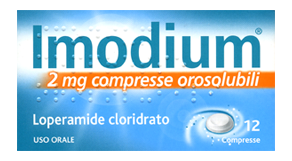
IMODIUM*12ORO DISINT.TAB 2MG
Regular price
€12,11 EUR
Sale price
€12,11 EUR
Regular price
€16,71 EUR
Unit price
per
Tax included.
SKU
023673092In stock
Vendor
KENVUE ITALIA SPADelivery time: 48/72 hours
Free Shipping: Orders over €70
This product page, including its Product Information Leaflet, has been automatically translated.
Description
IMODIUM 2 mg orodispersible tablets
Loperamide hydrochloride
What it is and what it is used for
This medicine contains loperamide hydrochloride, an active ingredient that acts on the intestine by reducing intestinal movements and the urge to evacuate.
IMODIUM is indicated for the symptomatic treatment of occasional (acute) diarrhoea.
Consult your doctor if you do not feel better or if you feel worse after 2 days of treatment.
What you need to know before taking the medicine
Do not take IMODIUM if:
• you are allergic to the active ingredient or any of the other ingredients of this medicine (listed in section 6);
• you are pregnant or breastfeeding;
• you have a high fever and blood in your stools (signs of acute dysentery);
• you suffer from an intestinal inflammation called ulcerative colitis;
• you have diarrhoea caused by the use of antibiotics (pseudomembranous colitis);
• you have an intestinal infection caused by bacteria such as Salmonella, Shigella, and Campylobacter;
• you are using medicines that reduce intestinal movements.
IMODIUM should not be given to children under 6 years of age.
Warnings and precautions
Consult your doctor or pharmacist before taking IMODIUM.
Pay particular attention:
• if you have diarrhoea, your body loses fluids and mineral salts: to restore normal levels, it may be useful to take aqueous solutions based on sugar and salts;
• treatment with IMODIUM is only symptomatic and does not serve to eliminate the cause of your disorder;
• if you have reduced liver function, consult your doctor or pharmacist before taking IMODIUM.
Stop treatment with IMODIUM immediately and consult your doctor:
• if you have AIDS and notice abdominal swelling;
• if you notice difficulty in defecation (constipation), swelling and/or abdominal pain.
Do not take this medicine for uses other than those intended (see section 1) and never take a dose higher than recommended (see section 3). Severe cardiac problems (with symptoms including a fast or irregular heartbeat) have been reported in patients who have taken an overdose of loperamide, the active ingredient in IMODIUM.
Consult your doctor if you do not feel better or if you feel worse after 2 days of treatment or if the disorder recurs.
Children from 6 to 12 years of age
IMODIUM must be used under medical supervision
Possible side effects
Like all medicines, this medicine can cause side effects, although not everyone gets them.
Stop taking IMODIUM and consult your doctor immediately if you notice:
• severe allergic reactions (anaphylactic or anaphylactoid reactions) which may manifest as skin rashes, swelling of the hands, feet, face, eyes, lips, throat, difficulty breathing or a sudden drop in blood pressure;
• abdominal swelling associated with pain, nausea, vomiting, inability to evacuate, signs of intestinal obstruction or megacolon;
• severe skin rashes with redness, exfoliation and/or blistering (e.g., Steven-Johnson Syndrome, toxic epidermal necrolysis).
Seek medical attention immediately:
Not known (frequency cannot be estimated from the available data)
• upper abdominal pain, abdominal pain spreading to the back, tenderness to touch of the abdomen, fever, rapid pulse, nausea, vomiting, which may be symptoms of inflammation of the pancreas (acute pancreatitis).
If you experience any of these symptoms, stop using the medicine and contact your doctor immediately.
Other side effects that may occur are:
- Headache, dizziness;
- Difficulty in evacuation (constipation), nausea, gas in the abdomen (flatulence);
- Drowsiness;
- Pain or discomfort in the abdomen (especially localised in the upper abdomen), dry mouth, vomiting, indigestion (dyspepsia);
- Pupil constriction (miosis);
- Skin rashes, characterised by blisters, spots on the skin (urticaria) and/or itching;
- Decreased urine output (urinary retention);
- Tongue pain (glossodynia), abdominal swelling;
- Complete cessation of movement with detachment from external reality (stupor), slowing of mental functions (reduced level of consciousness), fainting (loss of consciousness), increased muscle tone (hypertonia), muscle coordination disorders, fatigue.
Reporting of side effects
If you get any side effects, including any not listed in this leaflet, talk to your doctor or pharmacist. You can also report side effects directly via the national reporting system at: https://www.aifa.gov.it/content/segnalazionireazioni-avverse.
By reporting side effects, you can help provide more information on the safety of this medicine.
