

You will not be allowed to compare more than 4 products at a time
View compareLOPERAMIDE EG*12OROD TABS 2MG
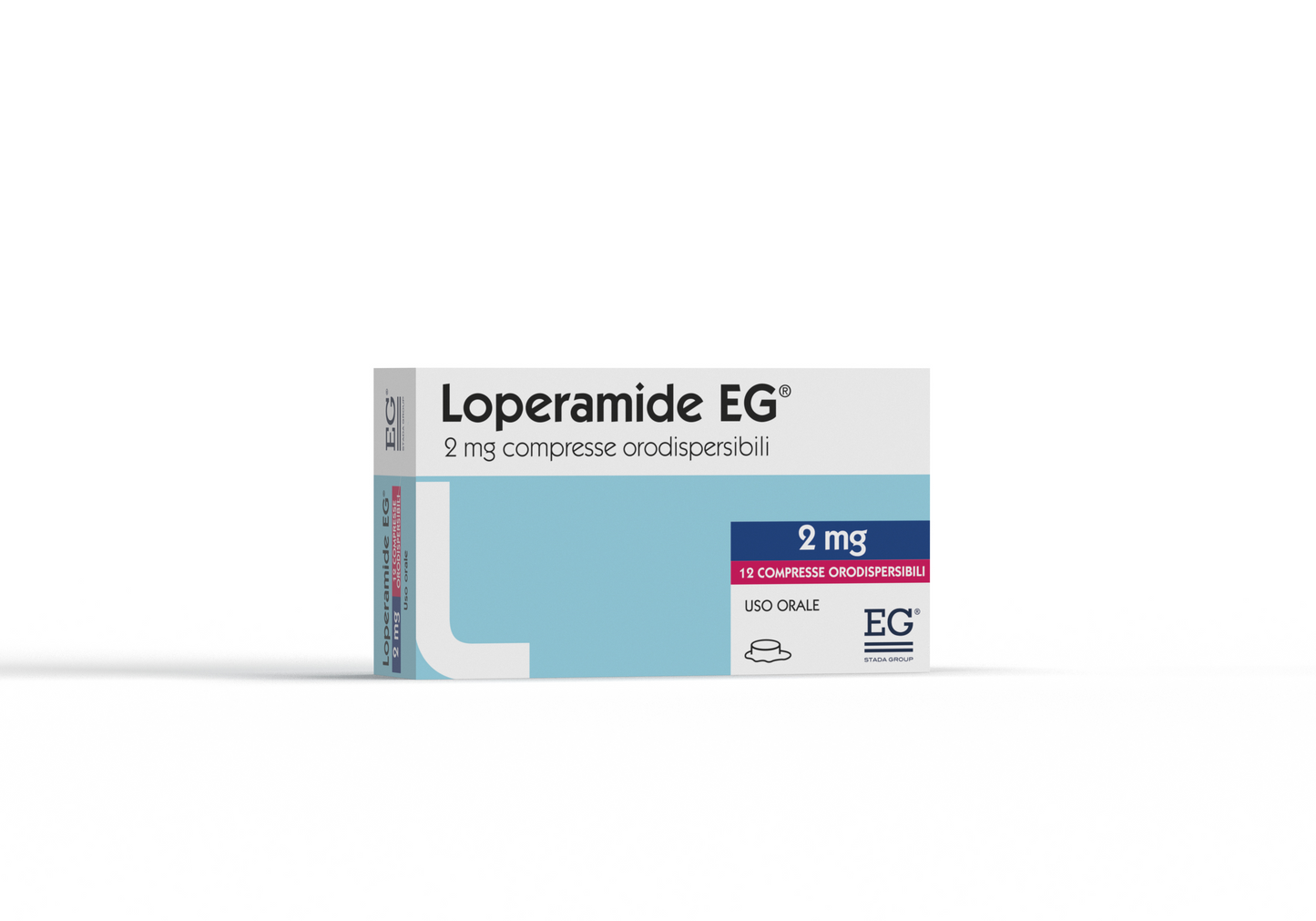
LOPERAMIDE EG*12OROD TABS 2MG
Regular price
€8,62 EUR
Sale price
€8,62 EUR
Regular price
€12,20 EUR
Unit price
per
Tax included.
SKU
046946063In stock
Vendor
EG SpADelivery time: 48/72 hours
Free Shipping: Orders over €70
This product page, including its Product Information Leaflet, has been automatically translated.
Description
LOPERAMIDE EG 2 mg orodispersible tablets
Adolescents from 12 years of age and adults
What it is and what it is used for
Loperamide EG is a medicine for the symptomatic treatment of acute diarrhoea in adolescents from 12 years of age and adults, unless a treatment that cures the cause of the diarrhoea is available.
Loperamide should not be used for more than 2 days, unless advised by a doctor or with careful monitoring.
What you need to know before taking the medicine
DO NOT take Loperamide EG if:
• you are allergic to loperamide hydrochloride or any of the other ingredients of this medicine (listed in section 6);
• your child is under 12 years of age (see also the section Children below);
• you suffer from conditions where slowing of intestinal transit should be avoided, such as abdominal distension, constipation and intestinal obstruction.
Loperamide EG should be stopped immediately in case of constipation, abdominal distension or intestinal obstruction (ileus);
• you suffer from diarrhoea associated with blood in the stools and/or fever;
• you suffer from a form of diarrhoea that occurs during or after antibiotic use;
• you suffer from chronic diarrhoeal diseases (these diseases can only be treated with loperamide hydrochloride on medical advice);
• you suffer from an acute form of ulcerative colitis (a type of inflammatory bowel disease).
Loperamide EG should only be taken on medical advice if you have liver disease or persistent liver disease, as loperamide metabolism may be delayed, leading to an increased risk of side effects in patients with severe liver disease.
Warnings and precautions
Do not take this medicine for purposes other than those given (see section 1) and never take more than the recommended amount (see section 3). Serious heart problems (symptoms of which include fast or irregular heartbeat), loss of consciousness and even death have been reported in patients who have taken too much loperamide, the active ingredient in Loperamide EG.
Talk to your doctor or pharmacist before taking Loperamide EG
• if you have AIDS and are taking Loperamide EG to treat acute diarrhoea. At the first signs of a distended (swollen) abdomen, stop treatment with Loperamide EG and contact your doctor. Isolated reports of constipation with an increased risk of severe inflammatory enlargement of the large intestine (toxic megacolon) have occurred in AIDS patients. These patients suffered from colon inflammation (colitis) caused by bacteria or viruses and were treated with loperamide hydrochloride;
• if you suffer from liver disease.
Make sure you replenish with sufficient fluids and salts (electrolytes). This is the most important measure to take when treating diarrhoea that causes increased loss of fluids and mineral salts, especially in children. Loperamide EG can be used in conjunction with oral rehydration solutions.
Loperamide EG stops diarrhoea, but does not cure its cause. Therefore, when the cause of diarrhoea can be determined, it should be treated with specific therapy. You should not use Loperamide EG as a primary treatment in cases where the cause of diarrhoea can be identified and treated. For this reason, consult your doctor.
Abuse and misuse of loperamide hydrochloride, the active ingredient in Loperamide EG, have been reported.
Take Loperamide EG only for the treatment of the indications described in section 1.
Do not take Loperamide EG for more than 2 days. Use of Loperamide EG at higher doses or for a longer duration than recommended can cause severe constipation.
If diarrhoea persists after two days of treatment with Loperamide EG, stop treatment with Loperamide EG and consult your doctor.
Children Loperamide-based medicines must not be given to children under 2 years of age.
Loperamide-based medicines can be given to children from 2 to 12 years of age only on medical prescription. The high content of loperamide in Loperamide EG makes this medicine unsuitable for use in this age group. Other formulations are available for this age group by medical prescription.
Possible side effects
Like all medicines, this medicine can cause side effects, although not everybody gets them.
The most commonly reported side effects in clinical studies were constipation, flatulence, headache, nausea and dizziness.
If any of the following (rare) side effects occur, observed in connection with treatment with loperamide hydrochloride, stop using Loperamide EG and seek immediate medical assistance:
• hypersensitivity reactions, anaphylactic reactions (including anaphylactic shock), anaphylactoid reactions such as unexplained wheezing, shortness of breath which may be accompanied by rash or hives, fainting or swelling of the face, tongue or throat;
• body stiffness, abnormal increase in muscle tension, coordination problems;
• skin rashes that can be severe and include blistering and peeling of the skin (including Stevens-Johnson syndrome, toxic epidermal necrolysis and erythema multiforme), swelling of the skin or mucous membranes due to fluid retention (angioedema);
• distended (swollen) abdomen;
• intestinal obstruction (ileus, including paralytic ileus), colon dilation (megacolon, including toxic megacolon). Signs include a feeling of bloating, vomiting, severe constipation, loss of appetite and cramps;
• loss of consciousness, reduced level of consciousness;
• difficulty urinating (urinary retention).
Not known (frequency cannot be estimated from the available data)
• upper abdominal pain, abdominal pain radiating to the back, abdominal tenderness to touch, fever, rapid pulse, nausea, vomiting, which may be symptoms of inflammation of the pancreas (acute pancreatitis).
Other side effects are:
Common (may affect up to 1 in 10 people)
• constipation, nausea, flatulence;
• dizziness, headache.
Uncommon (may affect up to 1 in 100 people)
• drowsiness;
• abdominal pain and discomfort, dry mouth;
• upper abdominal pain, vomiting;
• indigestion;
• rash.
Rare (may affect up to 1 in 1,000 people)
• pupil constriction in the eye (miosis);
• burning sensation on the tongue;
• hives, itching sensation;
• fatigue.
Immediately after taking loperamide hydrochloride in the form of orodispersible tablets, some patients reported a temporary burning or tingling sensation on the tongue.
Reporting of side effects
If you get any side effects, including any not listed in this leaflet, talk to your doctor or pharmacist. You can also report side effects directly via the national reporting system at: https://www.aifa.gov.it/content/segnalazionireazioni-avverse.
By reporting side effects you can help provide more information on the safety of this medicine.