

You will not be allowed to compare more than 4 products at a time
View compareALLEVYN SACRUM 22.5X22.1CM ADHESIVE STERILE HYDROCELLULAR SACRAL DRESSING, ABSORBENT POLYURETHANE FOAM, 10 PCS
ALLEVYN SACRUM 22.5X22.1CM ADHESIVE STERILE HYDROCELLULAR SACRAL DRESSING, ABSORBENT POLYURETHANE FOAM, 10 PCS
Regular price
€213,74 EUR
Sale price
€213,74 EUR
Regular price
€192,00 EUR
Unit price
per
Tax included.
SKU
906149911Low stock
Vendor
SMITH & NEPHEW SrlDelivery time: 48/72 hours
Free Shipping: Orders over €70
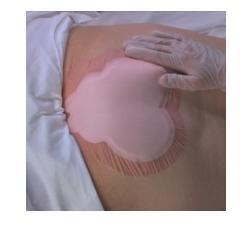
Description
Allevyn Sacrum
ADHESIVE HYDROCELLULAR DRESSING FOR THE SACRAL AREAexudating granulating wounds in the sacral area, healing by secondary intention.
It can be used together with Intrasite Gel for wounds with necrosis or slough.
Instructions for use:
prepare and cleanse the skin around the wound.
Remove the protective film and apply the dressing to the wound. Press gently and ensure that the edges adhere well to the perilesional skin.
Take care to position it at least 2 cm away from the anal sphincter and then adhere the dressing up to the sacral area.
At the beginning of treatment, check more frequently. The dressing can be left on the wound for up to 5 days depending on the level of exudate.
To remove the dressings, lift one side and carefully peel off. The dressing should be removed from the top towards the anus to avoid the risk of infection transmission.
To facilitate the removal of adhesive dressings, sterile water or saline solution can be used.
Features:
designed to anatomically fit the sacral area, allowing easier management of pressure ulcers. Clinical evidence shows that:
- it ensures faster and more cost-effective healing compared to a hydrocolloid,
- better quality of life for the patient.
It has a three-layered structure, consisting of a layer in direct contact with the wound, a soft and particularly absorbent hydrocellular central layer, and finally an impermeable outer film, which allows the creation of a true bacterial barrier.
Warnings:
do not apply in combination with oxidizing agents such as hypochlorite or hydrogen peroxide solutions, as these products may damage the hydrocellular layer.
As with other adhesive dressings, excessive sensitivity to Allevyn Sacrum, in the form of irritation and/or maceration of the skin around the wound, has been reported only rarely. Excessive sensitivity to the dressing itself has been reported only rarely. It should be noted, however, that incorrect application or too frequent changes of the dressing, especially in patients whose skin has proven to be excessively sensitive, could cause damage. In case of redness or excessive sensitization, stop treatment immediately and consult a doctor.
Code. 66000700 / 66000451