

You will not be allowed to compare more than 4 products at a time
View comparePRONTEX SYNTESI AUTOMATIC DIGITAL BLOOD PRESSURE MONITOR
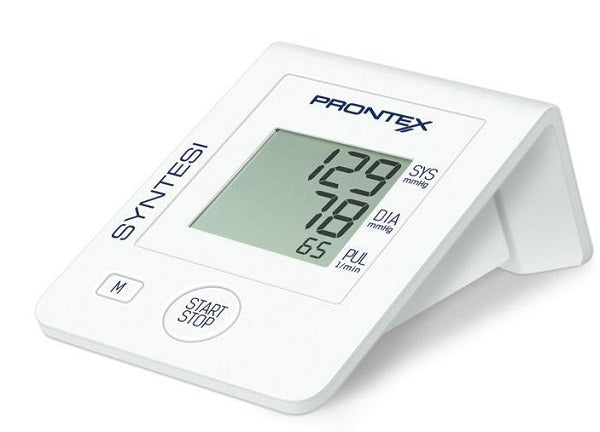
PRONTEX SYNTESI AUTOMATIC DIGITAL BLOOD PRESSURE MONITOR
Regular price
€77,49 EUR
Sale price
€77,49 EUR
Regular price
€95,00 EUR
Unit price
per
Tax included.
SKU
939901613Low stock
Vendor
SAFETY SpADelivery time: 48/72 hours
Free Shipping: Orders over €70
Description
PRONTEX
SYNTESI
Fully automatic digital blood pressure monitor
Description
This device has been developed to non-invasively measure systolic and diastolic blood pressure, and heart rate in adults. Designed for simple and comfortable home use. The device is not suitable for use on newborns. Before using the device to measure blood pressure on a child, pregnant woman, or pre-eclampsia patient, it is always recommended to consult with your doctor. The device is not intended for use during patient transport outside of a healthcare facility.
MEASUREMENT TECHNIQUE
This device measures blood pressure and heart rate using the oscillometric method. The cuff is connected to the main unit and should be wrapped around the arm. Sensors inside the cuff detect small pressure oscillations against it during the dilation and contraction of the arm arteries due to each individual heartbeat. The electronic system then measures the amplitude of each pressure wave, converts it to millimeters of mercury, and digitally displays the value on the large LCD screen.
MEASUREMENT DURING INFLATION (INFLATING Technology).
INFLATING is the recent technology that ensures direct measurement of blood pressure values only during cuff inflation, thus ensuring greater comfort due to less constriction force applied to the arm and a shorter application time. With this technology, the measurement procedure consists of three distinct phases. In the first phase, the device rapidly inflates the cuff to an ideal preset value to secure the cuff to the limb and initiate the second phase. The second phase begins when the device reduces the inflation speed of the cuff to allow for accurate heart rate detection. The third and final phase is the actual measurement of blood pressure values and begins when the heart symbol starts flashing on the screen and ends when the device automatically deflates the cuff and displays the measurement result on the screen.
WHO CLASSIFICATION OF BLOOD PRESSURE VALUES
Measured blood pressure values are classified as indicated in the table in the instruction manual (WHO guidelines). When systolic and diastolic pressures fall into different categories, the higher class applies. For specific information on your blood pressure, it is recommended to consult your doctor. You should not draw personal conclusions based solely on the indications provided by this device.
BODY MOVEMENT SYMBOL
The blood pressure value measured while the body is moving or while talking is not correct, as it is potentially influenced by these conditions. When the device detects body movement, it analyzes the pulse wave and displays the corresponding symbol indicating the possibility that the measurement result is incorrect (the symbol appears on the screen at the end of the measurement along with the detected values). In this case, it is advisable not to consider the displayed data valid and to repeat the measurement after about 10 minutes.
ARRHYTHMIA SYMBOL
Pulse rate can vary while talking or moving, or in the case of cardiac arrhythmia. When the difference between the shortest and longest interval between pulse waves exceeds 25%, the device displays the corresponding symbol indicating an arrhythmia condition.
MEMORY FUNCTION
Measured values are automatically saved in the memory channel, so that they can be reviewed later. The device's memory can store up to 60 readings. Once maximum memory capacity is reached, the device automatically deletes the oldest reading to record the newly performed one. When the clock is running, saved readings can be recalled along with the date and time of the measurement. *To save date and time, the clock must be activated even before starting the measurement. The device does not save results that have resulted in an error ([Err]).
CARE AND MAINTENANCE
It is recommended to always keep the device clean and check its cleanliness after each use. Make sure the monitor is not dirty before use. To clean the main unit, simply wipe it with a soft, dry cloth. Do not use gasoline, thinners, or other strong solvents for cleaning. The cuff can be cleaned by gently wiping its surface with a cloth dampened with a detergent suitable for synthetic fabrics and then allowing it to air dry completely. Always prevent fluids of any kind from entering the air connector of the cuff and thus into the corresponding tube. If this happens, detach the tube and connector parts and dry them completely in the air. The cuff must not be rubbed vigorously or machine washed. During storage, do not place heavy, hot, or sharp objects on top of the device and its accessories. Never bend the cuff with excessive force or wrap the cuff tube to bend it at an angle. To detach the cuff from the main unit, do not pull the cuff or the tube, but grasp the air connector and pull it out gently. Do not try to stretch or twist the cuff, and do not put it in contact with sharp objects. Do not replace parts, disassemble or modify the device to avoid malfunctions or danger to users. Discontinue use immediately and contact the retailer or manufacturer if visible damage is found on the device. If the device has been stored at a temperature below freezing point, keep it in a warm place for at least 1 hour before using it. If you intend to store the device for a long period of time, remove the batteries. Keep batteries out of reach of children. As a precaution against potential problems from poor maintenance, bumps, improper use, it is advisable to check the sphygmomanometer every 2 years. This operation can only be performed by the manufacturer or companies authorized by the manufacturer.
Code. 19875
This device has been developed to non-invasively measure systolic and diastolic blood pressure, and heart rate in adults. Designed for simple and comfortable home use. The device is not suitable for use on newborns. Before using the device to measure blood pressure on a child, pregnant woman, or pre-eclampsia patient, it is always recommended to consult with your doctor. The device is not intended for use during patient transport outside of a healthcare facility.
MEASUREMENT TECHNIQUE
This device measures blood pressure and heart rate using the oscillometric method. The cuff is connected to the main unit and should be wrapped around the arm. Sensors inside the cuff detect small pressure oscillations against it during the dilation and contraction of the arm arteries due to each individual heartbeat. The electronic system then measures the amplitude of each pressure wave, converts it to millimeters of mercury, and digitally displays the value on the large LCD screen.
MEASUREMENT DURING INFLATION (INFLATING Technology).
INFLATING is the recent technology that ensures direct measurement of blood pressure values only during cuff inflation, thus ensuring greater comfort due to less constriction force applied to the arm and a shorter application time. With this technology, the measurement procedure consists of three distinct phases. In the first phase, the device rapidly inflates the cuff to an ideal preset value to secure the cuff to the limb and initiate the second phase. The second phase begins when the device reduces the inflation speed of the cuff to allow for accurate heart rate detection. The third and final phase is the actual measurement of blood pressure values and begins when the heart symbol starts flashing on the screen and ends when the device automatically deflates the cuff and displays the measurement result on the screen.
WHO CLASSIFICATION OF BLOOD PRESSURE VALUES
Measured blood pressure values are classified as indicated in the table in the instruction manual (WHO guidelines). When systolic and diastolic pressures fall into different categories, the higher class applies. For specific information on your blood pressure, it is recommended to consult your doctor. You should not draw personal conclusions based solely on the indications provided by this device.
BODY MOVEMENT SYMBOL
The blood pressure value measured while the body is moving or while talking is not correct, as it is potentially influenced by these conditions. When the device detects body movement, it analyzes the pulse wave and displays the corresponding symbol indicating the possibility that the measurement result is incorrect (the symbol appears on the screen at the end of the measurement along with the detected values). In this case, it is advisable not to consider the displayed data valid and to repeat the measurement after about 10 minutes.
ARRHYTHMIA SYMBOL
Pulse rate can vary while talking or moving, or in the case of cardiac arrhythmia. When the difference between the shortest and longest interval between pulse waves exceeds 25%, the device displays the corresponding symbol indicating an arrhythmia condition.
MEMORY FUNCTION
Measured values are automatically saved in the memory channel, so that they can be reviewed later. The device's memory can store up to 60 readings. Once maximum memory capacity is reached, the device automatically deletes the oldest reading to record the newly performed one. When the clock is running, saved readings can be recalled along with the date and time of the measurement. *To save date and time, the clock must be activated even before starting the measurement. The device does not save results that have resulted in an error ([Err]).
CARE AND MAINTENANCE
It is recommended to always keep the device clean and check its cleanliness after each use. Make sure the monitor is not dirty before use. To clean the main unit, simply wipe it with a soft, dry cloth. Do not use gasoline, thinners, or other strong solvents for cleaning. The cuff can be cleaned by gently wiping its surface with a cloth dampened with a detergent suitable for synthetic fabrics and then allowing it to air dry completely. Always prevent fluids of any kind from entering the air connector of the cuff and thus into the corresponding tube. If this happens, detach the tube and connector parts and dry them completely in the air. The cuff must not be rubbed vigorously or machine washed. During storage, do not place heavy, hot, or sharp objects on top of the device and its accessories. Never bend the cuff with excessive force or wrap the cuff tube to bend it at an angle. To detach the cuff from the main unit, do not pull the cuff or the tube, but grasp the air connector and pull it out gently. Do not try to stretch or twist the cuff, and do not put it in contact with sharp objects. Do not replace parts, disassemble or modify the device to avoid malfunctions or danger to users. Discontinue use immediately and contact the retailer or manufacturer if visible damage is found on the device. If the device has been stored at a temperature below freezing point, keep it in a warm place for at least 1 hour before using it. If you intend to store the device for a long period of time, remove the batteries. Keep batteries out of reach of children. As a precaution against potential problems from poor maintenance, bumps, improper use, it is advisable to check the sphygmomanometer every 2 years. This operation can only be performed by the manufacturer or companies authorized by the manufacturer.
Code. 19875