

You will not be allowed to compare more than 4 products at a time
View compareMUCICLAR*OS GRAN 30SACH 30MG
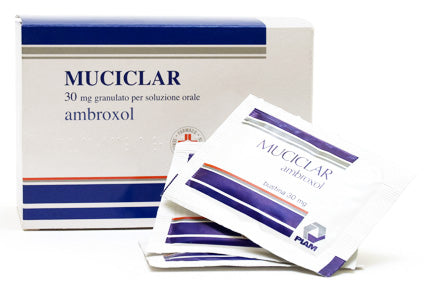
MUCICLAR*OS GRAN 30SACH 30MG
Regular price
€9,91 EUR
Sale price
€9,91 EUR
Regular price
€12,50 EUR
Unit price
per
Tax included.
SKU
025009085In stock
Vendor
PIAM FARMACEUTICI SpADelivery time: 48/72 hours
Free Shipping: Orders over €70
Description
MUCICLAR 15mg/5ml syrup
MUCICLAR 75 mg prolonged-release capsules
MUCICLAR 30 mg granules for oral solution
Ambroxol hydrochloride
Equivalent medicine
What it is and what it is used for
This medicine contains the active ingredient ambroxol hydrochloride, belonging to a group of medicines called mucolytics, used to facilitate the elimination of mucus from the respiratory tract.
MUCICLAR is indicated for the treatment of secretions in acute and chronic bronchial and lung diseases (in the presence of cough and phlegm).
Consult your doctor if you do not feel better or if you feel worse.
What you need to know before taking the medicine
Do not take MUCICLAR
- if you are allergic to ambroxol hydrochloride or any of the other ingredients of this medicine (listed in section 6);
- if you suffer from severe liver or kidney problems.
MUCICLAR should not be given to children under 2 years of age.
Warnings and precautions
Talk to your doctor or pharmacist before taking MUCICLAR.
Take this medicine with caution and inform your doctor:
- if you suffer from a stomach or intestinal problem called peptic ulcer;
- if you suffer from kidney problems (kidney failure).
Cases of severe skin reactions associated with ambroxol administration have been reported. If you develop a skin rash (including lesions of mucous membranes such as mouth, throat, nose, eyes, genitals), stop taking MUCICLAR and contact your doctor immediately.
Especially in the initial phase of such diseases, you may experience flu-like symptoms, such as fever, pain, runny nose (rhinitis), cough, and sore throat.
Children
MUCICLAR 15 mg/5 ml syrup, MUCICLAR 75 mg prolonged-release capsules and MUCICLAR 30 mg granules for oral solution should not be administered to children under 2 years of age, as they can induce bronchial obstruction and impede normal breathing due to the limited ability of children to clear secretions.
Possible side effects
Like all medicines, this medicine can cause side effects, although not everybody gets them.
The following side effects may occur:
Common (may affect up to 1 in 10 people):
- changes in taste sensation (dysgeusia);
- loss of sensation (hypoesthesia) of the oral cavity and pharynx;
- nausea.
Uncommon (may affect up to 1 in 100 people):
- vomiting, diarrhoea, digestive difficulties (dyspepsia) and abdominal pain;
- dry mouth.
Rare (may affect up to 1 in 1,000 people):
- headache;
- increased mucus production, runny nose (rhinorrhea);
- heartburn and oesophageal burning (pyrosis);
- constipation;
- skin irritation (rash, urticaria, contact dermatitis);
- difficulty urinating (dysuria);
- fatigue;
- hypersensitivity reactions.
Not known (frequency cannot be estimated from the available data):
- anaphylactic reactions, including anaphylactic shock, angioedema (rapidly developing swelling of the skin, subcutaneous tissues, mucosa and submucosal tissues), itching and other hypersensitivity reactions;
- severe cutaneous adverse reactions (including erythema multiforme, Stevens-Johnson syndrome/toxic epidermal necrolysis and acute generalised exanthematous pustulosis);
- bronchial occlusion (bronchial obstruction);
- dry throat.
Reporting of side effects
If you get any side effects, including any not listed in this leaflet, talk to your doctor or pharmacist. You can also report side effects directly via the national reporting system at: https://www.aifa.gov.it/content/segnalazionireazioni-avverse.
By reporting side effects you can help provide more information on the safety of this medicine.