

You will not be allowed to compare more than 4 products at a time
View compareMUSCADVANCE*20FC TAB 25MG
MUSCADVANCE*20FC TAB 25MG
Regular price
€10,93 EUR
Sale price
€10,93 EUR
Regular price
€12,50 EUR
Unit price
per
Tax included.
SKU
041735022In stock
Vendor
DOC GENERICI SrlDelivery time: 48/72 hours
Free Shipping: Orders over €70
Description
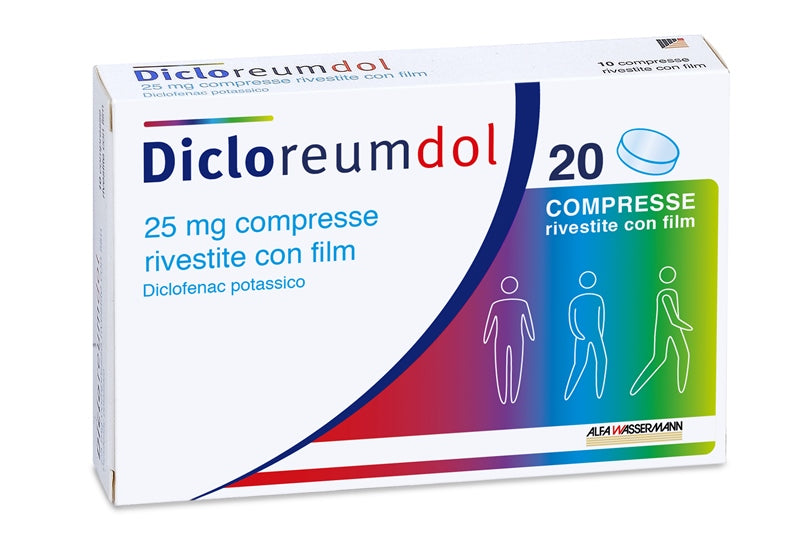
MuscAdvance 25 mg film-coated tablets
Diclofenac potassium
What it is and what it is used for
MuscAdvance relieves pain and reduces inflammation. MuscAdvance belongs to a group of medicines called NSAIDs (non-steroidal anti-inflammatory drugs/anti-rheumatic medicines).
MuscAdvance is used for the treatment of mild to moderate pain, such as headaches, toothaches, muscle and joint pain, back pain and menstrual pain.
Consult your doctor if you do not feel better or if you feel worse after 3 days of treatment.
What you need to know before taking the medicine
Do not take MuscAdvance
- if you are allergic to diclofenac or any of the other ingredients of this medicine (listed in section 6);
- if you have previously had an allergic reaction such as asthma, chest pain, sneezing or rashes when taking painkillers containing acetylsalicylic acid or other pain/inflammation medicines belonging to the NSAID group;
- if you have severe liver disease;
- if you have an increased tendency to bleed;
- if you have porphyria (a metabolic disease);
- if you have or have had a stomach or duodenal ulcer;
- if you have or have had a stomach or duodenal ulcer in connection with treatment with diclofenac or similar preparations;
- if you have severe kidney disease;
- during the last 3 months of pregnancy and during breastfeeding;
- if you suffer from established heart disease and/or cerebrovascular disease, e.g., you have had a heart attack, stroke, mini-stroke (TIA) or an obstruction of the blood vessels leading to the heart or brain or an operation to eliminate or avoid such obstructions;
- if you suffer or have suffered from blood circulation problems (peripheral artery disease);
- if you are under 14 years of age.
Warnings and precautions
Side effects can be minimised by using the lowest effective dose for the shortest necessary duration.
Ask your doctor or pharmacist before taking MuscAdvance if you have or have had any of the following diseases:
• stomach and intestinal (duodenal) ulcer;
• inflammation of the intestine (ulcerative colitis and Crohn's disease);
• liver disease;
• heart or kidney disease;
• inflammation of the nasal mucous membranes, asthma, chronic obstructive pulmonary disease, chronic upper airway infection or other allergic reactions such as urticaria or angioedema (local swelling that appears periodically);
• systemic lupus erythematosus (connective tissue disease);
• blood disorders or diseases that cause an increased tendency to bleed.
Before taking diclofenac, make sure your doctor is aware:
• If you smoke;
• If you have diabetes;
• If you suffer from angina, blood clots, high blood pressure, increased cholesterol or increased triglycerides;
• If you have recently undergone or are about to undergo surgery on your stomach or intestinal tract before taking MuscAdvance, as MuscAdvance can sometimes worsen wound healing in the intestine after surgery.
It is advisable to avoid the use of this medicine during chickenpox.
Elderly people should be informed of the increased risk of age-related side effects.
NSAIDs, including MuscAdvance, can in rare cases cause gastric ulcers which can occur at any time during treatment with or without warning. If you experience stomach or intestinal pain, especially if you are elderly, contact your doctor.
Like other anti-inflammatory agents, MuscAdvance can mask the signs or symptoms of infection.
MuscAdvance can, in rare cases, affect blood cells in a way that weakens your immune system. If you develop an infection with symptoms such as fever and severe debilitation, or fever with a local infection such as a sore throat/mouth or urinary tract problems, you should immediately contact your doctor for blood tests to rule out a white blood cell deficiency (agranulocytosis). It is important that you inform your doctor about the medicine you are taking.
Stop treatment with MuscAdvance and contact your doctor immediately if you develop swelling of the face, tongue and/or throat, and/or difficulty breathing or urticaria together with difficulty breathing (angioedema).
Severe skin reactions have been reported very rarely in association with the use of NSAIDs. Stop using MuscAdvance if you develop any skin rash or mucosal damage and contact a doctor.
Taking MuscAdvance (as with all medicines that inhibit cyclooxygenase and prostaglandin synthesis) can make it more difficult to conceive. Ask your doctor for advice if you are planning a pregnancy or if you are having problems getting pregnant. The effect is temporary and ceases when you stop taking this type of medicine.
Medicines like MuscAdvance may be associated with a small increased risk of heart attacks (myocardial infarction) or strokes. Any risk is more likely with high doses and prolonged treatment. Do not exceed the recommended dose or duration of treatment.
Possible side effects
Like all medicines, this medicine can cause side effects, although not everybody gets them.
Some side effects can be serious.
Stop taking MuscAdvance and tell your doctor immediately if you notice:
- mild abdominal cramps and tenderness occurring shortly after starting treatment with MuscAdvance, followed by rectal bleeding or bloody diarrhoea usually within 24 hours of the onset of abdominal pain (frequency not known, cannot be estimated from the available data);
- chest pain, which can be a sign of a potentially severe allergic reaction called Kounis syndrome.
You may develop gastrointestinal problems at the beginning of treatment. These side effects usually disappear within a few days.
Common side effects (occur in more than 1 in 100 patients): abdominal pain, nausea, vomiting, diarrhoea, digestive problems, decreased appetite, flatulence, headache, dizziness, rash and increased liver values.
Uncommon side effects (occur in less than 1 in 100 patients): contraction of the muscles lining the airways, making breathing difficult.
Rare side effects (occur in less than 1 in 1,000 patients): fatigue, body swelling due to fluid retention, hypersensitivity reactions (urticaria, allergic reaction with collapse of blood pressure), stomach ulcer, stomach bleeding (vomiting mixed with blood, blood in stools, bloody diarrhoea), problems with the large intestine (constipation, inflammation of the intestine), deterioration of Crohn's disease and ulcerative colitis, inflammation of the tongue, mouth or oesophagus, inflammation of the pancreas, impotence (in this case the association is uncertain), asthma (including difficulty breathing), liver dysfunction (inflammation of the liver, jaundice).
Very rare side effects (occur in less than 1 in 10,000 patients): effects on vision (blurred vision, double vision) and hearing (reduced hearing, tinnitus), difficulty sleeping, nightmares, irritability, anxiety, depression, memory disturbances, confusion, disturbed sense of reality, altered sense of taste, effects on the heart and blood vessels (such as chest pain, tachycardia, high blood pressure, heart failure, heart attack, inflammation of blood vessels), effects on blood composition (reduced number of platelets which can lead to small haemorrhages of the skin and mucous membranes, reduced number of white blood cells (agranulocytosis), which can weaken the immune response, rupture of red blood cells (anaemia)), eczema, itching, skin redness, severe allergic reactions including Stevens-Johnson syndrome (inflammation of the mucous membranes and skin with pustules and fever) and Lyell's syndrome (similar to Stevens-Johnson syndrome but with the addition of sudden desquamation), hair loss, light hypersensitivity, effects on the kidneys (e.g. reduced or blocked urine production or blood in the urine), inflammation of the membranes of the brain or lungs without bacterial cause, stroke, angioedema (e.g. swelling of the face, rash, difficulty breathing).
Exceptionally, severe skin infections in cases of chickenpox.
Medicines like MuscAdvance may be associated with a small increased risk of heart attack (myocardial infarction) or stroke.
Reporting of side effects
If you get any side effects, including those not listed in this leaflet, talk to your doctor or pharmacist. You can also report side effects directly via the national reporting system at: https://www.aifa.gov.it/content/segnalazionireazioni-avverse.
By reporting side effects, you can help provide more information on the safety of this medicine.
