

You will not be allowed to compare more than 4 products at a time
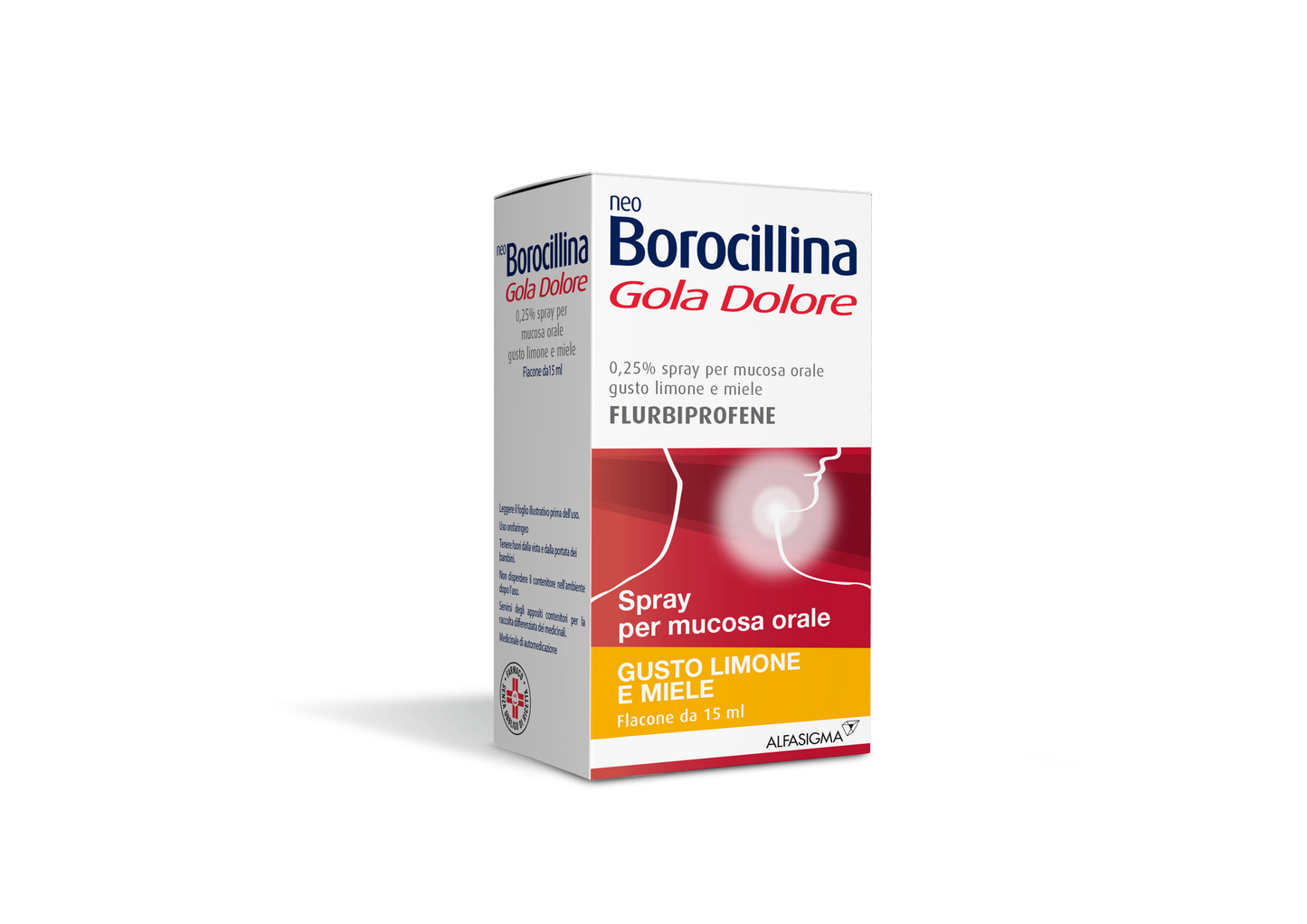
View compareNEOBORO GOLADO*SPRAY LEMON&HONEY
NEOBORO GOLADO*SPRAY LEMON&HONEY
Regular price
€6,79 EUR
Sale price
€6,79 EUR
Regular price
€11,50 EUR
Unit price
per
Tax included.
SKU
035760089Low stock
Vendor
ALFASIGMA SpADelivery time: 48/72 hours
Free Shipping: Orders over €70
Description
NEO BOROCILLINA GOLA DOLORE 0.25% mint-flavored oral mucosa spray NEO BOROCILLINA GOLA DOLORE 0.25% orange and honey flavored oral mucosa spray NEO BOROCILLINA GOLA DOLORE 0.25% lemon and honey flavored oral mucosa spray
flurbiprofen
What it is and what it is used for
Neo Borocillina Gola Dolore contains flurbiprofen. Flurbiprofen belongs to a group of medicines called Non-Steroidal Anti-Inflammatory Drugs (NSAIDs). These medicines relieve symptoms by modifying the body's response to pain and fever.
Neo Borocillina Gola Dolore oral mucosa spray is used to relieve symptoms of irritation and inflammation, including those associated with pain, of the oropharyngeal cavity (e.g., sore throat, gingivitis and stomatitis), also as a consequence of conservative or extractive dental therapy (dental treatment and extraction).
What you need to know before taking the medicine
DO NOT use Neo Borocillina Gola Dolore oral mucosa spray
• if you are allergic to flurbiprofen or any of the other ingredients of this medicine (listed in paragraph 6)
• if you are allergic to acetylsalicylic acid (e.g., aspirin) or other Non-Steroidal Anti-Inflammatory Drugs (NSAIDs)
• if you have a high sensitivity of the respiratory system (asthma, bronchospasm)
• if you are allergic and suffer from itching (urticaria)
• if you suffer from gastric mucosal lesions (peptic ulcer) or if you have suffered from this disease in the past
• during the third trimester of pregnancy and if you are breastfeeding (see section Pregnancy and breastfeeding)
Warnings and precautions
Swallowing the solution, at the recommended doses, does not cause any harm to the patient, as these doses are widely lower than those commonly used in treatments with systemic flurbiprofen.
It is advisable not to use Neo Borocillina Gola Dolore oral mucosa spray with other medicines belonging to the category of non-steroidal anti-inflammatory drugs (NSAIDs).
The use, especially if prolonged, of products for local use may give rise to allergic phenomena. In this case, stop the treatment and consult your doctor.
Talk to your doctor or pharmacist if:
- you have an infection - refer to the Infections paragraph below.
Infections
Non-steroidal anti-inflammatory drugs (NSAIDs) can mask signs of infection such as fever and pain. This can delay appropriate treatment of the infection, which, in turn, can lead to an increased risk of complications.
If you take this medicine during an infection and the symptoms of the infection persist or worsen, contact your doctor or pharmacist immediately.
Use Neo Borocillina Gola Dolore oral mucosa spray with caution:
• if you suffer from reduced kidney function (renal insufficiency) or reduced heart function (heart failure) or reduced liver function (hepatic insufficiency)
Remember:
• that this medicine should not be used for long-term treatments
• to consult your doctor after a short period of treatment if you do not notice improvements
Possible side effects
Like all medicines, this medicine can cause side effects, although not everybody gets them.
The use of Neo Borocillina Gola Dolore for a prolonged period of time can cause allergic reactions or local irritation. In this case, stop the treatment and consult your doctor for a more appropriate therapy.
Blood problems
• Altered values of some blood tests (thrombocytopenia, aplastic anemia, agranulocytosis)
Immune system problems
• Allergic reactions, even severe (anaphylaxis, swelling of the face, lips and/or tongue)
Nervous system problems
• Dizziness
• Brain damage (stroke)
• Visual disturbances
• Inflammation of the optic nerve (optic neuritis)
• Headache (migraine)
• Sensory disturbances of the limbs and other parts of the body (paresthesia)
• Depression
• Confusion
• Hallucination
• Vertigo
• Feeling of discomfort
• Fatigue and drowsiness
Ear problems
• Ringing in the ears (tinnitus)
Respiratory problems
• Narrowing of the airways (bronchospasm)
• Inflammation of the airways (asthma)
• Labored breathing (dyspnea)
Gastrointestinal problems
More commonly observed:
• Nausea
• Vomiting
• Diarrhea
• Gas production (flatulence)
• Lack of bowel movements (constipation)
• Digestive difficulties (dyspepsia)
• Abdominal pain or stomachache (abdominal pain)
• Presence of blood in stools (black stools)
• Presence of blood in vomit (hematemesis)
• Presence of mouth ulcers (ulcerative stomatitis)
• Internal bleeding of the digestive system (gastrointestinal hemorrhage)
• Worsening of inflammatory bowel diseases (colitis, Crohn's disease)
Less commonly observed:
• Inflammation of the stomach (gastritis)
• Internal stomach lesions (peptic ulcer)
• Perforation and bleeding (from ulcer)
Skin problems
• Rashes
• Itching
• Urticaria
• Dark red spots of varying size (purpura)
• Very rarely severe skin diseases such as Stevens-Johnson syndrome (skin rash and blisters, mouth and eye ulcers), Lyell's syndrome (peeling, painful, red skin) and erythema multiforme (skin lesions)
Kidney and urinary tract problems
• Kidney problems in various forms, including kidney inflammation (interstitial nephritis)
• Alteration of kidney function (nephrotic syndrome)
As with other NSAIDs, rare cases of reduced kidney function (renal insufficiency) have been reported
Reporting of side effects
If you get any side effects, including any not listed in this leaflet, talk to your doctor or pharmacist. You can also report side effects directly via the national reporting system at: https://www.aifa.gov.it/content/segnalazionireazioni-avverse.
By reporting side effects, you can help provide more information on the safety of this medicine.
