

You will not be allowed to compare more than 4 products at a time
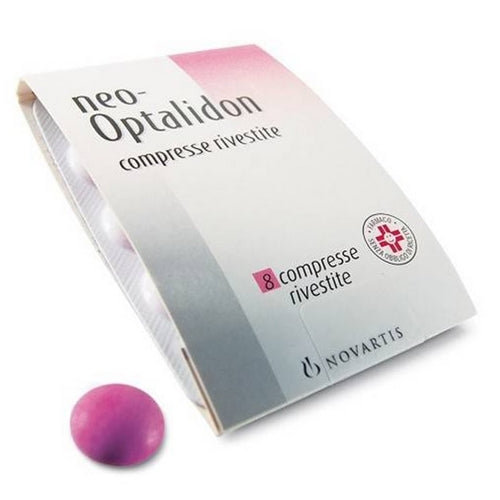
View compareNEOOPTALIDON*8FC TAB
NEOOPTALIDON*8FC TAB
Regular price
€4,96 EUR
Sale price
€4,96 EUR
Regular price
€7,49 EUR
Unit price
per
Tax included.
SKU
025319043Low stock
Vendor
PERRIGO ITALIA SrlDelivery time: 48/72 hours
Free Shipping: Orders over €70
Description
NEO-OPTALIDON 200 mg + 125 mg + 25 mg film-coated tablets
Paracetamol + Propyphenazone + Caffeine
What it is and what it is used for
Neo-Optalidon is a medicine containing three active ingredients, paracetamol and propyphenazone, which reduce fever and pain, and caffeine, which is a classic component of this type of combination.
This medicine is used for the symptomatic treatment of pain (e.g. headache, toothache, nerve pain, menstrual pain) and fever.
Consult your doctor if you do not feel better or if you feel worse after 3 days of treatment.
What you need to know before taking the medicine
Do not take Neo-Optalidon if:
• you are allergic to paracetamol, propyphenazone, caffeine or any of the other ingredients of this medicine (listed in section 6);
• you are allergic to other chemically similar substances, e.g. other anti-inflammatory drugs belonging to the same class (e.g. para-aminophenols, pyrazolones);
• you are allergic to peanuts or soy;
• you suffer from certain blood disorders such as:
- granulocytopenia (decrease in the number of certain blood cells);
- intermittent porphyria (diseases with alterations of certain enzymes);
- glucose-6-phosphate dehydrogenase deficiency (a disease known as favism or broad bean disease, which causes a decrease in red blood cells);
- severe hemolytic anemia (a disease that destroys red blood cells);
• you suffer from hepatocellular insufficiency (insufficient liver cell function) or kidney failure;
• you are pregnant or breastfeeding (see Pregnancy and breastfeeding).
Neo-Optalidon should not be administered to children under 12 years of age because it contains caffeine.
Warnings and precautions
Be CAREFUL not to use Neo-Optalidon in high doses or for a long time, or together with other medicines containing paracetamol, as adverse reactions, including serious ones, may occur, especially affecting the liver, kidneys and blood (see Other medicines and Neo-Optalidon and section 4. Possible side effects).
Consult your doctor or pharmacist before taking Neo-Optalidon, especially if:
• you have blood disorders or liver or kidney problems;
• you have asthma or nasal inflammation that has lasted for more than 12 weeks (chronic rhinitis);
• you have chronic urticaria (a skin rash characterised by the presence of itchy swellings (wheals) that lasts for 6-12 weeks);
• you are taking other anti-inflammatory drugs (see Other medicines and Neo-Optalidon); in these cases, the use of Neo-Optalidon is not recommended.
Stop treatment with Neo-Optalidon and consult your doctor:
• if fever appears, as treatment with Neo-Optalidon may not be suitable for your condition;
• if you have chest pain (angina), or notice skin or mucous membrane changes, or any other sign of an allergic reaction (see section 4. Possible side effects).
This medicine can affect the results of some laboratory tests, such as tests for measuring uric acid (uricemia) and blood glucose (glycemia).
Children
Neo-Optalidon should not be administered to children under 12 years of age because it contains caffeine.
Possible side effects
Like all medicines, this medicine can cause side effects, although not everyone experiences them.
Stop taking Neo-Optalidon and contact your doctor if you experience any of the following:
• skin rashes, redness, itching with skin spots (urticaria), swelling of the face, eyes, lips, difficulty breathing (laryngeal edema or asthma), severe allergic reaction (anaphylactic shock);
• severe skin rashes with redness and/or blistering (e.g. erythema multiforme, Stevens-Johnson Syndrome, toxic epidermal necrolysis).
Inform your doctor if you experience the following side effects:
• changes in blood cells: thrombocytopenia (decrease in platelets), leucopenia (decrease in white blood cells), agranulocytosis (significant reduction in granulocytes), anemia (decrease in red blood cells);
• liver inflammation (hepatitis) and alterations in its function;
• kidney inflammation (interstitial nephritis), and alterations in its function (kidney failure), blood in the urine (hematuria), absence of diuresis (anuria);
• stomach or intestinal disorders;
• dizziness.
Reporting of side effects
If you get any side effects, including any not listed in this leaflet, tell your doctor or pharmacist. You can also report side effects directly via the national reporting system at: https://www.aifa.gov.it/content/segnalazionireazioni-avverse.
By reporting side effects, you can help provide more information on the safety of this medicine.