

You will not be allowed to compare more than 4 products at a time
View compareNICORETTEICY*40LOZ 2MG
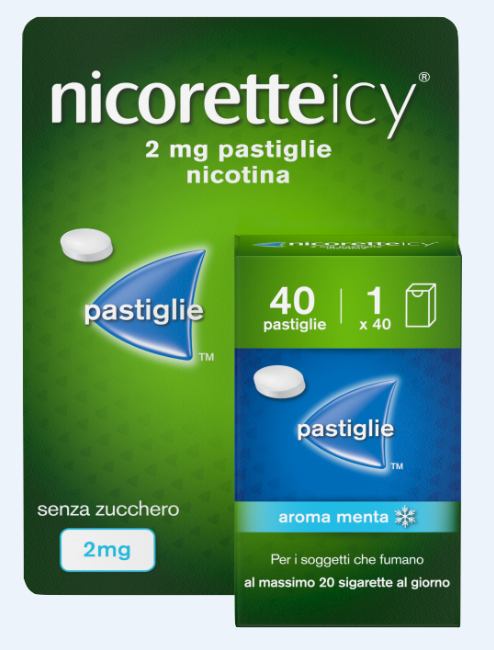
NICORETTEICY*40LOZ 2MG
Regular price
€19,73 EUR
Sale price
€19,73 EUR
Regular price
€23,99 EUR
Unit price
per
Tax included.
SKU
040615078In stock
Vendor
KENVUE ITALIA SPADelivery time: 48/72 hours
Free Shipping: Orders over €70
Description
Nicoretteicy 2 mg, lozenges
Nicotine
What it is and what it is used for
This medicinal product is used to relieve withdrawal symptoms and reduce nicotine cravings experienced when trying to quit smoking. The treatment is intended for adult smokers aged 18 and over.
Nicoretteicy 2 mg lozenges are suitable for smokers with a low nicotine dependence, such as those who smoke their first cigarette of the day more than 30 minutes after waking up or who smoke 20 cigarettes or less per day.
This medicinal product relieves nicotine withdrawal symptoms, including cravings, when quitting smoking. When the body suddenly stops receiving nicotine from tobacco, you begin to experience a series of unpleasant sensations called withdrawal symptoms, such as irritability, anger or depression, anxiety, restlessness, poor concentration, increased appetite or weight gain, urge to smoke (craving), nocturnal awakenings or sleep disturbances. The nicotine in Nicoretteicy helps to prevent or reduce these unpleasant sensations and to control the urge to smoke.
To improve the chances of success in quitting smoking, it is advisable to seek advice and help from qualified professionals.
What you need to know before taking this medicine
Do not use Nicoretteicy lozenges:
• if you are allergic to nicotine or any of the other ingredients of this medicinal product (listed in section 6);
• if you are under 18 years of age;
• if you are not a smoker.
Warnings and precautions
Consult your doctor before taking this medicine if you have any of the following conditions. It may still be possible to take Nicoretteicy lozenges, but you must first consult your doctor if you have:
• recently had a heart attack or stroke;
• chest pain (unstable angina) or angina at rest;
• a heart condition affecting heart rate or rhythm (arrhythmia);
• hypertension that is not controlled by medication;
• impaired heart function or circulation problems;
• a history of allergic reactions including swelling of the lips, face and throat (angioedema) or itchy skin rashes (urticaria). In some cases, nicotine replacement therapy may trigger this type of reaction;
• moderate to severe liver impairment;
• severe kidney disease;
• diabetes;
• an overactive thyroid gland;
• adrenal gland tumour (phaeochromocytoma);
• stomach or duodenal ulcer;
• oesophagitis;
• history of epilepsy or seizures.
The lozenges may pose a choking hazard. Use with caution if you have difficulty swallowing solids or liquids or if you cough frequently during or after swallowing.
Children and adolescents
Do not give this medicine to children and adolescents.
Possible side effects
Like all medicines, this medicine can cause side effects, although not everybody gets them.
Effects related to quitting smoking (nicotine withdrawal)
Some of the side effects you may experience when you quit smoking may be withdrawal symptoms due to a decrease in nicotine intake.
These effects include:
• irritability, aggression, impatience or frustration
• feeling anxious, restless or difficulty concentrating
• nocturnal awakenings or sleep disturbances
• increased appetite or body weight
• feeling of depressed mood
• urge to smoke (craving)
• decreased heart rate
• gum bleeding or mouth ulcers
• dizziness or light-headedness
• cough, sore throat, blocked or runny nose
• constipation
If you experience any severe side effect, stop taking Nicoretteicy lozenges and contact a doctor immediately, as it may be a severe allergic reaction (frequency is very rare: may affect up to 1 in 10,000 people):
• urticaria (a skin condition characterized by itching or red spots)
• swelling of the face, tongue or throat
• difficulty breathing
• difficulty swallowing
Most side effects occur during the initial phase of taking the medicine. In the first few days of treatment, mouth and throat irritation may occur, however most people adapt to these effects with prolonged use.
Other side effects that may occur:
Very common side effects (may affect more than 1 in 10 people)
• cough
• headache
• hiccups
• nausea (feeling sick)
• throat, mouth or tongue irritation
Common side effects (may affect up to 1 in 10 people)
• local effects such as burning sensation, inflammation of the mouth, altered taste
• dry mouth or increased salivation
• feeling of indigestion
• abdominal pain or discomfort
• vomiting, flatulence, diarrhoea
• heartburn
• fatigue
• dizziness
• hypersensitivity (allergy)
• irritability and feeling anxious
Uncommon side effects (may affect up to 1 in 100 people)
• feeling of blocked nose (nasal congestion), sneezing
• wheezing (bronchospasm) or feeling that breathing is more difficult than usual (dyspnoea), throat constriction
• skin redness (flush), itching, increased sweating
• oral effects such as itching in the mouth, inflammation of the tongue, mouth ulcers, exfoliation of the mouth mucosa, changes in voice sound, pain in the mouth and throat, belching
• palpitations (unusual awareness of heart beat) or fast heart beat, hypertension
• rash and/or tingling (pruritus, urticaria) or skin redness
• depression, feeling nervous, abnormal dreams
• chest pain and discomfort
• weakness, feeling unwell
Rare side effects (may affect up to 1 in 1000 people)
• difficulty swallowing, decreased sensitivity of the mouth
• fast and irregular heartbeat, which can be treated with specific medicines
• retching
Side effects of unknown frequency (frequency cannot be estimated from the available clinical data)
• blurred vision, increased tear production (lacrimation)
• dry throat, stomach upset, lip pain
• skin redness
• seizures
Reporting of side effects
If you get any side effects, including any not listed in this leaflet, tell your doctor or pharmacist. You can also report side effects directly via the national reporting system at: https://www.aifa.gov.it/content/segnalazionireazioni-avverse.
By reporting side effects you can help provide more information on the safety of this medicine.