

You will not be allowed to compare more than 4 products at a time
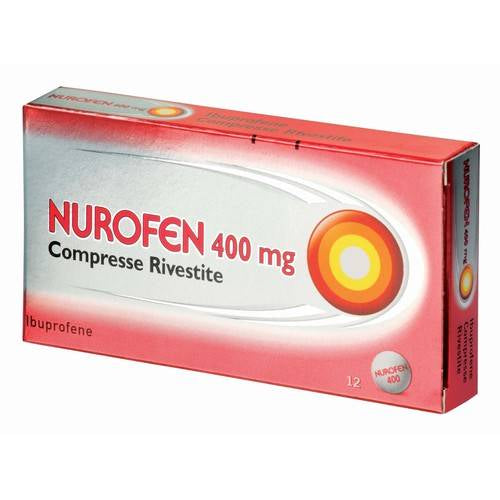
View compareNUROFEN*12COATED TABS 400MG
NUROFEN*12COATED TABS 400MG
Regular price
€6,50 EUR
Sale price
€6,50 EUR
Regular price
€11,30 EUR
Unit price
per
Tax included.
SKU
038958029In stock
Vendor
FARMA 1000 SrlDelivery time: 48/72 hours
Free Shipping: Orders over €70
Description
NUROFEN 200 mg film-coated tablets
NUROFEN 400 mg film-coated tablets
Ibuprofen – bones and joints, menstrual pain.
Nurofen is also indicated as an adjunct for the symptomatic treatment of feverish and flu-like conditions
What it is and what it is used for
Nurofen contains ibuprofen, which belongs to a group of medicines called non-steroidal anti-inflammatory drugs (NSAIDs) whose action reduces pain and swelling caused by inflammation and fever.
Nurofen is indicated for adults and adolescents over 12 years of age for the treatment of various types of pain: headaches, toothaches, neuralgia, muscle, bone and joint pain, menstrual pain.
Nurofen is also indicated as an adjunct for the symptomatic treatment of feverish and flu-like conditions
What you need to know before taking the medicine
Do not take Nurofen if:
• you are allergic (hypersensitive) to ibuprofen or any of the other ingredients of this medicine (listed in paragraph 6);
• you have previously experienced allergic reactions such as breathing difficulties (bronchospasm, asthma), rhinitis (runny nose), swelling of the face, lips and throat (angioedema) or urticaria after taking ibuprofen, acetylsalicylic acid or other non-steroidal anti-inflammatory drugs (NSAIDs);
• you suffer from severe kidney or liver disease (renal or hepatic insufficiency);
• you suffer from severe heart disease (severe heart failure);
• you have suffered from stomach bleeding or perforation due to previous NSAID treatments;
• you suffer or have suffered from gastric/duodenal ulcers (peptic ulcers) or active or recurrent bleeding (at least two distinct episodes of proven ulceration or bleeding);
• you are in the last trimester of pregnancy;
• you need to undergo or have undergone heart surgery.
Do not administer Nurofen to children under 12 years of age.
Warnings and precautions
Talk to your doctor or pharmacist before taking Nurofen if:
• you are taking other medicines used to treat pain, reduce fever and/or treat inflammation (non-steroidal anti-inflammatory drugs, NSAIDs including COX-2 inhibitors) (see paragraph “Other medicines and Nurofen”);
• you are elderly and/or have suffered from stomach and intestinal disorders (history of ulcer), especially if complicated by bleeding or perforation, as an increase in gastrointestinal bleeding and perforations may occur. In these cases, your doctor will advise you to start treatment with the lowest available dose and possibly the concomitant use of medicines that protect the stomach (misoprostol or proton pump inhibitors). This should also be considered if you are taking low doses of aspirin or other medicines that may increase the risk of stomach and intestinal diseases (see paragraph “Other medicines and Nurofen”).
During treatment with all NSAIDs, at any time, with or without warning symptoms or a previous history of serious gastrointestinal events, bleeding, ulceration and perforation of the stomach or intestine may occur, which can be fatal. Therefore, inform your doctor of any unusual gastrointestinal symptoms (especially gastrointestinal bleeding) particularly in the initial stages of treatment. If gastrointestinal bleeding or ulceration occurs, discontinue Nurofen and contact your doctor;
• you suffer or have suffered from an inflammatory bowel disease (ulcerative colitis, Crohn's disease);
• you are taking medicines that could increase the risk of ulceration or bleeding, such as medicines used to treat inflammation and certain immune system diseases (oral corticosteroids), anticoagulants such as warfarin, medicines that may have an antiplatelet effect such as aspirin, medicines to treat depression (selective serotonin reuptake inhibitors) (see paragraph “Other medicines and Nurofen”);
• you suffer from high blood pressure and/or severe heart disease (heart failure) because, in association with NSAID therapy, fluid retention, high blood pressure and swelling have been reported;
• you suffer from reduced liver and/or kidney function, as habitual use of analgesic medicines such as Nurofen can lead to serious permanent kidney problems (with possible onset of kidney failure). Your doctor will advise you to undergo periodic tests during treatment;
• you suffer or have suffered from asthma (difficulty breathing) or allergic reactions as you may experience shortness of breath;
• you suffer from clotting problems;
• you suffer from a chronic autoimmune disease that causes disorders in various parts of the body, particularly the skin (systemic lupus erythematosus) or mixed connective tissue disease, as this increases the risk of aseptic meningitis; you experience the first signs of a hypersensitivity reaction after taking Nurofen. If this occurs or is suspected, you must stop taking Nurofen and consult your doctor. Medically assisted measures must be initiated by specialized medical personnel, in line with the symptomatology; Anti-inflammatory/pain relief medicines based on ibuprofen can cause a prolongation of bleeding time by reversibly inhibiting platelet aggregation;
• you have an infection – see paragraph “Infections” below.
Anti-inflammatory/pain relief medicines such as ibuprofen may be associated with a modest increased risk of heart attack or stroke, especially if administered in high doses. Do not exceed the recommended dose or duration of treatment.
You should discuss your therapy with your doctor or pharmacist before taking Nurofen if you have:
• heart problems including heart attack, angina (chest pain) or if you have a history of heart attack, coronary bypass surgery, peripheral arterial disease (poor circulation to the legs or feet due to narrowing or obstruction of the arteries) or any type of stroke (including 'mini-stroke' or TIA, transient ischemic attack);
• high blood pressure, diabetes, high cholesterol, a family history of heart disease or stroke, or if you are a smoker.
Skin reactions
Serious skin reactions have been reported in association with NUROFEN treatment. Stop taking NUROFEN and consult your doctor immediately if you experience a rash, mucosal lesions, blisters or other signs of allergy, as these may be the first signs of a very serious skin reaction. See paragraph 4.
Infections
Nurofen can mask the symptoms of infections such as fever and pain. It is therefore possible that Nurofen may delay adequate treatment of the infection, which could increase the risk of complications. This has been observed in pneumonia caused by bacteria and in bacterial skin infections related to chickenpox. If you take this medicine while you have an infection and the symptoms of the infection persist or worsen, consult your doctor immediately.
Children and adolescents
Do not give this medicine to children under 12 years of age.
Caution is required in dehydrated adolescents (12-18 years) as there is a risk of impaired kidney function.
Possible side effects
Like all medicines, this medicine can cause side effects, although not everybody gets them.
If you experience any of the following side effects, STOP treatment and contact your doctor:
• severe alterations of the skin and mucous membranes characterized by rashes, redness, itching and blisters (bullous and exfoliative dermatitis including erythema multiforme, Stevens-Johnson syndrome and toxic epidermal necrolysis)
• allergic reactions, even severe, which may include: urticaria, itching, purpura, swelling of the face, mouth and throat (angioedema), difficulty breathing (bronchospasm or dyspnoea), altered heart rate (tachycardia), low blood pressure (hypotension), anaphylaxis, shock and worsening of asthma.
Additional side effects include:
Uncommon (may affect up to 1 in 100 people):
• stomach disorders, such as heartburn, stomach pain and nausea
• headache
• dizziness
• skin rashes
Rare (may affect up to 1 in 1,000 people):
• diarrhoea, vomiting, flatulence, constipation
• increased transaminases, increased alkaline phosphatase, reduced haematocrit, prolonged bleeding time, decreased blood calcium, increased uric acid
• stroke
• liver damage (hepatotoxicity)
Very rare (may affect up to 1 in 10,000 people):
• peptic ulcers, perforation and bleeding of the stomach and intestine, black stools and vomiting blood
• lesions with bleeding of the mouth, heartburn (gastritis)
• severe heart disease (heart failure), oedema and high blood pressure (hypertension)
• severe kidney diseases (kidney failure, papillary necrosis) particularly after long-term treatments, associated with an increase in urea concentration in the blood (the first signs are: urinating less than normal, general malaise). Presence of blood in the urine (haematuria), kidney inflammation (nephritis), a set of signs and symptoms such as protein loss in the urine, decreased protein levels in the blood, fluid accumulation in the body with consequent swelling, increased levels of lipids or fats in the blood, hypercoagulability of the blood, related to kidney diseases (nephrotic syndrome)
• liver damage especially after long-term treatments, hepatitis, jaundice
• reduction in the number of blood cells (anaemia, leucopenia, thrombocytopenia, pancytopenia, agranulocytosis) – the first signs are: fever, sore throat, superficial mouth ulcers, flu-like symptoms, severe fatigue, nose and skin bleeding, skin bruises (haematomas)
• aseptic meningitis with symptoms such as stiff neck, headache, nausea, vomiting, fever or disorientation (more frequent if you suffer from systemic lupus erythematosus or mixed connective tissue disease)
• decrease in haemoglobin levels in the blood
• visual disturbances
Not known (frequency cannot be estimated from the available data):
• respiratory tract disorders including asthma, worsening of asthma, wheezing (bronchospasm) and difficulty breathing (dyspnoea)
• worsening of inflammatory bowel diseases (colitis and Crohn's disease)
• a severe skin reaction known as DRESS syndrome may occur. Symptoms of DRESS include: rash, fever, swollen lymph nodes and increased eosinophils (a type of white blood cell)
• inflammation of the pancreas (pancreatitis)
• a widespread, red, scaly rash, with pustules under the skin and vesicles located mainly on the skin folds, trunk and upper limbs accompanied by fever at the beginning of treatment (acute generalized exanthematous pustulosis). Stop using Nurofen if you develop these symptoms and contact your doctor immediately.
See also paragraph 2.
• skin becomes sensitive to light
The use of ibuprofen, especially at high doses (2400 mg/day) may be associated with a modest increased risk of heart attack (myocardial infarction) or stroke.
Reporting of side effects
If you get any side effects, including any not listed in this leaflet, talk to your doctor or pharmacist. You can also report side effects directly via the national reporting system at: https://www.aifa.gov.it/content/segnalazionireazioni-avverse.
By reporting side effects, you can help provide more information on the safety of this medicine.
