

You will not be allowed to compare more than 4 products at a time
View compareNUROFEN INFLUENZA RAFFR*12CPR
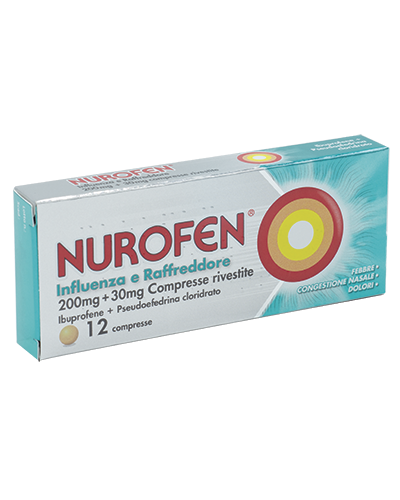
NUROFEN INFLUENZA RAFFR*12CPR
Regular price
€12,10 EUR
Sale price
€12,10 EUR
Regular price
€12,90 EUR
Unit price
per
Tax included.
SKU
044663019In stock
Vendor
FARMA 1000 SrlDelivery time: 48/72 hours
Free Shipping: Orders over €70
Description
NUROFEN COLD AND FLU
200 mg + 30 mg coated tablets
Ibuprofen + pseudoephedrine hydrochloride
What it is and what it is used for
Nurofen Cold and Flu contains two active ingredients:
- Ibuprofen, which belongs to a group of medicines called non-steroidal anti-inflammatory drugs (NSAIDs) whose action reduces pain and swelling caused by inflammation and lowers fever;
- Pseudoephedrine hydrochloride belongs to a group of medicines called vasoconstrictors whose action on the blood vessels inside the nose helps to relieve nasal congestion.
Nurofen Cold and Flu is indicated for adults and adolescents over 12 years of age for the treatment of cold and flu symptoms such as blocked nose (nasal and sinus congestion), aches, headaches, fever and sore throat.
Consult your doctor if you do not feel better or feel worse after 3 days in adolescents over 12 years of age and after 5 days in adults.
What you need to know before taking the medicine
Do not take Nurofen Cold and Flu:
• if you are allergic to ibuprofen, pseudoephedrine or any of the other ingredients of this medicine (listed in section 6);
• if in the past, after taking ibuprofen, acetylsalicylic acid or other non-steroidal anti-inflammatory drugs (NSAIDs), other medicines to treat fever or pain, you have experienced allergic reactions such as nasal polyps, wheezing and/or difficulty breathing (asthma), rhinitis, swelling of the face, lips and throat (angioedema) or hives;
• if you suffer or have suffered from recurrent gastric/duodenal ulcers (peptic ulcers) or bleeding (at least two distinct episodes of diagnosed ulcers or bleeding)
• if you suffer from a severe kidney or liver disease (renal or hepatic insufficiency);
• if you suffer from severe heart disease (severe heart failure);
• if you suffer from severe heart or circulatory problems such as increased heart rate (tachycardia), high blood pressure, chest pain that occurs when the heart does not receive enough oxygen (angina pectoris);
• if you suffer from an overactive thyroid (hyperthyroidism);
• if you suffer from a disease characterized by a high concentration of glucose in the blood (diabetes);
• if you suffer from a tumour affecting the kidney (phaeochromocytoma);
• if you suffer from increased intraocular pressure (glaucoma);
• if you suffer from difficulty urinating related to prostate problems;
• if you are under 12 years of age;
• if you are pregnant or breastfeeding;
• if you are taking antidepressants, such as non-selective monoamine oxidase inhibitors (known as MAOIs) or have taken them in the last 14 days.
Warnings and precautions
Consult your doctor or pharmacist before taking Nurofen Cold and Flu if:
• you are taking other medicines used to treat pain, to lower fever and/or to treat inflammation (non-steroidal anti-inflammatory drugs, NSAIDs including COX-2 inhibitors) the concomitant use of these medicines may increase the risk of side effects and should be avoided (see section Other medicines and Nurofen Cold and Flu)
• you have blood clotting problems or are taking blood thinning medicines (oral anticoagulants). Your doctor will carefully assess whether you can take this medicine as it may lead to a reduction in clotting. (see section Other medicines and Nurofen Cold and Flu)
• you are elderly and/or have suffered from stomach and intestinal disorders (history of ulcer), especially with bleeding or perforation or if you are taking medicines that may increase the risk of gastrointestinal events. In these cases, your doctor will advise you to start treatment with the lowest available dose and possibly the concomitant use of medicines that protect the stomach (misoprostol or proton pump inhibitors).
• you suffer or have suffered from an inflammatory bowel disease (ulcerative colitis, Crohn's disease);
• you are taking medicines that could increase the risk of ulceration or bleeding, medicines used to treat inflammation (oral corticosteroids), blood thinning medicines (such as warfarin), antiplatelet drugs (aspirin) and medicines to treat depression (selective serotonin reuptake inhibitors) (see section Other medicines and Nurofen Cold and Flu);
• you have heart problems including heart attack, angina (chest pain) or if you have a history of heart attack, coronary bypass surgery, peripheral arterial disease (poor circulation in the legs or feet due to narrowing or obstruction of the arteries) or any type of stroke (including 'mini-stroke' or 'TIA, transient ischaemic attack);
• you have high blood pressure, diabetes, high cholesterol, a family history of heart disease or stroke, or if you are a smoker;
• you suffer from reduced kidney function;
• you suffer or have suffered from allergic reactions or asthma attacks (difficulty breathing) as you may experience shortness of breath;
• you suffer from liver disorders;
• in dehydrated adolescents (i.e. who have lost a lot of fluids with fever, vomiting or diarrhoea) due to the risk of altered kidney function;
• you suffer from chronic autoimmune disease that causes disorders in various parts of the body, particularly the skin (systemic lupus erythematosus) or mixed connective tissue disease, as it increases the risk of aseptic meningitis;
• if you suffer from hyperexcitability;
• if you take medicines that mimic the effects of sympathetic nervous system stimulation on various tissues such as nasal decongestants, appetite suppressants and amphetamine stimulants (see Other medicines and Nurofen Cold and Flu) your doctor will carefully assess co-administration;
• if you develop a generalized febrile rash associated with pustules, stop taking Nurofen Cold and Flu and contact your doctor or seek immediate medical attention. See section 4.
Anti-inflammatory/painkiller drugs such as ibuprofen may be associated with a modest increased risk of heart attack or stroke, especially if given in high doses. Do not exceed the recommended dose or duration of treatment.
During treatment with all NSAIDs, at any time, with or without warning symptoms or previous history of serious gastrointestinal events, bleeding, ulceration and perforation of the stomach or intestine have been reported, which can be fatal. If bleeding or ulceration occurs, stop treatment with Nurofen Cold and Flu and contact your doctor (see section Possible side effects).
If you have suffered from gastrointestinal problems (gastrointestinal toxicity) in the past, especially if you are elderly, inform your doctor of any unusual symptoms (especially gastrointestinal bleeding) particularly in the early stages of treatment.
Very rarely, severe skin reactions, some of which fatal, such as exfoliative dermatitis, Stevens-Johnson syndrome and toxic epidermal necrolysis, have been reported, especially in the early stages of treatment. Stop treatment with this medicine and contact your doctor at the first appearance of skin rashes or mucosal lesions or any other sign of hypersensitivity (see section Possible side effects).
For those involved in sports activities
The use of the drug without therapeutic necessity constitutes doping and can in any case lead to positive anti-doping tests.
Children and adolescents
Do not give this medicine to children under 12 years of age.
In dehydrated adolescents, there is a risk of altered kidney function.
Possible side effects
Like all medicines, this medicine can cause side effects, although not everybody gets them.
If you experience any of the following side effects, STOP treatment and consult your doctor:
• ulcerations or bleeding of the stomach and intestines, not necessarily preceded by warning symptoms or a previous history of serious stomach and intestinal diseases;
• skin and mucous membrane changes (rashes, redness, itching, blisters), as these could be signs of severe allergic reactions (exfoliative dermatitis, Stevens-Johnson syndrome and toxic epidermal necrolysis). The onset of reactions occurs in most cases in the early stages of treatment;
• difficulty breathing (bronchospasm);
• hallucinations, restlessness or sleep disturbances (see section Warnings and precautions)
The sudden onset of fever, skin redness or numerous small pustules (possible symptoms of Acute Generalized Exanthematous Pustulosis - AGEP) may occur within the first 2 days of treatment with Nurofen Cold and Flu.
See section 2.
Stop using Nurofen Cold and Flu if you develop these symptoms and contact your doctor or seek immediate medical attention.
Further side effects include:
Uncommon (may affect up to 1 in 100 people):
• digestive disorders (dyspepsia), abdominal pain and nausea
• headache, tremors
• allergic reactions manifesting as hives and itching.*
• skin rashes*
Rare (may affect up to 1 in 1000 people):
• diarrhoea, vomiting, gas from the intestine (flatulence) and difficulty passing stools (constipation)
Very rare (may affect up to 1 in 10000 people):
• peptic ulcers, perforation and bleeding of the stomach and intestines, black stools and vomiting blood sometimes fatal especially in the elderly (see section Warnings and precautions)
• lesions with bleeding of the mouth, heartburn (gastritis)
• severe kidney disease (severe renal insufficiency including papillary necrosis). Especially during long treatments, associated with increased blood urea levels and swelling (oedema)
• liver damage
• reduction in the number of blood cells (anaemia, leucopenia, thrombocytopenia, pancytopenia, agranulocytosis), the first signs are: fever, sore throat, superficial mouth ulcers, flu-like symptoms, severe fatigue, unexplained bleeding, bruising on the skin (haematomas)
• severe allergic reactions (anaphylaxis, angioedema or severe shock).
Symptoms may include swelling of the face, tongue and larynx, difficulty breathing (dyspnoea), rapid heartbeat (tachycardia), low blood pressure (hypotension)
• viral central nervous system disease (aseptic meningitis), with symptoms such as stiff neck, headache, nausea, vomiting, fever or disorientation (more frequent if you suffer from systemic lupus erythematosus or mixed connective tissue disease)
• decrease in haemoglobin levels (the substance that carries oxygen) in the blood
• skin reactions with blisters may occur including Stevens-Johnson syndrome, erythema multiforme and toxic epidermal necrolysis
Not known (frequency cannot be estimated from the available data):
• respiratory tract disorders, due to allergic reactions, including wheezing and/or difficulty breathing (asthma), wheezing (bronchospasm) and difficulty breathing (dyspnoea)*
• high blood pressure (hypertension) (see section Warnings and precautions)
• palpitations, changes in heart rhythm (tachycardia, arrhythmia)
• swelling (oedema)
• chest pain
• heart failure (see section Warnings and precautions)
• insomnia
• anxiety
• agitation
• restlessness
• hallucinations
• worsening of inflammatory bowel diseases (colitis and Crohn's disease) (see section Warnings and precautions)
• dry mouth
• excessive sweating
• muscle weakness
• reduced normal urine output over the course of the day
• irritability
• thirst
• acute generalized exanthematous pustulosis - AGEP
A severe skin reaction known as DRESS syndrome may occur. Symptoms of DRESS include: rash, fever, swollen lymph nodes and an increase in eosinophils (a type of white blood cell).
*allergic reactions include a) non-specific allergic reactions and anaphylaxis, b) respiratory tract reactivity including asthma, worsening of asthma, bronchospasm or dyspnoea or c) various skin conditions such as various skin rashes, itching, hives, skin redness with bleeding (purpura), skin signs and swelling in the area of the eyes and lips (angioedema) and very rarely bullous and exfoliative dermatitis including toxic epidermal necrolysis, Stevens-Johnson syndrome and erythema multiforme, d) allergic reactions due to pseudoephedrine or similar compounds (cross-reactivity reactions with pseudoephedrine).
The following side effects have also been observed: gastrointestinal intolerance, bleeding, sweating, dizziness, chest pain (precordial pain), difficulty urinating and insomnia.
Reporting of side effects
If you get any side effects, including any not listed in this leaflet, tell your doctor or pharmacist. You can also report side effects directly via the national reporting system at: https://www.aifa.gov.it/content/segnalazionireazioni-avverse.
By reporting side effects you can help provide more information on the safety of this medicine.
