

You will not be allowed to compare more than 4 products at a time
View compareOCTILIA*COLL 10ML 0.5MG/ML
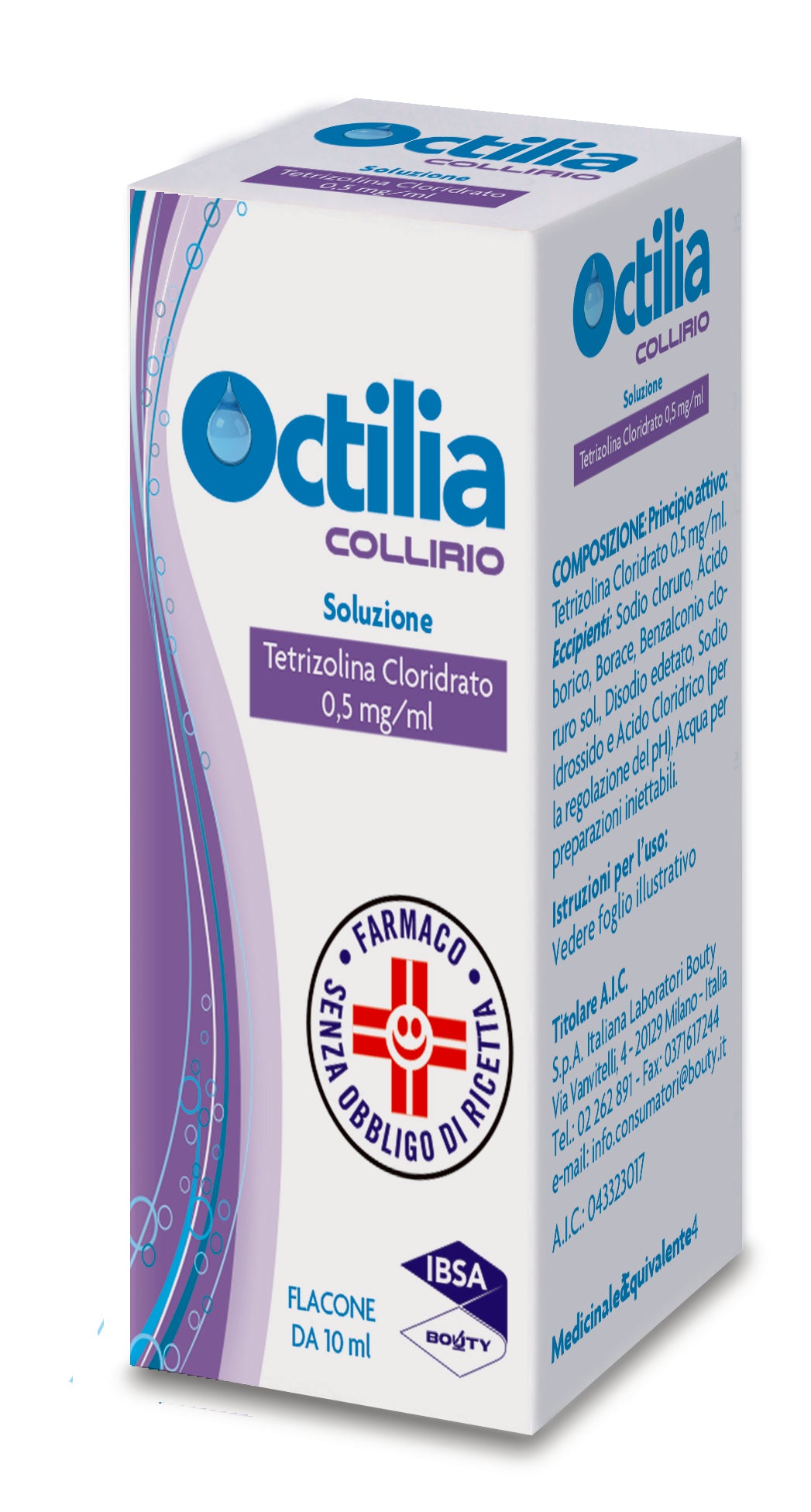
OCTILIA*COLL 10ML 0.5MG/ML
Regular price
€7,63 EUR
Sale price
€7,63 EUR
Regular price
€8,90 EUR
Unit price
per
Tax included.
SKU
043323017In stock
Vendor
IBSA FARMACEUTICI ITALIA SrlDelivery time: 48/72 hours
Free Shipping: Orders over €70
Description
OCTILIA 0.5 mg/ml eye drops, solution, 10 ml bottle
Tetrizoline hydrochloride
What it is and what it is used for
OCTILIA is a decongestant for ophthalmic use.
OCTILIA is indicated for the symptomatic treatment of eye irritations caused by smoke, wind, salt water, prolonged light exposure, allergic conjunctivitis, and other irritating agents.
What you need to know before taking the medicine
Do not use OCTILIA
- if you are hypersensitive to Tetrizoline or any of the excipients
- if you suffer from narrow-angle glaucoma (high intraocular pressure)
- if you suffer from severe eye diseases.
- if you have heart problems or suffer from high blood pressure (hypertension)
- if you suffer from an adrenal tumor (pheochromocytoma)
- if you suffer from an overactive thyroid (hyperthyroidism)
- if you suffer from diabetes being treated with insulin
- if you are using monoamine oxidase inhibitors (MAOIs) or other medicines that can cause an increase in blood pressure
- if you suffer from dry rhinitis
- if you suffer from inflammation of the cornea and ocular conjunctiva (keratoconjunctivitis)
- in children under three years of age, while the use of the product in children over 3 years of age is at the discretion of the doctor.
- if the container appears visibly damaged.
Warnings and precautions
Talk to your doctor or pharmacist before taking OCTILIA.
In particular:
- if you are over 65 years old
- if you have infections, pus, foreign bodies in the eye, mechanical, chemical, or heat damage
- if you have eye pain, headache, sudden changes in visual field, appearance of visual spots, intense eye redness, light intolerance or diplopia
- if you suffer from hypertension, hyperthyroidism, severe cardiovascular diseases, and hyperglycemia due to diabetes mellitus.
- if you have temporary mydriasis (pupil dilation)
- if you have swelling and itching around the eye (hyperemia and rebound hyperemia)
- if you wear soft contact lenses (for more information see the paragraph "OCTILIA contains benzalkonium chloride").
OCTILIA is contraindicated in children under three years of age, while the use of the product in children over three years of age is at the discretion of the doctor.
Possible side effects
Like all medicines, OCTILIA can cause side effects, although not everybody gets them.
Uncommon (affects 1 to 10 users in 1000): redness of the ocular mucosa, dry eyes, hyperemia, palpitations, headache, tremor, weakness, sweating, and increased blood pressure.
Rare (affects 1 to 10 users in 10000): blurred vision, conjunctival irritation, and pupil dilation (mydriasis).
Prolonged and frequent use can cause dry eye syndrome.
Only with very high doses can hypertension, heart problems, or hyperglycemia occur.
Following the instructions in the package leaflet reduces the risk of side effects.
Reporting of side effects
If you get any side effects, including any not listed in this leaflet, talk to your doctor or pharmacist. You can also report side effects directly via the national reporting system at: https://www.aifa.gov.it/content/segnalazionireazioni-avverse.
By reporting side effects, you can help provide more information on the safety of this medicine.