

You will not be allowed to compare more than 4 products at a time
View compareEDIBLE LINSEED OIL 100 ML
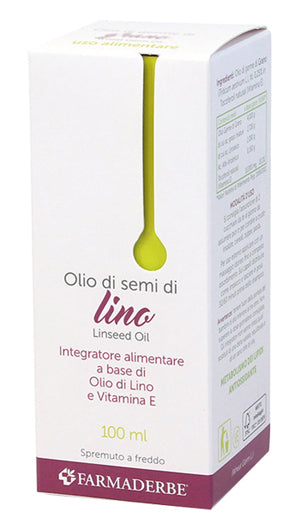
EDIBLE LINSEED OIL 100 ML
Regular price
€8,07 EUR
Sale price
€8,07 EUR
Regular price
€12,00 EUR
Unit price
per
Tax included.
SKU
904452657In stock
Vendor
FARMADERBE SrlDelivery time: 48/72 hours
Free Shipping: Orders over €70
Description
Linseed oil
Description
Linseed oil is a food supplement based on linseed oil and vitamin E. Linseed oil promotes lipid metabolism, and the integrity and functionality of cell membranes. Vitamin E contributes to the protection of cells from oxidative stress. Linseed oil is obtained by simple cold pressing from the plant's seeds, without the use of solvents. The addition of vitamin E allows all the organoleptic properties of the product to be preserved for a long time. It is a product free of preservatives, GMO-free and non-irradiated. It is an oil particularly rich in omega 3 fatty acids (linolenic acid) and omega 6 fatty acids (linoleic acid). Mammalian cells are unable to synthesise all polyunsaturated fatty acids due to the lack of some metabolic enzymes, which are present in fish and plants. For this reason, Omega-3 and Omega-6 are defined as essential fatty acids and must be taken through food (e.g. fish, some vegetable oils, oily dried fruit) or by means of specific supplements. Omega 3s are important for the treatment of inflammation, for blood viscosity and pressure, for immune activity and for central nervous system activity. Linseed oil supports cholesterol reduction, prevents hepatic steatosis, reduces insulin resistance and inflammation. In case of gout, it can help relieve pain or sudden and severe joint swelling, symptoms typical of this condition. Hyperactive attention deficit disorder (ADHD) may be linked to an omega-3 deficiency, so this oil can be a valid aid. Omega-3 deficiency can be linked to depression, and the increase in essential fatty acids in the diet of adolescents seems to promote the reduction of aggressive behaviour typical of this age group. Omega 3s are important in children for brain and eye development and are useful for the treatment of allergies, asthma and various skin disorders. As a cosmetic, linseed oil has emollient and anti-inflammatory properties for skin conditions, and detangling and shining properties for hair.
Ingredients
Linseed oil (Linum usitatissimum L.), vitamin E.
Nutritional characteristics
*NRV: Nutrient Reference Values.
Directions for use
We recommend taking 2 teaspoons a day, either pure or to season salads, cereals, soups, and pasta raw. For cosmetic use, apply with a suitable massage until completely absorbed. For hair, distribute as a pack and leave on for 30-60 minutes before shampooing; on dry hair, apply a few drops to the lengths.
Format
100 ml bottle.
Code. 291343
Bibliography
Campos J. et al. Linseed essential oil - Source of Lipids as Active Ingredients for Pharmaceuticals and Nutraceuticals. Curr. Med. Chem. doi: 10.2174/0929867325666181031105603. 2018.
Gonçalves N.B. et al. α-Linolenic acid prevents hepatic steatosis and improves glucose tolerance in mice fed a high-fat diet. Clinics (Sao Paulo). 73:e150. doi: 10.6061/clinics/2018/e150. 2018.
Skoczynska A.H. et al. Linseed oil increases HDL3 cholesterol and decreases blood pressure in patients diagnosed with mild hypercholesterolaemia. Kardiol. Pol. 76(8):1242-1250. 2018.
Linseed oil is a food supplement based on linseed oil and vitamin E. Linseed oil promotes lipid metabolism, and the integrity and functionality of cell membranes. Vitamin E contributes to the protection of cells from oxidative stress. Linseed oil is obtained by simple cold pressing from the plant's seeds, without the use of solvents. The addition of vitamin E allows all the organoleptic properties of the product to be preserved for a long time. It is a product free of preservatives, GMO-free and non-irradiated. It is an oil particularly rich in omega 3 fatty acids (linolenic acid) and omega 6 fatty acids (linoleic acid). Mammalian cells are unable to synthesise all polyunsaturated fatty acids due to the lack of some metabolic enzymes, which are present in fish and plants. For this reason, Omega-3 and Omega-6 are defined as essential fatty acids and must be taken through food (e.g. fish, some vegetable oils, oily dried fruit) or by means of specific supplements. Omega 3s are important for the treatment of inflammation, for blood viscosity and pressure, for immune activity and for central nervous system activity. Linseed oil supports cholesterol reduction, prevents hepatic steatosis, reduces insulin resistance and inflammation. In case of gout, it can help relieve pain or sudden and severe joint swelling, symptoms typical of this condition. Hyperactive attention deficit disorder (ADHD) may be linked to an omega-3 deficiency, so this oil can be a valid aid. Omega-3 deficiency can be linked to depression, and the increase in essential fatty acids in the diet of adolescents seems to promote the reduction of aggressive behaviour typical of this age group. Omega 3s are important in children for brain and eye development and are useful for the treatment of allergies, asthma and various skin disorders. As a cosmetic, linseed oil has emollient and anti-inflammatory properties for skin conditions, and detangling and shining properties for hair.
Ingredients
Linseed oil (Linum usitatissimum L.), vitamin E.
Nutritional characteristics
| Average content per daily dose | |
|---|---|
| Linseed oil | 3.990 g |
| of which saturated fatty acids | 3.587 g |
| of which linoleic acid | 0.650 g |
| Alpha-linolenic acid | 2.242 g |
| Vitamin E | 10.0 mg (83.3% NRV*) |
Directions for use
We recommend taking 2 teaspoons a day, either pure or to season salads, cereals, soups, and pasta raw. For cosmetic use, apply with a suitable massage until completely absorbed. For hair, distribute as a pack and leave on for 30-60 minutes before shampooing; on dry hair, apply a few drops to the lengths.
Format
100 ml bottle.
Code. 291343
Bibliography
Campos J. et al. Linseed essential oil - Source of Lipids as Active Ingredients for Pharmaceuticals and Nutraceuticals. Curr. Med. Chem. doi: 10.2174/0929867325666181031105603. 2018.
Gonçalves N.B. et al. α-Linolenic acid prevents hepatic steatosis and improves glucose tolerance in mice fed a high-fat diet. Clinics (Sao Paulo). 73:e150. doi: 10.6061/clinics/2018/e150. 2018.
Skoczynska A.H. et al. Linseed oil increases HDL3 cholesterol and decreases blood pressure in patients diagnosed with mild hypercholesterolaemia. Kardiol. Pol. 76(8):1242-1250. 2018.