

You will not be allowed to compare more than 4 products at a time
View comparePAIDOFEN*OS 150ML STRAWBERRY
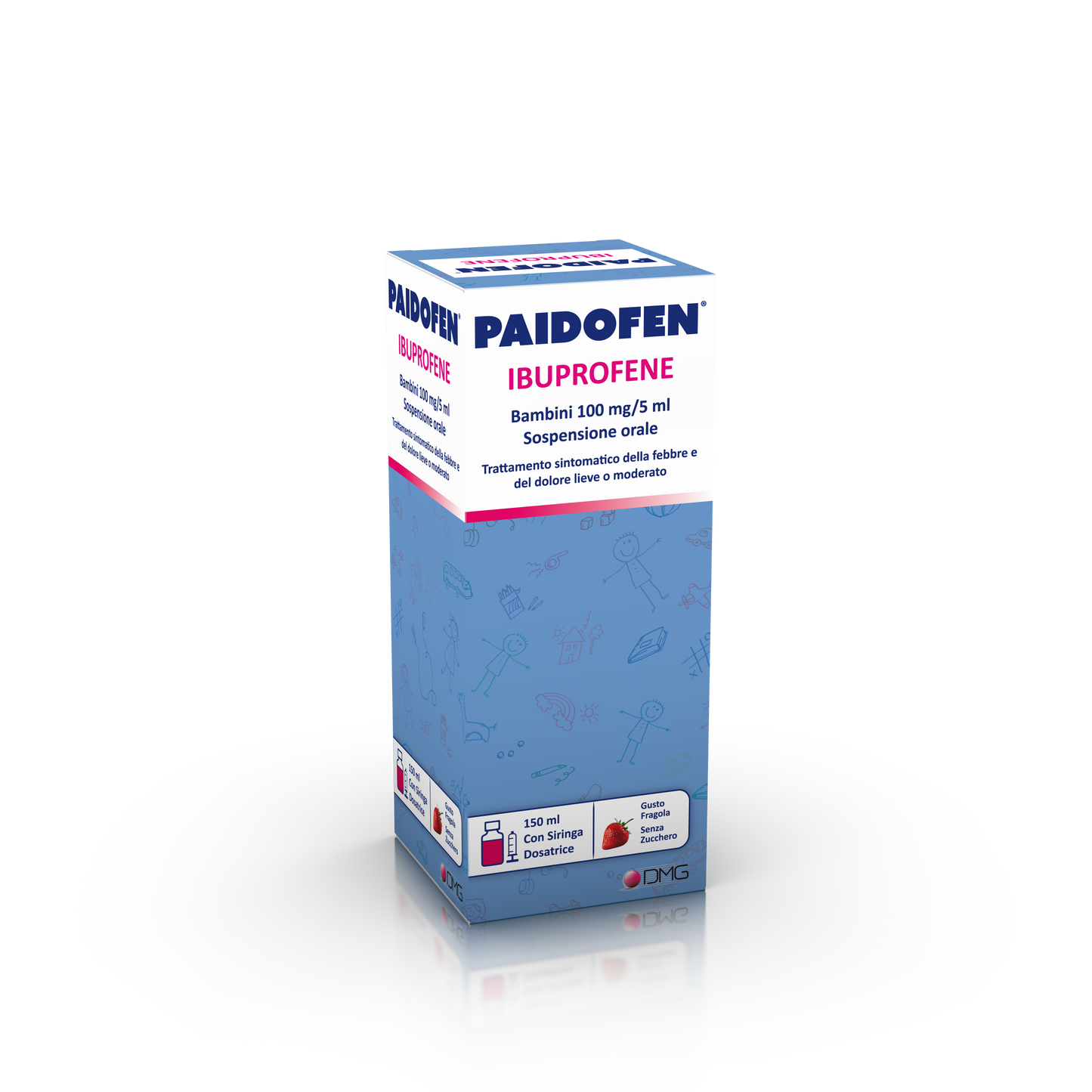
PAIDOFEN*OS 150ML STRAWBERRY
Regular price
€7,95 EUR
Sale price
€7,95 EUR
Regular price
€7,95 EUR
Unit price
per
Tax included.
SKU
041952019Low stock
Vendor
D.M.G. ITALIA SrlDelivery time: 48/72 hours
Free Shipping: Orders over €70
Description
PAIDOFEN Children 100mg/5ml oral suspension strawberry flavour sugar-free
PAIDOFEN Children 100mg/5ml oral suspension orange flavour sugar-free
Ibuprofen
What it is and what it is used for
PAIDOFEN contains ibuprofen, which belongs to a group of medicines called non-steroidal anti-inflammatory drugs (NSAIDs) that reduce pain, fever, and inflammation.
This medicine is indicated for the symptomatic treatment of fever and mild to moderate pain in children aged 3 months to 12 years.
What you need to know before taking this medicine
Signs of an allergic reaction to this medicine, including breathing problems, swelling of the face and neck (angioedema) and chest pain, have been reported with ibuprofen.
Stop treatment with Paidofen immediately and contact your doctor or emergency medical service immediately if you notice any of these signs.
Do not take/give PAIDOFEN to your child:
- if you are allergic to ibuprofen or any of the other ingredients of this medicine (listed in section 6);
- if the child is under 3 months of age or weighs less than 5.6 kg (See section How to use PAIDOFEN);
- if you are allergic to medicines such as acetylsalicylic acid or other similar medicines (analgesics, antipyretics, non-steroidal anti-inflammatory drugs), especially if you have had nasal problems such as nasal polyposis and asthma (See section Warnings and precautions);
- if you suffer from a stomach ulcer (active peptic ulcer);
- if you suffer from severe kidney or liver disease (kidney or liver failure);
- if you suffer from severe heart disease (heart failure);
- if you have a history of bleeding, stomach or intestinal perforation, or if you have suffered recurrent bleeding or stomach ulcers (two or more distinct episodes of proven ulceration or bleeding);
- if you are being treated with other anti-inflammatory medicines (NSAIDs, including specific COX-2 inhibitors) (See sections Warnings and precautions and Other medicines and PAIDOFEN);
- if you have any disease that increases the risk of bleeding;
- in case of unexplained blood disorders;
- if you are severely dehydrated, for example, you have had severe episodes of vomiting, diarrhoea, or are drinking very little.
Pregnancy, breastfeeding and fertility
Do not take Paidofen during the last 3 months of pregnancy, as it could harm the unborn child or cause problems during delivery:
- it can cause kidney and heart problems in the unborn child;
- it can affect the bleeding tendency of the mother and baby;
- it can cause labour to be delayed or last longer than expected.
You should not take Paidofen during the first 6 months of pregnancy unless strictly necessary and advised by your doctor. If treatment is necessary during this period or while trying to get pregnant, the lowest possible dose should be used for the shortest possible time.
If taken for more than a few days from 20 weeks of pregnancy onwards, Paidofen can cause kidney problems in the unborn child that can lead to low levels of amniotic fluid surrounding the baby (oligohydramnios) or narrowing of a blood vessel (ductus arteriosus) in the baby's heart. If you need treatment for more than a few days, your doctor may recommend additional monitoring.
Warnings and precautions
Talk to your doctor or pharmacist before taking or giving PAIDOFEN to your child if:
• you suffer or have suffered from an allergy to medicines used to treat fever, pain and inflammation (non-steroidal anti-inflammatory drugs) and if you suffer from breathing difficulties (asthma), nasal polyps or angioedema);
• you are taking other medicines used to treat pain, to lower fever and/or to treat inflammation (non-steroidal anti-inflammatory drugs, including COX-2 inhibitors) (see section Other medicines and PAIDOFEN);
• you have suffered from stomach and intestinal disorders (history of ulcer), especially if complicated by bleeding or perforation, as an increase in gastrointestinal bleeding and perforations may occur. In these cases, your doctor will advise you to start treatment with the lowest available dose and possibly the concomitant use of medicines that protect the stomach (misoprostol or proton pump inhibitors). This should also be considered if low doses of aspirin or other drugs that can increase the risk of stomach and intestinal diseases are taken (see section Other medicines and PAIDOFEN). During treatment with all NSAIDs, at any time, with or without warning symptoms or a previous history of serious gastrointestinal events, bleeding, ulceration and perforation of the stomach or intestines may occur, which can be fatal. Therefore, inform your doctor of any unusual gastrointestinal symptoms (especially gastrointestinal bleeding) particularly in the initial stages of treatment. If gastrointestinal bleeding or ulceration occurs, discontinue treatment with PAIDOFEN and contact your doctor;
• you suffer or have suffered from inflammatory bowel disease (ulcerative colitis, Crohn's disease) as these diseases may worsen (see section Possible side effects);
• you are taking medicines that could increase the risk of ulcer or bleeding, such as medicines used to treat inflammation and some immune system diseases (oral corticosteroids), anticoagulants such as warfarin, medicines that may have an antiplatelet effect such as aspirin, medicines to treat depression (selective serotonin reuptake inhibitors) (see section Other medicines and PAIDOFEN);
• you have heart diseases (uncontrolled hypertension, congestive heart failure, confirmed ischemic heart disease, peripheral arterial disease) or have suffered from reduced blood flow to the brain (stroke), or if you think the child may be at risk for these conditions (for example, if they have high blood pressure, high blood sugar (diabetes) or fat levels, or if they smoke). Medicines like PAIDOFEN may be associated with a slight increase in the risk of heart attack or reduced blood flow to the brain: the risk is more likely at high doses. Do not exceed the recommended dose or duration of treatment;
• you suffer or have suffered from high blood pressure and/or severe heart disease (heart failure) as fluid retention, high blood pressure and swelling (oedema) have been reported in association with NSAID therapy;
• you have an infection - see section Infections below.
Infections
Paidofen may mask the symptoms of infection such as fever and pain. Therefore, it is possible that Paidofen may delay appropriate treatment of the infection, which could increase the risk of complications. This has been observed in pneumonia caused by bacteria and in bacterial skin infections related to chickenpox. If you take this medicine while you have an infection and the infection symptoms persist or worsen, contact your doctor immediately.
Skin reactions
Severe skin reactions have been reported in association with Paidofen treatment. Stop taking Paidofen and consult a doctor immediately if you develop a rash, mucosal lesions, blisters, or other signs of allergy as these can be the first signs of a very serious skin reaction. See section 4.
Severe skin reactions, including exfoliative dermatitis, erythema multiforme, Stevens-Johnson syndrome, toxic epidermal necrolysis, drug reaction with eosinophilia and systemic symptoms (DRESS), acute generalised exanthematous pustulosis (AGEP), have been reported in association with Ibuprofen treatment. Stop using Paidofen and contact your doctor immediately if you notice any of the symptoms related to these severe skin reactions described in section 4.
Side effects can be minimised by using the lowest effective dose for the shortest possible duration of treatment needed to control symptoms.
Use PAIDOFEN with caution and inform your doctor if you or your child:
- have a history of stomach or intestinal problems such as ulcerations, perforations or bleeding. If your child is being treated with other medicines that may cause stomach and intestinal problems, your doctor may prescribe medicines that protect the stomach (misoprostol or proton pump inhibitors) (See section Other medicines and PAIDOFEN);
- suffer from asthma. PAIDOFEN may cause breathing problems in this case;
- have problems with blood clotting;
- suffer from kidney or heart disease, have high blood pressure or are being treated with medicines called diuretics. In these cases, severe kidney problems may occur (critical reduction in kidney function, nephrotoxicity or fluid retention);
- suffer from liver disease;
- are dehydrated (e.g., due to fever, vomiting or diarrhoea). In this case, your child will need to be rehydrated before and during treatment.
In case of prolonged treatment with PAIDOFEN, you must pay particular attention and immediately notify your doctor if you experience:
- signs or symptoms of ulcerations or bleeding of the stomach or intestines;
- signs or symptoms of liver problems;
- signs or symptoms of kidney damage;
- visual disturbances (blurred or reduced vision, areas of complete or partial blindness, altered colour perception);
- signs or symptoms of meningitis, a severe inflammation of the meninges. Symptoms can be fever, neck stiffness, headache, vomiting and disorientation. Ibuprofen can rarely cause aseptic meningitis; this inflammation is more common in people suffering from systemic lupus erythematosus or other collagen diseases (See section Possible side effects).
Elderly
This medicine is indicated for children, however, it may be used for the elderly.
If you are elderly, you may more easily experience some side effects such as bleeding and perforations of the stomach or intestines, even serious, following treatment with medicines such as PAIDOFEN.
These effects can occur especially at high doses of PAIDOFEN or if you have a history of ulcers, bleeding and perforations of the stomach or intestines (See section Possible side effects).
If you are elderly, take the lowest possible dose of this medicine. In elderly people, the use of medicines that protect the stomach (misoprostol or proton pump inhibitors) is recommended.
Inform your doctor if you experience stomach or intestinal problems, especially if you have a history of ulcers, bleeding and perforations of the stomach or intestines.
Children and adolescents
In dehydrated children and adolescents, there is a risk of impaired kidney function.
Possible side effects
Like all medicines, this medicine can cause side effects, although not everyone gets them.
If the child experiences any of the following side effects, STOP treatment with PAIDOFEN and consult a doctor:
• reddish, non-raised, target-shaped or circular patches on the trunk, often with central blisters, skin peeling, ulcers of the mouth, throat, nose, genitals and eyes. These severe rashes may be preceded by fever and flu-like symptoms [exfoliative dermatitis, erythema multiforme, Stevens-Johnson syndrome, toxic epidermal necrolysis];
• widespread rash, high body temperature and enlarged lymph nodes (DRESS syndrome);
• widespread, red and scaly rash, with bumps under the skin and blisters, accompanied by fever. Symptoms usually appear at the beginning of treatment (acute generalised exanthematous pustulosis);
• allergic reactions, including severe ones, which may include: hives, itching, purpura, swelling of the face, mouth and throat (angioedema), difficulty breathing (bronchospasm or dyspnoea), altered heart rate (tachycardia), low blood pressure (hypotension), anaphylaxis, shock and worsening of asthma;
• aseptic meningitis with symptoms such as disorientation, headache, nausea, vomiting, stiff neck and fever (more frequent if the child suffers from systemic lupus erythematosus or other collagenopathies).
The following additional side effects may occur:
Uncommon (may affect up to 1 in 100 people):
• headache, dizziness, drowsiness and seizures;
• stomach pain, nausea and indigestion (dyspepsia);
• skin rashes;
• visual disturbances.
Rare (may affect up to 1 in 1,000 people):
• cystitis, rhinitis;
• depression, insomnia, difficulty concentrating, unstable mood, hearing disturbances;
• cerebrovascular haemorrhage;
• dry eyes;
• awareness of own heartbeat (palpitations);
• diarrhoea, flatulence, dry mouth, constipation and vomiting;
• hair loss (alopecia);
• skin becomes sensitive to light;
• severe kidney diseases including tubular necrosis, glomerulonephritis, appearance of blood in the urine and increased urine production;
• decreased haematocrit levels.
Very rare (may affect up to 1 in 10,000 people):
• reduction in the number of blood cells (anaemia, leucopenia, thrombocytopenia, eosinophilia, pancytopenia, agranulocytosis) - the first signs are: fever, sore throat, superficial mouth ulcers, flu-like symptoms, severe fatigue, nosebleeds and haemorrhages;
• signs or symptoms of ulcerations or bleeding of the stomach and intestines, black and foul-smelling stools, vomiting with blood;
• lesions with bleeding of the mouth, heartburn (gastritis);
• simultaneous kidney and liver disease (hepatorenal syndrome), death of some liver cells (hepatic necrosis), liver disease (hepatic failure, hepatic dysfunction, hepatitis, jaundice);
• severe kidney diseases (acute renal failure, papillary necrosis) particularly following long-term treatments, associated with an increase in blood urea concentration and swelling (oedema);
• decreased haemoglobin levels in the blood;
• heart attack (myocardial infarction);
• severe skin infections and soft tissue complications during chickenpox infection;
• worsening of infection-related inflammations (e.g. necrotising fasciitis) associated with the use of certain non-steroidal anti-inflammatory drugs (NSAIDs). If signs of an infection appear or worsen, you should consult your doctor immediately to assess whether anti-infective/antibiotic therapy is necessary;
• widespread, red and scaly rash, with the formation of pustules under the skin and blisters located mainly on the skin folds, trunk and upper limbs accompanied by fever at the beginning of treatment (acute generalised exanthematous pustulosis).
Not known (frequency cannot be estimated from the available data):
• irritability;
• fluid retention and decreased appetite;
• abnormal perception of noises such as buzzing, ringing or rustling (tinnitus);
• severe heart disease (heart failure) and swelling (oedema);
• increased blood pressure (hypertension) and reduced blood flow to the body (shock);
• respiratory tract disorders including asthma, laryngeal obstruction, wheezing (bronchospasm), temporary cessation of breathing (apnoea) and difficulty breathing (dyspnoea);
• worsening of inflammatory bowel diseases (colitis and Crohn's disease);
• inflammation of the pancreas (pancreatitis), inflammation of the duodenum (duodenitis);
• inflammation of the oesophagus (oesophagitis);
• a severe skin reaction known as DRESS syndrome may occur. Symptoms of DRESS include: rash, fever, swelling of the lymph nodes and increased eosinophils (a type of white blood cell).
Stop using Paidofen if you develop these symptoms and contact your doctor immediately. See also section 2:
• chest pain, which may be a sign of a potentially serious allergic reaction called Kounis syndrome.
The use of ibuprofen, especially at high doses (2400 mg/day), may be associated with a modest increased risk of heart attack (myocardial infarction) or stroke.
Reporting of side effects
If you get any side effects, including those not listed in this leaflet, talk to your doctor or pharmacist. You can also report side effects directly via the national reporting system at: https://www.aifa.gov.it/content/segnalazionireazioni-avverse.
By reporting side effects you can help provide more information on the safety of this medicine.
