

You will not be allowed to compare more than 4 products at a time
View comparePARACETAMOL SAND*20TAB 500MG
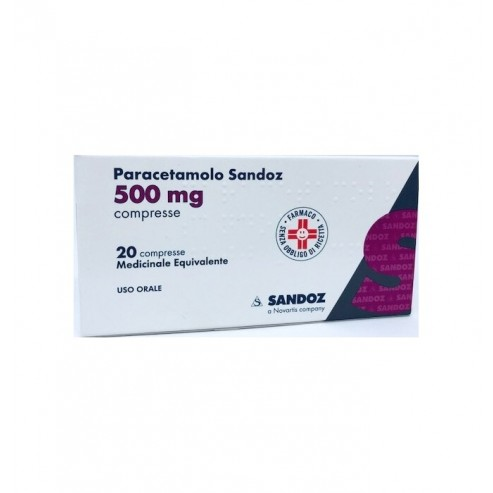
PARACETAMOL SAND*20TAB 500MG
Regular price
€1,86 EUR
Sale price
€1,86 EUR
Regular price
€5,04 EUR
Unit price
per
Tax included.
SKU
042360040In stock
Vendor
SANDOZ SpADelivery time: 48/72 hours
Free Shipping: Orders over €70
Description
Paracetamol Sandoz 500 mg tablets
Generic medicine
What it is and what it is used for
Paracetamol Sandoz contains the active ingredient paracetamol. It is a medicine that relieves pain and reduces fever (analgesic and antipyretic).
Paracetamol Sandoz 500 mg is used for mild to moderate pain and fever in adults, adolescents, and children over 9 years of age.
What you need to know before taking the medicine
Do not take Paracetamol Sandoz
- if you are allergic to paracetamol or any of the other ingredients of this medicine (listed in section 6).
Warnings and precautions
Talk to your doctor or pharmacist before taking Paracetamol Sandoz if you have:
• frequent consumption of large amounts of alcohol
• liver problems such as liver inflammation or reduced liver function
• Gilbert's syndrome (a rare hereditary metabolic disorder with possible signs such as yellowing of the skin or whites of the eyes)
• kidney problems (moderate to severe renal failure)
• a hereditary deficiency of a certain enzyme called Glucose 6-phosphate dehydrogenase
• abnormal red blood cell breakdown which can make the skin pale yellow and cause weakness or shortness of breath (hemolytic anemia)
• total body water deficiency (dehydration)
• underweight or chronic malnutrition
• asthmatic patients sensitive to acetylsalicylic acid
Consult your doctor if any of the above warnings apply to you or have applied to you in the past. It may be necessary to avoid the use of this medicine or to reduce the dose of Paracetamol Sandoz.
Warning: taking higher doses than recommended does not provide better pain relief but carries the risk of serious liver damage. Therefore, the maximum daily dose of paracetamol should not be exceeded. Ask a doctor or pharmacist before the concomitant use of other medicines also containing paracetamol. Normally, the symptoms of liver damage occur after a few days. It is therefore important to consult a doctor immediately if you have taken more than recommended. See also section 3 "If you take more Paracetamol Sandoz than you should".
In case of high fever, signs of infection, or symptoms that last longer (persistent for 5 days for pain or 3 days for fever) or if symptoms worsen, you should contact a doctor.
Effects of paracetamol on diagnostic tests: for example, some tests to check uric acid and glucose in the blood may be affected.
Children
Paracetamol Sandoz 500 mg is not suitable for children under 9 years of age.
Possible side effects
Like all medicines, this medicine can cause side effects, although not everybody gets them.
Stop treatment and contact your doctor immediately in case of severe allergic reactions (hypersensitivity) to paracetamol with possible signs such as: swelling of the face, lips, neck or throat (angioedema), shortness of breath (dyspnoea), sweating (episodes of sweating), nausea or low blood pressure, as well as shock (very rare: may affect up to 1 in 10,000 people).
The following other side effects may occur after using paracetamol:
Rare (may affect up to 1 in 1,000 people)
- Some blood disorders:
- reduction in platelet count, which increases the risk of bleeding or bruising (thrombocytopenia)
- unexplained formation of hematomas (thrombocytopenic purpura)
- reduction in white blood cells (leukopenia)
- reduction in red blood cells which can make the skin pale yellow and cause weakness or shortness of breath (hemolytic anemia)
- severe reduction in the number of white blood cells that can cause infections, most likely in long-term treatment
- allergies (excluding angioedema)
- abnormal liver function, increased liver enzymes in the blood, liver failure, liver necrosis, yellowing of the skin and whites of the eyes
- rash, itching, sweating, redness, hives
- depression, confusion, seeing, perceiving, or hearing things that are not there (hallucinations)
- tremor, headache
- blurred vision
- swelling due to water retention (edema)
- bleeding, abdominal pain, diarrhea, feeling unwell, vomiting
- dizziness, general feeling of unwellness, fever, drowsiness
Very rare (may affect up to 1 in 10,000 people)
- severe reduction in blood cells which can cause weakness, bruising, or an increased likelihood of infections (pancytopenia)
- severe skin reactions
- generalized rash (exanthema)
- constriction due to muscle spasms of the airways (bronchospasm) in people who are sensitive to acetylsalicylic acid or other non-steroidal anti-inflammatory drugs (NSAIDs, a group of pain relievers with anti-inflammatory and antipyretic action)
- decrease in blood sugar levels
- kidney damage: kidney inflammation (interstitial nephritis), cloudy urine (sterile pyuria), blood in the urine, inability to produce urine
Frequency not known (frequency cannot be estimated from the available data)
- Severe skin reactions: acute generalized exanthematous pustulosis, toxic epidermal necrolysis, drug-induced dermatosis, and Steven Johnson syndrome
- Liver intoxication
Single daily doses of 6 g of paracetamol (in children over 140 mg/kg body weight), or long-term use of 3-4 g of paracetamol per day, can cause liver damage.
Reporting of side effects
If you get any side effects, including any not listed in this leaflet, talk to your doctor or pharmacist. You can also report side effects directly via the national reporting system at: https://www.aifa.gov.it/content/segnalazionireazioni-avverse.
By reporting side effects, you can help provide more information on the safety of this medicine.
