

You will not be allowed to compare more than 4 products at a time
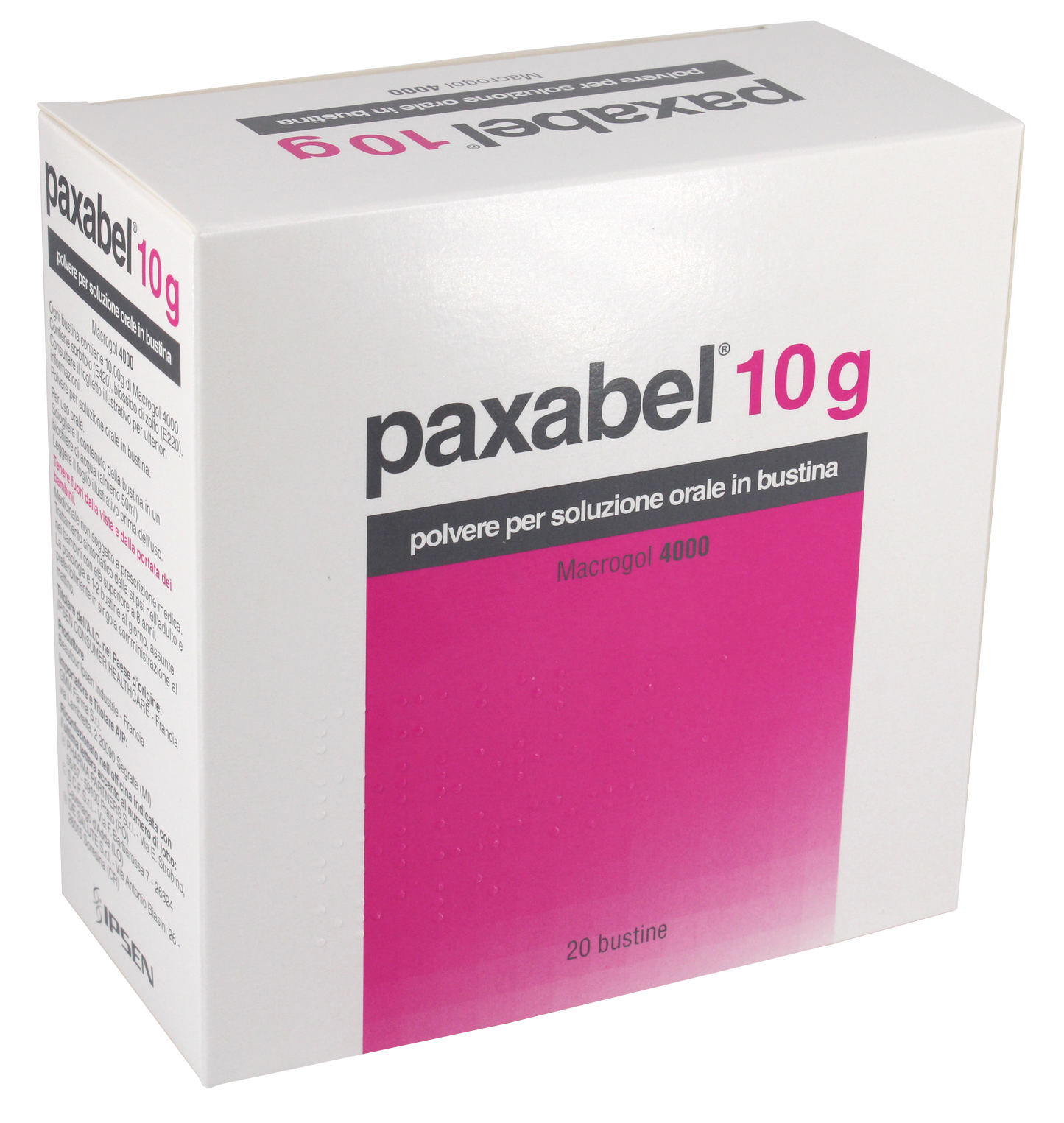
View comparePAXABEL*ORAL POWDER 20SACHETS 10G
PAXABEL*ORAL POWDER 20SACHETS 10G
Regular price
€11,55 EUR
Sale price
€11,55 EUR
Regular price
€15,35 EUR
Unit price
per
Tax included.
SKU
036003022Low stock
Delivery time: 48/72 hours
Free Shipping: Orders over €70
Description
Paxabel 10 g, powder for oral solution in sachet
Macrogol 4000
What it is and what it is used for
Paxabel contains the active substance Macrogol 4000, which belongs to a class of medicines called osmotic laxatives. It works by adding water to the stool, which helps to overcome problems caused by very slow bowel movements. Paxabel is not absorbed into the bloodstream or metabolised in the body.
Paxabel is used for the symptomatic treatment of constipation in adults and children over 8 years of age.
This medicine consists of a powder to be dissolved in a glass of water (at least 50 ml) and drunk. It usually acts within 24-48 hours after administration.
The treatment of constipation with any medicinal product should be considered an adjunct to an appropriate lifestyle and a healthy diet.
What you need to know before taking the medicine
Do not use Paxabel:
• if you are allergic (hypersensitive) to macrogol (polyethylene glycol) or any of the other ingredients of this medicine (listed in section 6);
• if you have an existing severe bowel disease, such as:
- inflammatory bowel disease (e.g. ulcerative colitis, Crohn's disease, abnormal dilation of the intestine);
- perforation or risk of intestinal perforation;
- ileus or suspected intestinal obstruction;
- abdominal pain of undetermined cause.
Do not use this medicine if you suffer from any of the conditions listed above. If you are unsure, ask your pharmacist or doctor before taking the medicine.
Warnings and precautions
Cases of allergic reactions such as rash and swelling of the face or throat (angioedema) have been reported in adults after taking macrogol-containing products (polyethylene glycol). Isolated cases of severe allergic reactions characterised by weakness, collapse or respiratory difficulties and general malaise have been reported.
If you experience any of these symptoms, stop taking Paxabel and contact your doctor immediately.
This medicine can sometimes cause diarrhoea. Check with your doctor or pharmacist before taking the medicine if:
- you suffer from impaired liver or kidney function;
- you are taking diuretics (water pills) or are elderly because there is a risk of reduced sodium (salt) or potassium in the blood.
Before taking PAXABEL, talk to your doctor or pharmacist if you know you have a swallowing disorder.
If you have difficulty swallowing, avoid mixing Paxabel and starch-based food thickeners. This may result in a watery liquid that could enter the lungs and cause pneumonia if you cannot swallow correctly.
Possible side effects
Like all medicines, Paxabel can cause side effects, although not everybody gets them.
Side effects are usually mild and temporary and include:
In children:
Common (may affect up to 1 in 10 people)
• Abdominal pain (stomach ache)
• Diarrhoea that may cause rectal cramps (anus)
Uncommon (may affect up to 1 in 100 people)
• Nausea (feeling of nausea) or vomiting
• Abdominal bloating
Not known (frequency cannot be estimated from the available data)
• Allergic reactions (hypersensitivity) (rash, hives, swelling of the face and throat, difficulty breathing, weakness or collapse)
In adults:
Common (may affect up to 1 in 10 people)
• Abdominal pain (stomach ache)
• Abdominal bloating
• Nausea (feeling of nausea) or vomiting
• Diarrhoea
Uncommon (may affect up to 1 in 100 people)
• Vomiting
• Urgency to go to the toilet
• Faecal incontinence
Not known (frequency cannot be estimated from the available data)
• Low blood potassium levels which may cause weakness, tremors and altered heart rhythm
• Low sodium levels which may cause tiredness and confusion, muscle spasms, convulsions and coma
• Dehydration caused by severe diarrhoea, especially in the elderly
• Symptoms of an allergic reaction, such as skin redness, rash, hives, swelling of the face and throat, difficulty breathing, weakness and collapse.
Reporting of side effects
If you get any side effects, talk to your doctor or pharmacist. This includes any possible side effects not listed in this leaflet. You can also report side effects directly via the national reporting system at: https://www.aifa.gov.it/content/segnalazionireazioni-avverse.
By reporting side effects, you can help provide more information on the safety of this medicine.
