

You will not be allowed to compare more than 4 products at a time
View compareTRAULEN*GEL 4% FL 25G W/DISP
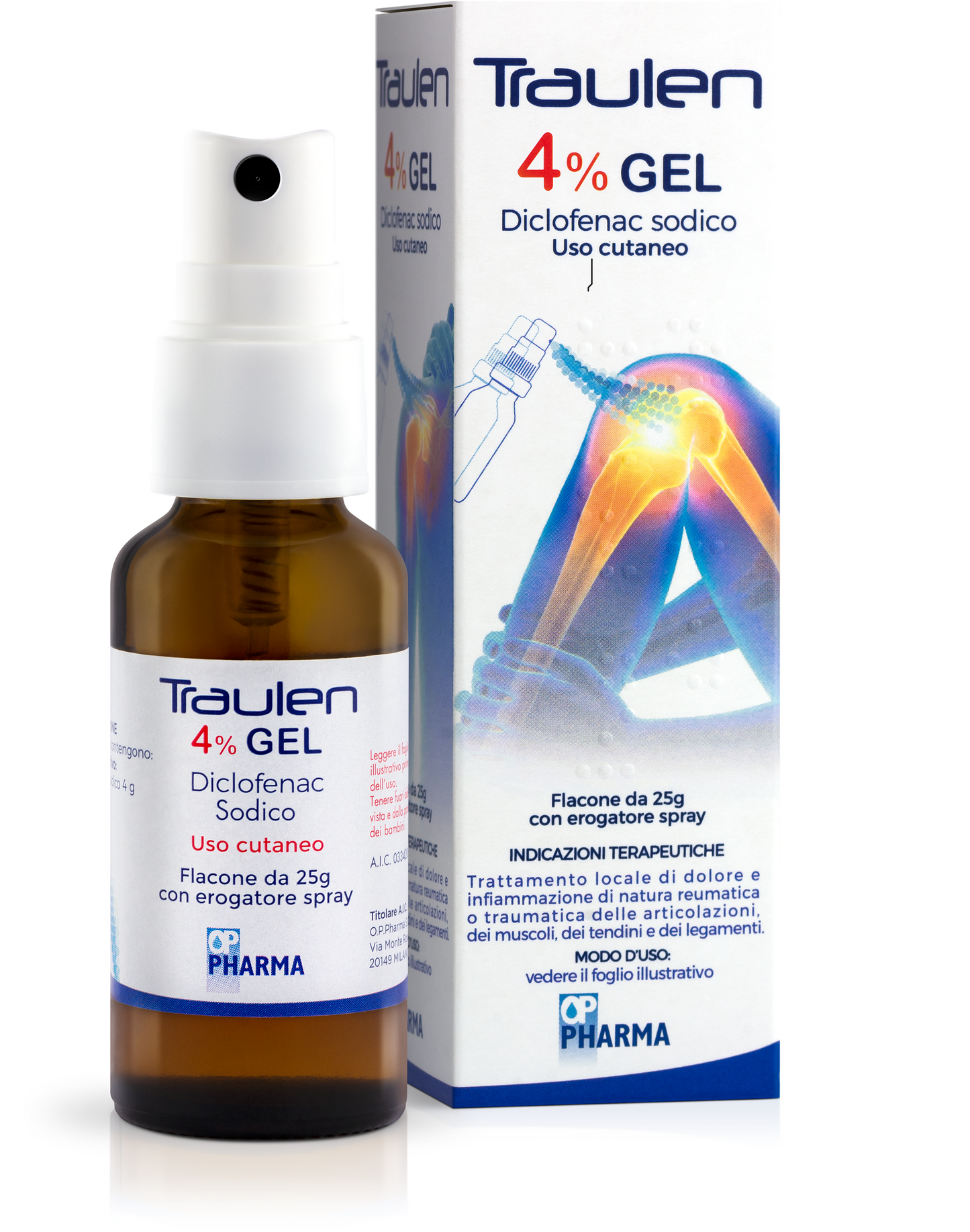
TRAULEN*GEL 4% FL 25G W/DISP
Regular price
€15,00 EUR
Sale price
€15,00 EUR
Regular price
€13,90 EUR
Unit price
per
Tax included.
SKU
033420050In stock
Vendor
O.P. PHARMA SrlDelivery time: 48/72 hours
Free Shipping: Orders over €70
This product page, including its Product Information Leaflet, has been automatically translated.
Description
Traulen 4% Gel
Diclofenac sodium
What it is and what it is used for
Traulen contains the active ingredient diclofenac and belongs to a group of medicines called non-steroidal anti-inflammatory drugs (NSAIDs), used to relieve pain and inflammation.
Traulen is used for the local treatment of pain and inflammation of rheumatic or traumatic origin in joints, muscles, tendons and ligaments.
Consult your doctor if you do not feel better or if you feel worse after 7 days.
What you need to know before taking this medicine
Do not use Traulen
- if you are allergic to diclofenac or any of the other ingredients of this medicine (listed in section 6);
- if you are allergic to peanuts or soy, as it contains soy lecithin;
- if you have experienced asthma attacks, hives or acute rhinitis after taking acetylsalicylic acid or other non-steroidal anti-inflammatory drugs (NSAIDs);
- if you are in the last 3 months of pregnancy (see section Pregnancy, breastfeeding and fertility);
- in children and adolescents under 14 years of age.
Warnings and precautions
Talk to your doctor or pharmacist before using Traulen.
If the medicine is used on extensive skin areas and for a prolonged period, the possibility of systemic side effects (which may affect various parts of the body) cannot be excluded (see section 4 Possible side effects).
Stop treatment immediately and consult your doctor if a skin rash occurs after applying the gel.
Children and adolescents
Insufficient data are available on the efficacy and safety in children and adolescents under 14 years of age. Therefore, do not use Traulen in children under 14 years of age.
Possible side effects
Like all medicines, this medicine can cause side effects, although not everybody gets them.
If the medicine is used on extensive skin areas and for a prolonged period, the possibility of systemic side effects (which may affect various parts of the body) such as nausea, indigestion, heartburn, excitement, altered sense of taste, conjunctivitis cannot be excluded; if you notice any of these symptoms, stop treatment and consult your doctor.
Common side effects (may affect up to 1 in 10 patients):
- Rash
- Itching
Uncommon side effects (may affect up to 1 in 100 patients):
- Redness and burning of the skin
- Rash with blisters and vesicles
- Skin peeling
- Tingling
- Involuntary muscle contractions
Very rare side effects (may affect up to 1 in 10,000 patients):
- Allergic reactions (hypersensitivity, including hives)
- Rapid swelling of the skin and mucous membranes
- Increased skin sensitivity to sunlight
- Asthma
Side effects with unknown frequency (frequency cannot be estimated from the available data):
- Burning sensation at the application site
- Dry skin
Reporting of side effects
If you get any side effects, including any not listed in this leaflet, talk to your doctor or pharmacist. You can also report side effects directly via the national reporting system at: https://www.aifa.gov.it/content/segnalazionireazioni-avverse.
By reporting side effects, you can help provide more information on the safety of this medicine.