

You will not be allowed to compare more than 4 products at a time
View compareASPIRIN C*10EFF TB 400+240MG
ASPIRIN C*10EFF TB 400+240MG
Regular price
€6,90 EUR
Sale price
€6,90 EUR
Regular price
€7,80 EUR
Unit price
per
Tax included.
SKU
004763114Low stock
Vendor
BAYER SpADelivery time: 48/72 hours
Free Shipping: Orders over €70
This product page, including its Product Information Leaflet, has been automatically translated.
Description
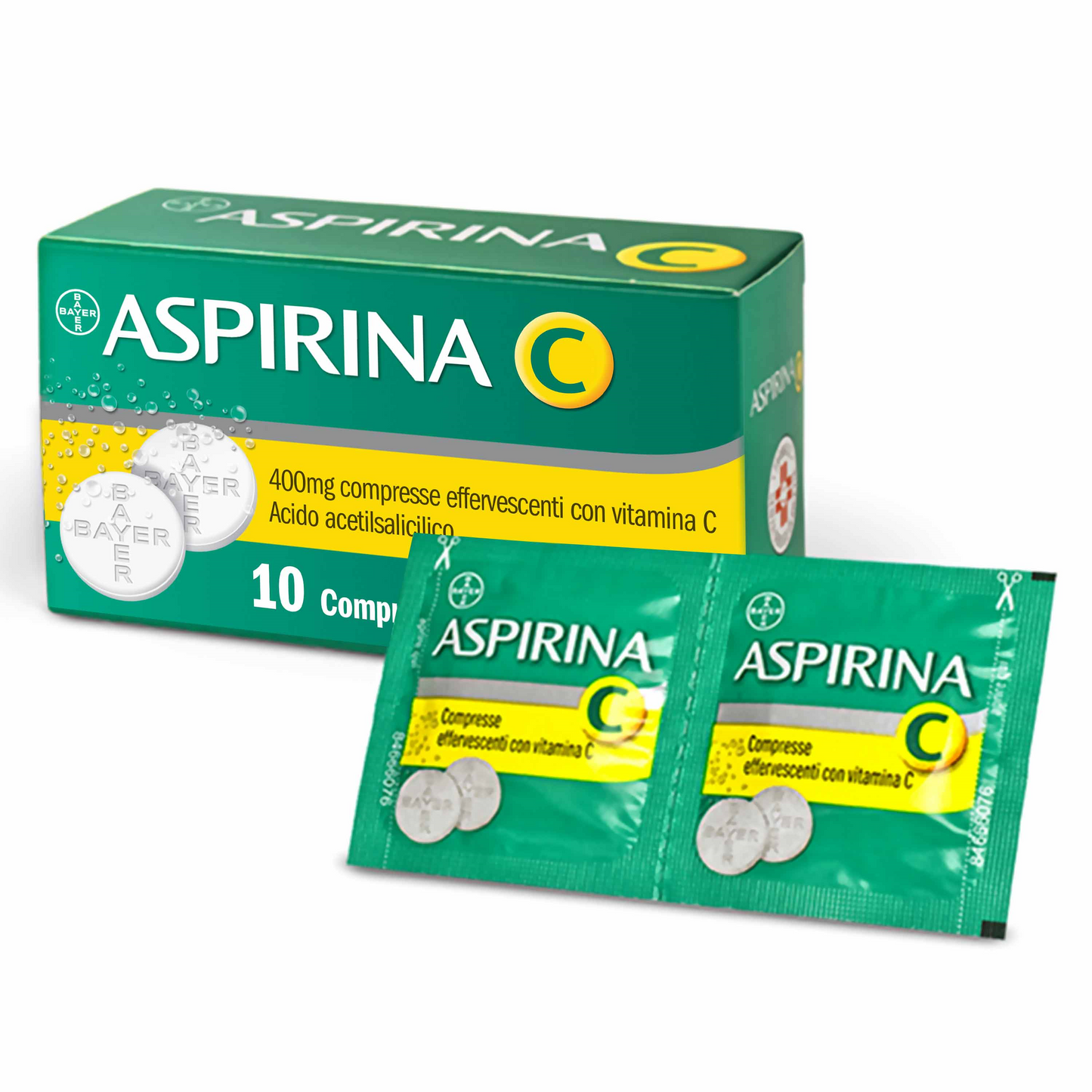
Aspirin 400 mg effervescent tablets with Vitamin C
Acetylsalicylic acid + ascorbic acid
What it is and what it is used for
Aspirin is an analgesic (pain reliever: reduces pain), anti-inflammatory and antipyretic (fever reducer: reduces fever).
Aspirin is used for the symptomatic treatment of feverish states and flu and cold syndromes, and for the symptomatic treatment of headaches and toothaches, neuralgia, menstrual pain, rheumatic pain and muscle pain.
Vitamin C (ascorbic acid) participates in the body's defense system.
The product is for adult patients only.
Consult your doctor if you do not notice any improvement or if your symptoms worsen after 3-5 days.
What you need to know before taking the medicine
Do not take Aspirin 400 mg effervescent tablets with Vitamin C
- if you are allergic to acetylsalicylic acid, ascorbic acid, other analgesics/antipyretics/non-steroidal anti-inflammatory drugs (NSAIDs) or any of the other ingredients of this medicine (listed in paragraph 6);
- if you suffer from gastroduodenal ulcer (ulcer in the stomach or in the first part of the intestine);
- if you suffer from hemorrhagic diathesis (tendency to bleeding);
- if you suffer from severe kidney (reduced kidney function) or liver or heart failure;
- if you suffer from glucose-6-phosphate dehydrogenase deficiency (an enzyme whose genetically determined absence leads to a disease characterized by reduced red blood cell survival);
- if you are already taking methotrexate (at doses of 15 mg/week or more) or warfarin (see Other medicines and Aspirin 400 mg effervescent tablets with Vitamin C);
- if you have suffered in the past from asthma induced by the administration of salicylates or substances with similar activity, in particular non-steroidal anti-inflammatory drugs (NSAIDs);
- if you are in the last trimester of pregnancy or if you are breastfeeding (see Pregnancy, breastfeeding and fertility);
- if you are under 16 years of age (see Children and adolescents);
- if you suffer or have suffered from nephrolithiasis (kidney stones or stones in the urinary tract);
- if you suffer from hyperoxaluria (increased urinary excretion of calcium oxalate);
- hemochromatosis (iron metabolism disorder leading to progressive accumulation of iron in the body).
Warnings and precautions
Consult your doctor or pharmacist before taking Aspirin 400 mg effervescent tablets with Vitamin C.
Take the medicine only on a full stomach.
Before administering any medicine, you must take all precautions to prevent undesirable reactions:
• exclude the existence of previous allergic reactions to this or other medicines;
• exclude the existence of other contraindications or conditions that may expose you to the risk of potentially serious undesirable effects. If in doubt, consult your doctor or pharmacist;
• do not use acetylsalicylic acid together with another NSAID or, in any case, do not use more than one NSAID at a time.
Allergic reactions
Acetylsalicylic acid and other NSAIDs can cause allergic reactions [including asthma attacks, rhinitis (runny nose), angioedema (swelling of the skin and mucous membranes) or urticaria (small spots on the skin accompanied by itching)].
The risk is greater in subjects who have already had an allergic reaction in the past after using this type of medicine (see Do not take Aspirin 400 mg effervescent tablets with Vitamin C) and in subjects who have allergic reactions (e.g. skin reactions, itching, urticaria) to other substances.
In subjects with asthma and/or rhinitis (with or without nasal polyposis) and/or urticaria, reactions may be more frequent and severe.
Inform your doctor if:
- you must undergo surgery (even minor surgery such as tooth extraction), as pre-operative use of this medicine may make it more difficult to stop bleeding during surgery (intraoperative hemostasis);
- you need to perform a fecal occult blood test, as acetylsalicylic acid can cause gastrointestinal bleeding.
In the following cases, your doctor will prescribe this medicine only after a careful evaluation of the risk/benefit ratio:
• if you have a greater risk of allergic reactions, for example if you suffer from asthma and/or rhinitis (with or without nasal polyposis) and/or urticaria;
• if you have a greater risk of gastrointestinal lesions, as acetylsalicylic acid and other NSAIDs can cause serious gastrointestinal side effects (bleeding, ulcer, perforation); for this reason, these medicines should not be used in subjects who suffer or have suffered in the past from gastrointestinal ulcers or gastrointestinal bleeding (see Do not take Aspirin 400 mg effervescent tablets with Vitamin C) or who use large amounts of alcohol or higher doses of acetylsalicylic acid (dose-related effect);
• if you have blood coagulation defects or if you are undergoing treatment with anticoagulant medicines (used to slow down or inhibit the blood coagulation process);
• if you suffer from impaired kidney, heart or liver function;
• if you suffer from asthma;
• if you have hyperuricemia/gout (increased uric acid level in the blood);
• if you have a predisposition to calcium-oxalate nephrolithiasis (kidney stones) or recurrent nephrolithiasis.
It is also advisable to consult your doctor if the disorders listed above have occurred in the past.
• if you are taking medicines that are not recommended or that require special precautions or dosage adjustment (see Other medicines and Aspirin 400 mg effervescent tablets with Vitamin C);
• if you are over 70 years of age, especially if you are taking concomitant therapies;
• if you are in the first or second trimester of pregnancy (see Pregnancy, breastfeeding and fertility);
• if you are following a low-sodium diet.
Children and adolescents
This medicine should not be taken by children and adolescents under 16 years of age.
Elderly
The risk of serious side effects is greater in elderly subjects.
If you are over 70 years of age, consult your doctor before taking this medicine.
Patients with impaired kidney and liver function
This medicine should be used with caution (see warnings and precautions).
Possible side effects
Like all medicines, this medicine can cause side effects, although not everybody gets them.
The most frequently observed side effects affect the gastrointestinal tract.
These disorders can be partially alleviated by taking the medicine on a full stomach. Most side effects are dependent on both the dose and the duration of treatment.
The side effects observed with acetylsalicylic acid are generally common to other NSAIDs.
The following side effects may occur:
Effects on blood
- prolonged bleeding time,
- anemia due to gastrointestinal bleeding,
- reduction in platelets (thrombocytopenia) in extremely rare cases.
Following hemorrhage, hemorrhagic/iron deficiency anemia (due to iron deficiency) may occur (due to, for example, occult microhemorrhages) with related changes in laboratory parameters and related clinical signs and symptoms such as asthenia (fatigue), pallor and hypoperfusion (reduced blood supply to the tissues).
Effects on the nervous system
- headache,
- dizziness.
Rarely, it may occur:
- Reye's syndrome (*), an acute disease affecting the brain and liver, potentially fatal, which affects almost exclusively children.
Rarely to very rarely, it may occur:
- cerebral hemorrhage, especially in patients with uncontrolled hypertension (high blood pressure) and/or on anticoagulant therapy (medicines used to slow down or inhibit the blood coagulation process), which, in isolated cases, can be potentially fatal.
Effects on the ear
- tinnitus (ringing/hissing/tinkling/whistling in the ear).
Effects on the respiratory system
- Respiratory disease exacerbated by acetylsalicylic acid
- asthmatic syndrome,
- rhinitis (runny nose)
- nasal congestion (stuffy nose) (associated with allergic reactions);
- epistaxis (nosebleed).
Effects on the heart
- cardiorespiratory distress (severe and acute respiratory failure) (associated with allergic reactions).
Effects on the eye
- conjunctivitis (associated with allergic reactions).
Effects on the gastrointestinal tract
- gastrointestinal bleeding (occult),
- stomach upset,
- heartburn,
- gastrointestinal pain,
- gingivorrhagia (bleeding gums),
- vomiting,
- diarrhea,
- nausea,
- crampy abdominal pain (associated with allergic reactions).
Rarely, it may occur:
- gastrointestinal inflammation,
- gastrointestinal erosion,
- gastrointestinal ulceration,
- hematemesis (vomiting blood or coffee-ground material),
- melena (emission of black, tarry stools),
- esophagitis (inflammation of the esophagus)
Very rarely, it may occur:
- hemorrhagic gastrointestinal ulcer and/or gastrointestinal perforation with related clinical signs and symptoms and changes in laboratory parameters.
Frequency not known (especially in long-term treatment):
- Intestinal diaphragm disease.
Effects on the liver
- rarely: hepatotoxicity (usually mild and asymptomatic hepatocellular injury) manifested by an increase in transaminases.
Effects on the skin
- skin rash,
- edema (swelling),
- urticaria,
- itching,
- erythema (redness),
- angioedema (associated with allergic reactions).
Effects on the kidneys and urinary tract
- impaired kidney function (in the presence of conditions of altered blood circulation in the kidneys) and acute kidney injury,
- urogenital hemorrhages (of the urinary and genital apparatus).
Effects on the body as a whole
- procedural hemorrhages (immediately before, during and immediately after surgery),
- hematomas (collections of blood outside the blood vessels).
Effects on the immune system
- rarely: anaphylactic shock (severe allergic reaction, potentially fatal) with related changes in laboratory parameters and clinical manifestations.
(*) Reye's Syndrome (RS)
RS initially manifests with vomiting (persistent or recurrent) and other signs of encephalic suffering of varying severity: from listlessness, drowsiness or personality changes (irritability or aggression) to disorientation, confusion or delirium up to convulsions or loss of consciousness. The variability of the clinical picture should be kept in mind: even vomiting may be absent or replaced by diarrhea.
If these symptoms occur in the days immediately following a flu-like episode (or chickenpox or another viral infection) during which acetylsalicylic acid or other salicylate-containing medicines have been administered, the doctor's attention should immediately be directed to the possibility of RS.
Reporting of side effects
If you get any side effects, including any not listed in this leaflet, tell your doctor or pharmacist. You can also report side effects directly via the national reporting system at: https://www.aifa.gov.it/content/segnalazionireazioni-avverse.
By reporting side effects you can help provide more information on the safety of this medicine.
