



You will not be allowed to compare more than 4 products at a time
View compareTACHIFLUACTIV INFL RAFFR*10TAB
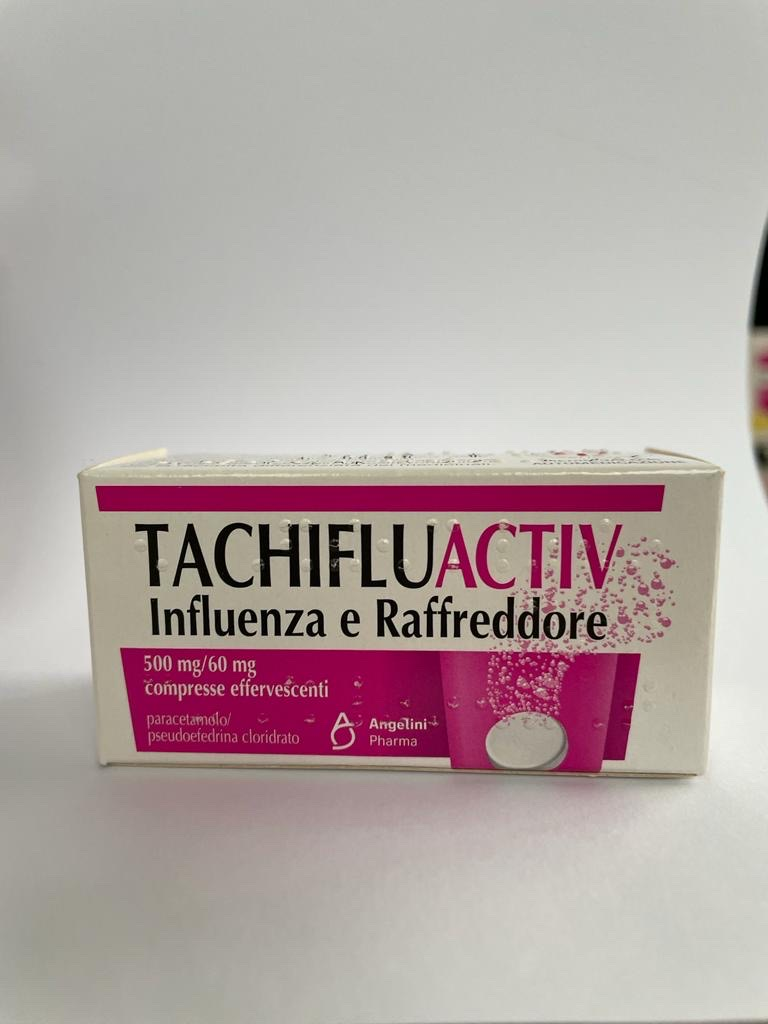
TACHIFLUACTIV INFL RAFFR*10TAB
Regular price
€8,94 EUR
Sale price
€8,94 EUR
Regular price
€9,90 EUR
Unit price
per
Tax included.
SKU
040055030In stock
Vendor
ANGELINI (A.C.R.A.F.) SpADelivery time: 48/72 hours
Free Shipping: Orders over €70
This product page, including its Product Information Leaflet, has been automatically translated.
Description
TACHIFLUACTIV INFLUENZA E RAFFREDDORE 500 mg/60 mg effervescent tablets
Paracetamol/pseudoephedrine hydrochloride
What it is and what it is used for
TACHIFLUACTIV INFLUENZA E RAFFREDDORE contains the active ingredients paracetamol and pseudoephedrine which act against pain, fever and nasal congestion.
TACHIFLUACTIV INFLUENZA E RAFFREDDORE is indicated for the treatment of cold and flu symptoms.
Consult your doctor if you do not feel better or feel worse after 5 days of treatment if you are an adult, and after 3 days if the person taking the medicine is an adolescent, if the disorder recurs repeatedly, or if you have noticed any recent changes in its characteristics.
What you need to know before taking the medicine
Do not use TACHIFLUACTIV INFLUENZA E RAFFREDDORE
- if you are allergic to paracetamol, pseudoephedrine or any of the other ingredients of this medicine (listed in paragraph 6);
- if you are pregnant or breastfeeding (see paragraph Pregnancy and breastfeeding);
- if the patient is a child under 12 years of age (see paragraph Children);
- if you have a deficiency of an enzyme known as glucose-6-phosphate dehydrogenase;
- if you have a severe form of the following diseases:
• coronary artery disease (chest pain (angina), previous heart attack);
• asthma;
• very high blood pressure (severe hypertension) or hypertension not controlled by medicines;
• heart rhythm disorders (arrhythmias);
• liver failure;
• severe acute (sudden) or chronic (long-term) kidney disease or kidney failure;
• diabetes;
• urinary disorders caused by an enlarged prostate (prostatic hypertrophy) and other diseases;
• reduction in the number of red blood cells due to their destruction (haemolytic anaemia);
- if your thyroid gland is overactive (hyperthyroidism);
- if you have a disease characterized by high pressure inside the eye (angle-closure glaucoma);
- if you have a tumour of the adrenal gland known as phaeochromocytoma;
- if you are using the following medicines:
• antidepressant medicines belonging to the class of tricyclic antidepressants;
• heart or high blood pressure medicines belonging to the class of beta-blockers;
• sympathomimetic medicines, used for the treatment of low blood pressure or nasal congestion (see paragraph Other medicines and TACHIFLUACTIV INFLUENZA E RAFFREDDORE);
- if you are using or have used in the last 14 days medicines for the treatment of depression and Parkinson's belonging to the class of monoamine oxidase inhibitors. See paragraph Other medicines and TACHIFLUACTIV INFLUENZA E RAFFREDDORE.
Warnings and precautions
Consult your doctor or pharmacist before taking TACHIFLUACTIV INFLUENZA E RAFFREDDORE.
Consult your doctor before taking this medicine:
- if you are elderly;
- if you have kidney problems;
- if you have liver problems, including liver failure and acute hepatitis;
- if you have a deficiency of an enzyme known as glucose-6-phosphate dehydrogenase (see paragraph Do not take TACHIFLUACTIV INFLUENZA E RAFFREDDORE);
- if you have a reduction in the number of red blood cells due to their destruction (haemolytic anaemia);
- if you suffer from a chronic form of malnutrition and dehydration;
- if you have heart and/or blood vessel problems, for example chest pain (angina), palpitations or other heart rhythm disorders;
- if you have diabetes mellitus;
- if you have an enlarged prostate (prostatic hypertrophy) that causes urinary problems;
- if you have mental problems (psychosis);
- if your thyroid gland is overactive (hyperthyroidism);
- if you have asthma;
- if you have a disease characterized by high pressure inside the eye (glaucoma);
- if you have high blood pressure (hypertension);
- if you have alcohol dependence (alcoholism) (see paragraph TACHIFLUACTIV INFLUENZA E RAFFREDDORE and alcohol);
- if you are using any other medicines (see paragraph Other medicines and TACHIFLUACTIV INFLUENZA E RAFFREDDORE), in particular:
• other medicines that affect the liver (consult your doctor if you are unsure if this applies to you);
• if you are using medicines that reduce blood clotting (oral anticoagulants), because your doctor will assess whether to reduce the dose of the medicine.
Consult your doctor if during treatment with TACHIFLUACTIV INFLUENZA E RAFFREDDORE:
• pain or nasal congestion worsen or last more than 5 days, or if symptoms do not improve within 5 days;
• fever worsens or lasts more than 3 days;
• you experience redness or swelling;
• you develop new symptoms.
During treatment with TACHIFLUACTIV INFLUENZA E RAFFREDDORE, inform your doctor immediately if:
You suffer from serious illnesses, including severe renal impairment or sepsis (when bacteria and their toxins circulate in the blood causing organ damage) or malnutrition, chronic alcoholism, or if you are also taking flucloxacillin (an antibiotic). In patients in these situations, a serious condition called metabolic acidosis (an abnormality of the blood and fluids) has been reported when paracetamol is used at regular doses for a prolonged period or when paracetamol is taken in combination with flucloxacillin. Symptoms of metabolic acidosis may include: severe breathing difficulties with rapid deep breathing, drowsiness, nausea, and vomiting.
Pay particular attention:
• TACHIFLUACTIV INFLUENZA E RAFFREDDORE contains paracetamol; before using any other medicine, check that it does not contain paracetamol, as the use of high doses of paracetamol could cause serious side effects, for example liver damage;
• do not take TACHIFLUACTIV INFLUENZA E RAFFREDDORE with other medicines used for the treatment of pain and fever, as serious side effects could occur;
• if you need to undergo surgery, inform your doctor that you are taking TACHIFLUACTIV INFLUENZA E RAFFREDDORE, because treatment with TACHIFLUACTIV INFLUENZA E RAFFREDDORE should be stopped a few days before the operation.
One of the active ingredients of TACHIFLUACTIV INFLUENZA E RAFFREDDORE, pseudoephedrine, can cause abuse, and high doses of pseudoephedrine can be toxic. Continued use may lead to taking more TACHIFLUACTIV INFLUENZA E RAFFREDDORE than the recommended dose to achieve the desired effect, resulting in an increased risk of overdose. The maximum recommended dose and duration of treatment must not be exceeded (see paragraph 3).
With TACHIFLUACTIV INFLUENZA E RAFFREDDORE, sudden abdominal pain or rectal bleeding may occur due to inflammation of the colon (ischemic colitis). If you experience these gastrointestinal symptoms, stop using TACHIFLUACTIV INFLUENZA E RAFFREDDORE and contact your doctor or seek immediate medical attention. See paragraph 4.
With TACHIFLUACTIV INFLUENZA E RAFFREDDORE, a reduction in blood flow to the optic nerve may occur. If you experience sudden vision loss, stop taking TACHIFLUACTIV INFLUENZA E RAFFREDDORE and contact your doctor or a healthcare facility immediately. See paragraph 4.
Cases of reversible posterior encephalopathy syndrome (PRES) and reversible cerebral vasoconstriction syndrome (RCVS) have been reported following the use of pseudoephedrine-containing medicines. PRES and RCVS are rare conditions that can lead to reduced blood supply to the brain. Stop using TACHIFLUACTIV INFLUENZA E RAFFREDDORE immediately and seek immediate medical attention if you develop symptoms that could be signs of PRES or RCVS (see paragraph 4 Possible side effects for symptoms).
If you develop a generalized erythematous rash with fever associated with pustules, stop taking TACHIFLUACTIV INFLUENZA E RAFFREDDORE and contact your doctor or seek immediate medical attention. See paragraph 4.
Children
TACHIFLUACTIV INFLUENZA E RAFFREDDORE should not be administered to children under 12 years of age (see paragraph Do not take TACHIFLUACTIV INFLUENZA E RAFFREDDORE).
Possible side effects
Like all medicines, this medicine can cause side effects, although not everybody gets them.
Very serious side effects: Side effects with unknown frequency (frequency cannot be estimated from the available data)
• serious conditions affecting the cerebral blood vessels known as reversible posterior encephalopathy syndrome (PRES) and reversible cerebral vasoconstriction syndrome (RCVS).
Stop treatment with TACHIFLUACTIV INFLUENZA E RAFFREDDORE immediately and seek urgent medical attention if you develop symptoms that could be signs of reversible posterior encephalopathy syndrome (PRES) and reversible cerebral vasoconstriction syndrome (RCVS). These include:
• severe headache with sudden onset;
• nausea;
• vomiting;
• seizures;
• changes in vision.
Other possible side effects are:
Rare side effects (may affect up to 1 in 1,000 people)
• allergic reactions, including swelling of the skin or mucous membranes (angioedema);
• nervousness, insomnia, anxiety, agitation, hallucinations, particularly in children;
• dizziness;
• headache;
• tremors;
• changes in heart rhythm (tachycardia, palpitations);
• increased blood pressure;
• vomiting, nausea, dry mouth;
• increased levels of some liver enzymes, visible through laboratory tests;
• skin rash, erythema, urticaria, itching;
• difficulty urinating, particularly in patients with an enlarged prostate (prostatic hypertrophy).
Very rare side effects (may affect up to 1 in 10,000 people)
• reduction in the number of platelets in the blood (thrombocytopenia);
• reduction in the number of white blood cells (leukopenia, agranulocytosis);
• reduction in the number of all blood cells (pancytopenia);
• severe skin reactions.
Side effects with unknown frequency (frequency cannot be estimated from the available data):
• severe and sudden allergic reaction (anaphylactic shock);
• severe skin reaction (Stevens-Johnson syndrome);
• severe allergic reaction involving the skin and mucous membranes, which can also be fatal (toxic epidermal necrolysis);
• sudden onset of fever, skin redness or numerous small pustules (possible symptoms of Acute Generalized Exanthematous Pustulosis - AGEP) may occur within the first 2 days of treatment with TACHIFLUACTIV INFLUENZA E RAFFREDDORE. See paragraph 2. Stop using TACHIFLUACTIV INFLUENZA E RAFFREDDORE if you develop these symptoms and contact your doctor or seek immediate medical attention;
• inflammation of the colon due to insufficient blood flow (ischemic colitis);
• reduction in blood flow to the optic nerve (ischemic optic neuropathy);
• severe condition that can make the blood more acidic (called metabolic acidosis), in patients suffering from a serious illness who use paracetamol (see paragraph 2).
Other side effects that may occur after taking TACHIFLUACTIV INFLUENZA E RAFFREDDORE:
• sweating;
• thirst;
• chest pain in the heart area (precordial pain);
• difficulty urinating;
• muscle weakness;
• pupil dilation;
• stomach problems;
• severe heart rhythm disorder (ventricular arrhythmia);
• allergic reaction involving the skin and mucous membranes (erythema multiforme);
• swelling of the throat (larynx);
• severe and sudden allergic reaction causing collapse and which can be fatal (anaphylactic shock);
• anaemia;
• liver function alterations, inflammation of the liver (hepatitis);
• kidney function alterations:
- severe kidney failure;
- severe kidney inflammation (interstitial nephritis);
- presence of blood in the urine (haematuria);
- inability to urinate (anuria).