

You will not be allowed to compare more than 4 products at a time
View compareSEPTAFAR*SPRAY 1FL 30ML 250ER
SEPTAFAR*SPRAY 1FL 30ML 250ER
Regular price
€3,55 EUR
Sale price
€3,55 EUR
Regular price
€8,90 EUR
Unit price
per
Tax included.
SKU
043452010In stock
Vendor
KRKA FARMACEUTICI MILANO SrlDelivery time: 48/72 hours
Free Shipping: Orders over €70
This product page, including its Product Information Leaflet, has been automatically translated.
Description
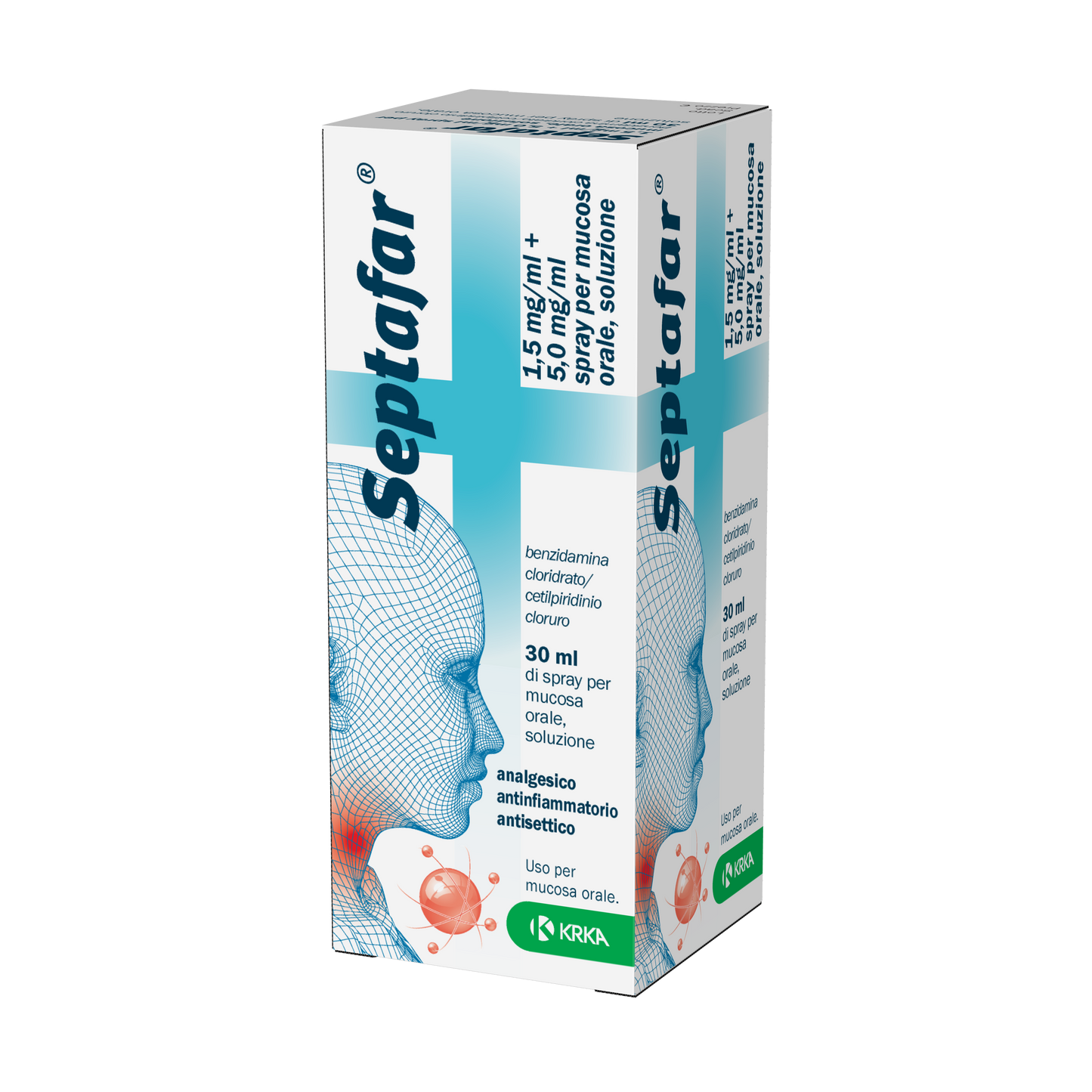
Septafar 1.5 mg/ml + 5.0 mg/ml oral mucosa spray, solution
Benzydamine hydrochloride/cetylpyridinium chloride
What it is and what it is used for
Septafar oral mucosa spray, solution is an anti-inflammatory, analgesic, and antiseptic medicine for local oral use. The oral mucosa spray disinfects the mouth and throat and reduces the signs of throat inflammation such as pain, redness, swelling, burning, and impaired function.
Septafar is used in the anti-inflammatory, analgesic and antiseptic treatment of:
- irritations of the throat, mouth, and gums
- gingivitis and pharyngitis, and
- before and after tooth extractions.
You must talk to a doctor if you do not feel better or if you feel worse after 3 days.
What you need to know before taking the medicine
Do not use Septafar
- if you are allergic to benzydamine hydrochloride, cetylpyridinium chloride, or any of the other ingredients of this medicine (listed in section 6).
- this medicine should not be used in children under 6 years of age as this pharmaceutical form is not suitable for this age group.
Warnings and precautions
Talk to your doctor or pharmacist before using Septafar.
Septafar should not be used for more than 7 days. If symptoms worsen or do not improve after 3 days, or if other symptoms appear, such as fever, consult your doctor.
The use, especially prolonged, of topical preparations can give rise to sensitisation phenomena, in which case treatment should be discontinued.
Septafar should not be used together with anionic compounds, such as those present in toothpaste, therefore it is recommended not to use the product immediately before or after brushing your teeth.
Avoid direct contact of Septafar oral mucosa spray, solution with the eyes.
The product should not be inhaled.
Children and adolescents
Septafar should not be used in children under 6 years of age as the oral mucosa spray is not suitable for this age group.
Possible side effects
Like all medicines, this medicine can cause side effects, although not everybody gets them.
Rare (may affect up to 1 in 1,000 people):
- hives, increased skin reactivity to sunlight (photosensitivity),
- sudden and uncontrolled narrowing of the airways in the lungs (bronchospasm).
Very rare (may affect up to 1 in 10,000 people):
- local irritation in the oral cavity, burning sensation in the oral cavity
Not known (frequency cannot be estimated from the available data):
- allergic reaction (hypersensitivity)
severe allergic reaction (anaphylactic shock), the signs of which may include difficulty breathing, chest pain or tightness and/or dizziness/weakness, severe skin itching or appearance of swelling on the skin, swelling of the face, lips, tongue and/or throat, which may potentially put the patient's life at risk.
- burning of the oral mucosa, loss of sensation (anaesthesia) of the oral mucosa.
These side effects are usually transient. However, if they occur, it is recommended to talk to your doctor or pharmacist.
By following the instructions in the package leaflet, you will reduce the risk of side effects.
Reporting of side effects
If you get any side effects, including any not listed in this leaflet, talk to your doctor or pharmacist. You can also report side effects directly via the national reporting system at: https://www.aifa.gov.it/content/segnalazionireazioni-averse.
By reporting side effects you can help provide more information on the safety of this medicine.