



You will not be allowed to compare more than 4 products at a time
View compareZIDOVAL*VAG GEL40G 7.5MG/G+5AP
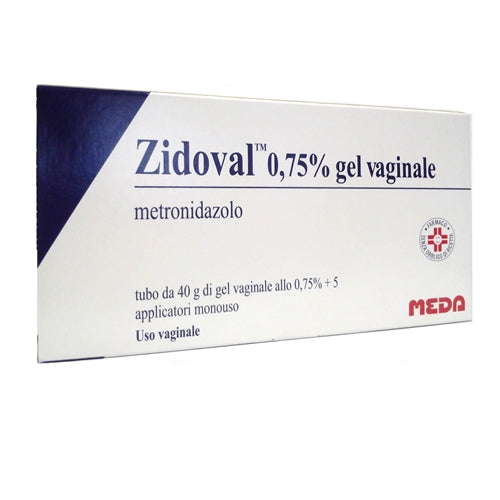
ZIDOVAL*VAG GEL40G 7.5MG/G+5AP
Regular price
€20,28 EUR
Sale price
€20,28 EUR
Regular price
€22,89 EUR
Unit price
per
Tax included.
SKU
034942019In stock
Vendor
EXELTIS ITALIA SrlDelivery time: 48/72 hours
Free Shipping: Orders over €70
This product page, including its Product Information Leaflet, has been automatically translated.
Description
Zidoval 7.5 mg/g Vaginal Gel
Metronidazole
What it is and what it is used for
Zidoval gel belongs to the category of medicines called antibacterials. It works by destroying many types of bacteria that cause infections.
Zidoval gel is used to treat a vaginal infection (called bacterial vaginosis or BV, for short) in adult patients. Zidoval gel is applied inside the vagina, where it destroys bacteria at the site of the infection.
It is important that bacterial vaginosis is treated and completely eradicated, otherwise the infection may recur. To prevent this from happening, it is necessary to use this medicine for the entire course of treatment, as prescribed by your doctor.
What you need to know before taking the medicine
Do not use Zidoval gel:
• if you are allergic to metronidazole or any of the other ingredients of this medicine (listed in section 6);
• if you are allergic to other similar nitroimidazole-based antibacterials;
• if you are allergic to parabens (preservatives).
If any of the above conditions apply to you, tell your doctor or pharmacist.
Warnings and precautions
Talk to your doctor or pharmacist before using Zidoval gel:
• if you have or have had any blood problems or a disease that has affected your blood;
• if you have or think you have a vaginal yeast infection (candidiasis). The symptoms of a vaginal yeast infection may be accentuated when using Zidoval gel. You may therefore need your doctor to prescribe another treatment for this problem;
• if you are menstruating;
• if you need to undergo blood tests, as metronidazole can interfere with the results of some analyses.
Avoid prolonged and unnecessary use.
As with all vaginal infections, you should avoid sexual intercourse during the infection and while using Zidoval gel.
Children and adolescents
Zidoval gel is contraindicated for use in girls under 18 years of age, as the safety of this medicine has not been established in this patient group.
Elderly
Zidoval gel is contraindicated for use in elderly patients, as the safety of this medicine has not been established in this patient group.
Possible side effects
Like all medicines, this medicine can cause side effects, although not everybody gets them.
Common side effects (may affect up to 1 in 10 patients):
• headache and dizziness;
• stomach cramps;
• vomiting;
• bad taste in the mouth;
• unusual sensation on the tongue;
• dry skin;
• skin redness (erythema);
• skin itching;
• skin discomfort (burning, skin pain, stinging skin pain);
• skin irritation;
• vaginal yeast infection (candidiasis);
• vaginal discharge;
• pelvic discomfort;
• reduced appetite.
Uncommon side effects (may affect up to 1 in 100 patients):
• feeling sick;
• depression;
• tiredness;
• irritability;
• difficulty sleeping;
• unusual sensation in fingers and toes;
• diarrhoea;
• constipation;
• swelling and rumbling of the stomach;
• dry mouth or feeling thirsty;
• metallic taste in the mouth;
• muscle cramps;
• dark urine;
• urinary tract infections (UTIs) which can cause pain or burning sensation when passing urine, or needing to urinate more often and with greater urgency;
• swelling of the vulva (external part of the vagina);
• changes in menstrual cycles, such as spotting or bleeding between cycles, or increased discomfort during the menstrual cycle.
Other possible side effects (frequency not known):
• itchy rash (urticaria).
Reporting of side effects
If you get any side effects, including any not listed in this leaflet, talk to your doctor or pharmacist. You can also report side effects directly via the national reporting system at: https://www.aifa.gov.it/content/segnalazionireazioni-avverse.
By reporting side effects, you can help provide more information on the safety of this medicine.
