


You will not be allowed to compare more than 4 products at a time
View compareCLARILAX CONSTIPATION*AD 6MICR
CLARILAX CONSTIPATION*AD 6MICR
Regular price
€5,45 EUR
Sale price
€5,45 EUR
Regular price
€5,80 EUR
Unit price
per
Tax included.
SKU
027857010In stock
Vendor
ALMUS SrlDelivery time: 48/72 hours
Free Shipping: Orders over €70
This product page, including its Product Information Leaflet, has been automatically translated.
Description
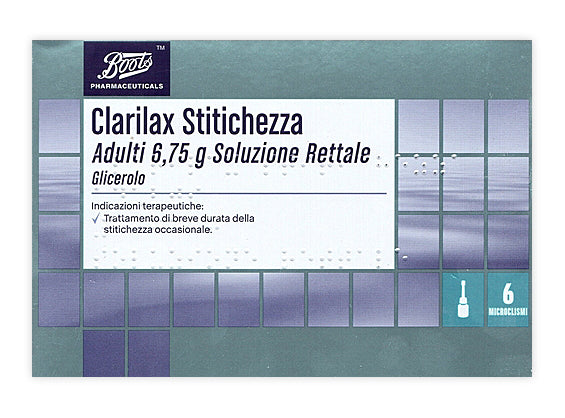
CLARILAX CONSTIPATION
Adults 6.75 g rectal solution
Glycerol
What it is and what it is used for
CLARILAX CONSTIPATION contains the active ingredient glycerol, which belongs to the laxative category of medicines used to facilitate bowel movements.
This medicine is indicated for the short-term treatment of occasional constipation.
Consult your doctor if you do not notice any improvement or if your symptoms worsen after 7 days.
What you need to know before taking the medicine
Do not use CLARILAX CONSTIPATION
- if you are allergic to glycerol or any of the other ingredients of this medicine (listed in section 6);
- if you suffer from acute or unknown abdominal pain;
- if you have nausea or vomiting;
- if you suffer from intestinal obstruction or narrowing (stenosis);
- if you suffer from rectal bleeding of unknown origin;
- if you suffer from swelling of the blood vessels around the anus (acute hemorrhoidal crisis) with pain and bleeding;
- if you are severely dehydrated.
Warnings and precautions
Talk to your doctor or pharmacist before using CLARILAX CONSTIPATION.
If you are elderly and/or not in good health, inform your doctor before using this medicine.
If you suffer from long-lasting (chronic) or frequent constipation, always seek medical advice for diagnosis, prescription of medicines, and supervision during therapy. Consult your doctor when the need for a laxative arises from a sudden change in previous bowel habits (frequency and characteristics of bowel movements) lasting more than two weeks or when the use of a laxative fails to produce effects.
Drink at least 6-8 glasses of water or other liquids per day to soften stools when using laxatives.
Excessive, frequent or incorrect use of laxatives can lead to prolonged diarrhea with consequent loss of water, mineral salts (especially potassium) and other essential nutrients. In the most severe cases of abuse, excessive fluid loss (dehydration) or a drop in blood potassium levels (hypokalemia) may occur, which can cause heart problems or muscle activity problems, especially if you are taking cardiac glycosides, diuretics or corticosteroids during treatment with this medicine.
Laxative abuse, especially contact laxatives (stimulant laxatives), can cause dependence (the need to constantly increase the dosage), chronic constipation and loss of normal bowel function (intestinal atony).
Possible side effects
Like all medicines, this medicine can cause side effects, although not everybody gets them.
The following side effects may occur with an unknown frequency (frequency cannot be estimated from the available data):
- cramping pain (isolated or widespread in the abdomen);
- non-continuous abdominal pain (colic);
- diarrhea (with loss of fluids and electrolytes);
- redness with burning or pain (irritation) in the anus.
Reporting of side effects
If you get any side effects, including any not listed in this leaflet, talk to your doctor or pharmacist. You can also report side effects directly via the national reporting system at: https://www.aifa.gov.it/content/segnalazionireazioni-adverse.
By reporting side effects you can help provide more information on the safety of this medicine.
