

You will not be allowed to compare more than 4 products at a time
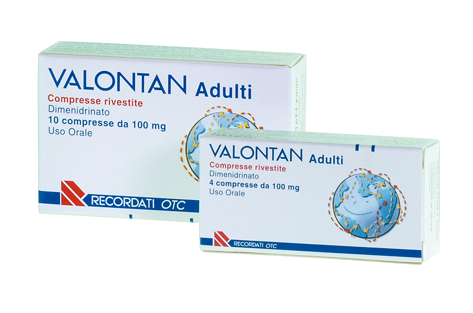
View compareVALONTAN*AD 10FC TAB 100MG
VALONTAN*AD 10FC TAB 100MG
Regular price
€7,55 EUR
Sale price
€7,55 EUR
Regular price
€10,00 EUR
Unit price
per
Tax included.
SKU
003452024In stock
Vendor
RECORDATI SpADelivery time: 48/72 hours
Free Shipping: Orders over €70
This product page, including its Product Information Leaflet, has been automatically translated.
Description
Valontan Adults 100 mg coated tablets
Dimenhydrinate
What it is and what it is used for
Valontan contains the active ingredient dimenhydrinate.
It belongs to a group of anti-vomiting medicines called antiemetics and anti-nausea.
Valontan is used for the prevention and treatment of nausea, vomiting and dizziness (loss of balance), typical of motion sickness, car sickness, train sickness, air sickness (naupathy).
Consult your doctor if you do not feel better or if you feel worse after a short period of treatment.
What you need to know before taking the medicine
Do not take Valontan
- if you are allergic to dimenhydrinate or any of the other ingredients of this medicine (listed in section 6);
- if you are allergic to other related substances (other antihistamines);
- if it is for a child or adolescent;
- if you are pregnant or breastfeeding (see Pregnancy, breastfeeding and fertility).
Warnings and precautions
Consult your doctor or pharmacist before taking Valontan.
Take Valontan only after consulting your doctor if:
• you have increased pressure inside the eye (glaucoma);
• you have an enlarged prostate (prostatic hypertrophy);
• you have difficulty urinating (urinary retention);
• you have problems with intestinal transit (intestinal obstruction);
• you have high blood pressure (arterial hypertension);
• you have cardiovascular diseases;
• you have breathing difficulties (bronchial asthma, chronic bronchitis or emphysema);
• you have an overactive thyroid (hyperthyroidism);
• you have epilepsy (seizures may worsen).
Also consult your doctor if these disorders have occurred in the past.
Children and adolescents
Valontan should not be used in children and adolescents.
Possible side effects
Like all medicines, this medicine can cause side effects, although not everybody gets them.
The following side effects may occur with Valontan:
Most frequent side effects:
- drowsiness
- reduced reactivity (sedation)
Frequent side effects:
- dry mouth
- nausea
- excessive sensitivity to light (photosensitivity)
- allergic skin reactions
- disturbance of eye accommodation (altered vision)
- difficulty urinating
- headache (cephalalgia)
- decreased appetite (anorexia)
Less frequent side effects:
- loss of balance (vertigo)
- tremors
- convulsions (may occur especially at high doses)
- decreased ability to exert muscle effort (asthenia)
- insomnia
- euphoria
- decreased blood pressure (hypotension)
- increased heart rate (tachycardia)
Reporting of side effects
If you get any side effects, including any not listed in this leaflet, talk to your doctor or pharmacist. You can also report side effects directly via the national reporting system at: https://www.aifa.gov.it/content/segnalazionireazioni-avverse.
By reporting side effects you can help provide more information on the safety of this medicine.
