

You will not be allowed to compare more than 4 products at a time
View compareSEDIPANTO*14DR/GASTRIC TABS 20MG
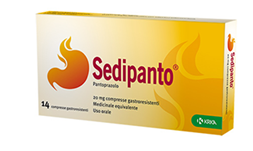
SEDIPANTO*14DR/GASTRIC TABS 20MG
Regular price
€2,71 EUR
Sale price
€2,71 EUR
Regular price
€2,52 EUR
Unit price
per
Tax included.
SKU
042475020In stock
Vendor
KRKA FARMACEUTICI MILANO SrlDelivery time: 48/72 hours
Free Shipping: Orders over €70
This product page, including its Product Information Leaflet, has been automatically translated.
Description
Sedipanto 20 mg gastro-resistant tablets
Pantoprazole
What it is and what it is used for
Sedipanto contains the active substance pantoprazole, which blocks the acid pump in the stomach. This reduces the amount of acid in the stomach.
Sedipanto is used for the short-term treatment of reflux symptoms (e.g., heartburn, acid regurgitation) in adults.
Reflux is the return of acid from the stomach into the oesophagus, which can become inflamed and cause pain. This can cause symptoms such as a painful burning sensation in the chest that rises to the throat (heartburn) and a bitter taste in the mouth (acid regurgitation).
You may experience relief from acid reflux and heartburn symptoms after just one day of treatment with Sedipanto, but this medicine is not designed to provide immediate relief. You may need to take the tablets for 2-3 consecutive days to relieve symptoms.
Consult your doctor if you do not feel better or if you feel worse after 2 weeks.
What you need to know before taking the medicine
Do not take Sedipanto
- if you are allergic to pantoprazole or any of the other ingredients of this medicine (listed in section 6);
- if you are taking HIV protease inhibitors such as atazanavir, nelfinavir (for the treatment of HIV infection). See Other medicines and Sedipanto.
Warnings and precautions
Talk to your doctor or pharmacist before taking Sedipanto.
Talk to your doctor first:
- if you have been continuously treated for heartburn or indigestion for 4 weeks or more;
- if you are over 55 and are taking over-the-counter medicines for indigestion daily;
- if you are over 55 with new or recently changed reflux symptoms;
- if you have a history of stomach ulcers or stomach surgery;
- if you have liver problems or jaundice (yellowing of the skin or eyes);
- if you regularly visit the doctor for serious disorders or conditions;
- if you need to undergo an endoscopy or a breath test called a C-urea test
- if you have ever had an allergic reaction after treatment with a medicine similar to Sedipanto that reduces stomach acidity;
- if you need to undergo a specific blood test (Chromogranin A);
- if you are taking HIV protease inhibitors such as atazanavir; nelfinavir (for the treatment of HIV infection) concomitantly with pantoprazole, ask your doctor for specific advice.
Do not take this medicine for longer than 4 weeks without consulting your doctor.
If gastric reflux symptoms (heartburn or acid regurgitation) persist for more than 2 weeks, inform your doctor, who will decide whether a longer period of taking this medicine is necessary.
If you take Sedipanto for an extended period, this may lead to additional risks, such as:
reduced vitamin B12 absorption, and vitamin B12 deficiency if you already have low vitamin B12 concentrations. Consult your doctor if you notice any of the following symptoms, which may indicate low vitamin B12 levels:
- extreme tiredness or lack of energy;
- tingling or prickling;
- red and sore tongue, mouth ulcers;
- muscle weakness;
- visual disturbances;
- memory problems, confusion, depression;
- fracture of the wrist, hip, and spine, especially if you already suffer from osteoporosis (reduced bone density) or if your doctor has told you that you are at risk of osteoporosis (e.g., if you are taking steroids);
- decreased blood magnesium levels (potential symptoms: tiredness, involuntary muscle contractions, disorientation, convulsions, dizziness, increased heart rate). Low magnesium levels can also lead to a reduction in blood potassium and calcium levels. You should inform your doctor if you have been taking this medicine for more than 4 weeks. Your doctor may decide to have regular blood tests to monitor magnesium levels.
Inform your doctor immediately, before or after taking this medicine, if you notice any of the following symptoms, which could be a sign of another more serious condition:
- unintentional weight loss (not related to a diet or exercise program);
- vomiting, especially if recurrent;
- blood in vomit; this may appear dark, like ground coffee;
- blood in stools, which may be black or tar-coloured;
- difficulty swallowing or pain when swallowing;
- if you are pale and feel weak (anaemia);
- chest pain;
- stomach pain;
- severe and/or persistent diarrhoea, as this medicine has been associated with a small increase in infectious diarrhoea;
- if you have a skin rash, especially in areas exposed to the sun, inform your doctor as soon as possible as you may need to stop treatment with Sedipanto. Remember to also mention all other side effects, such as joint pain;
- Severe skin reactions such as Stevens-Johnson syndrome, toxic epidermal necrolysis, drug reaction with eosinophilia and systemic symptoms (DRESS), and erythema multiforme have been reported in association with pantoprazole treatment. Stop using pantoprazole and contact your doctor immediately if you notice any of the symptoms related to these severe skin reactions, described in section 4.
Your doctor may decide that you need to have some tests.
If you need to have blood tests, inform your doctor that you are taking this medicine.
You may experience relief from acid reflux and heartburn symptoms after just one day of treatment with Sedipanto, but this medicine is not designed to provide immediate relief. You should not take it as a preventative measure.
If you have been suffering from recurrent heartburn or indigestion for some time, remember to visit your doctor regularly.
Children and adolescents
Sedipanto should not be used in children and adolescents under 18 years of age due to a lack of safety information in this age group.
Possible side effects
Like all medicines, this medicine can cause side effects, although not everybody gets them.
Tell your doctor immediately or contact the nearest hospital emergency department if you experience any of the following serious side effects. Stop taking this medicine immediately but bring this leaflet and/or the tablets with you.
- Serious allergic reactions (rare: may affect up to 1 in 1,000 people): hypersensitivity reactions, so-called anaphylactic reactions, anaphylactic shock, and angioedema. Typical symptoms are: swelling of the face, lips, mouth, tongue and/or throat, which may cause difficulty swallowing or breathing, hives, severe dizziness with a very fast heartbeat and heavy sweating.
- Serious skin reactions (frequency not known: frequency cannot be estimated from the available data): you may notice one or more of the following symptoms.
- rash with swelling, blisters or peeling of the skin, skin loss and bleeding around the eyes, nose, mouth or genitals and rapid deterioration of general health, or rash upon sun exposure. You may also have joint pain or flu-like symptoms, fever, swollen glands (e.g., under the armpit) and blood tests may show changes in certain white blood cells or liver enzymes.
- reddish, non-raised, circular or target-shaped patches on the trunk, often with blisters in the centre, skin peeling, ulcers in the mouth, throat, nose, genitals and eyes. These severe skin reactions may be preceded by fever and flu-like symptoms (Stevens-Johnson syndrome, toxic epidermal necrolysis).
widespread rash, high fever, and enlarged lymph nodes (DRESS syndrome or drug hypersensitivity syndrome).
- Other serious reactions (frequency not known): yellowing of the skin and eyes (due to severe liver damage), or fever, rash and kidney enlargement, sometimes with painful urination and lower back pain (severe kidney inflammation), which can lead to kidney failure.
Other side effects include:
- Common side effects (may affect up to 1 in 10 people): benign polyps in the stomach;
- Uncommon side effects (may affect up to 1 in 100 people): headache; dizziness; diarrhoea; feeling unwell; vomiting; bloating and flatulence (wind); constipation; dry mouth; stomach pain and discomfort; skin rash or hives; itching; feeling weak, tired and generally unwell; sleep disturbances; increased liver enzymes in blood tests, fracture of the wrist, hip and spine;
- Rare side effects (may affect up to 1 in 1,000 people): altered or complete lack of taste; visual disturbances such as blurred vision; joint pain; muscle pain; weight changes; high body temperature; swelling of the extremities; depression; increased bilirubin and blood fat levels (seen in blood tests); breast enlargement in men; high fever and sudden decrease in circulating granular white blood cells (seen in blood tests);
- Very rare side effects (may affect up to 1 in 10,000 people): disorientation; reduced platelet count in the blood, which may cause bleeding or bruising more than usual; reduced white blood cell count, which may lead to more frequent infections; abnormally coexisting reduction in red and white blood cells, as well as platelets (seen in blood tests);
- Frequency not known: hallucinations, confusion (especially in patients who have previously had these symptoms); reduced sodium, magnesium, calcium or potassium levels in the blood (see section 2); skin rash, possible joint pain; tingling, prickling, pins and needles, burning sensation or numbness; inflammation of the large intestine causing persistent watery diarrhoea.
Reporting of side effects
If you get any side effects, including any not listed in this leaflet, talk to your doctor or pharmacist. You can also report side effects directly via the national reporting system at: https://www.aifa.gov.it/content/segnalazionireazioni-avverse.
By reporting side effects, you can help provide more information on the safety of this medicine.
