



You will not be allowed to compare more than 4 products at a time
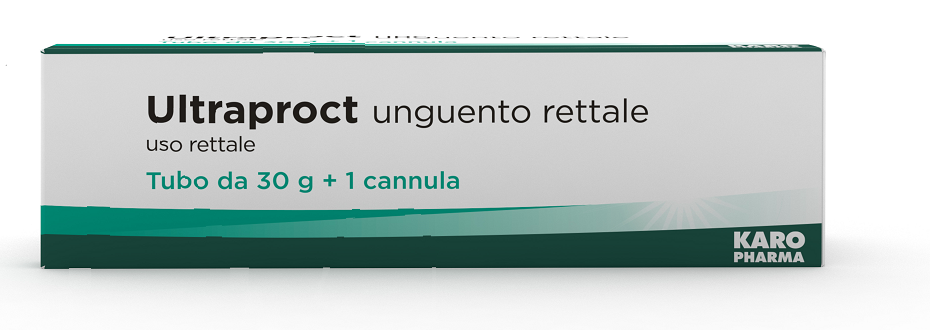
View compareULTRAPROCT*RECTAL OINTMENT 30G
ULTRAPROCT*RECTAL OINTMENT 30G
Regular price
€11,87 EUR
Sale price
€11,87 EUR
Regular price
€13,77 EUR
Unit price
per
Tax included.
SKU
021122080In stock
Vendor
KARO PHARMA SrlDelivery time: 48/72 hours
Free Shipping: Orders over €70
This product page, including its Product Information Leaflet, has been automatically translated.
Description
Ultraproct rectal ointment
Fluocortolone pivalate + fluocortolone caproate + cinchocaine hydrochloride
What it is and what it is used for
Ultraproct contains two active ingredients: fluocortolone (as pivalate and as caproate) and cinchocaine hydrochloride.
Fluocortolone (pivalate and caproate) belongs to the category of medicines called corticosteroids, anti-inflammatory drugs.
Cinchocaine hydrochloride belongs to the category of medicines called local anaesthetics.
Ultraproct is indicated for the treatment of internal and external haemorrhoids (swollen and inflamed veins inside the anal canal and around the anus), anal fissures (small tears at the edge of the anus) and proctitis (inflammation of the rectum).
Consult your doctor if you do not feel better or if you feel worse.
What you need to know before taking the medicine
Do not use Ultraproct:
- if you are allergic to fluocortolone pivalate, fluocortolone caproate or cinchocaine hydrochloride, or to any of the other ingredients of this medicine (listed in section 6);
- if tuberculous, luetic (due to syphilis) or viral lesions (smallpox, chickenpox, vaccinia pustules) are present in the area to be treated.
Warnings and precautions
Consult your doctor or pharmacist before using Ultraproct.
Avoid contact with eyes.
Wash your hands thoroughly after using the medicine.
If a mycosis (fungal infection) is present in the area to be treated, your doctor will prescribe a local antifungal in combination.
The use of topical products, especially if prolonged, may give rise to sensitisation phenomena (allergy). In this case, stop the treatment and consult your doctor to initiate appropriate therapy.
In the event of local applications on extensive surfaces, on broken skin or in the presence of an occlusive dressing, corticosteroids could be absorbed in quantities sufficient to cause distant undesirable effects.
The duration of treatment should not exceed 4 weeks, if possible.
If latex products, such as condoms, are used simultaneously in the same treatment area with Ultraproct, its excipients may cause damage to these latex products.
Consequently, the latter may no longer be effective as contraceptives or as protection against sexually transmitted diseases such as HIV infection. Consult your doctor or pharmacist if you need more information.
Contact your doctor if you experience blurred vision or other visual disturbances.
For those involved in sports: the use of the medicine without therapeutic necessity constitutes doping and may in any case result in positive anti-doping tests.
Children
In very early infancy, the medicine should be administered only when strictly necessary, under direct medical supervision.
Possible side effects
Like all medicines, this medicine can cause side effects, although not everybody gets them.
Rare cases of local irritation with burning and cases of allergy have been reported in predisposed individuals to one or more components of the medicine, especially cinchocaine hydrochloride.
In rare cases, allergic skin reactions may occur.
For prolonged treatment periods (more than 4 weeks), local symptoms such as skin atrophy (thinning of the skin) may occur.
The low doses of active ingredients contained in the medicine make the occurrence of distant secondary phenomena due to absorption into the body unlikely. Should these occur, they would have the general character of the classic secondary effects of corticosteroids, albeit to a very reduced extent.
Blurred vision may occur with unknown frequency (frequency cannot be estimated from the available data).
Reporting side effects
If you get any side effects, including any not listed in this leaflet, talk to your doctor or pharmacist. You can also report side effects directly via the national reporting system at: https://www.aifa.gov.it/content/segnalazionireazioni-avverse.
By reporting side effects you can help provide more information on the safety of this medicine.
