


You will not be allowed to compare more than 4 products at a time
View compareCARNITENE*10CHEW TABS 1G
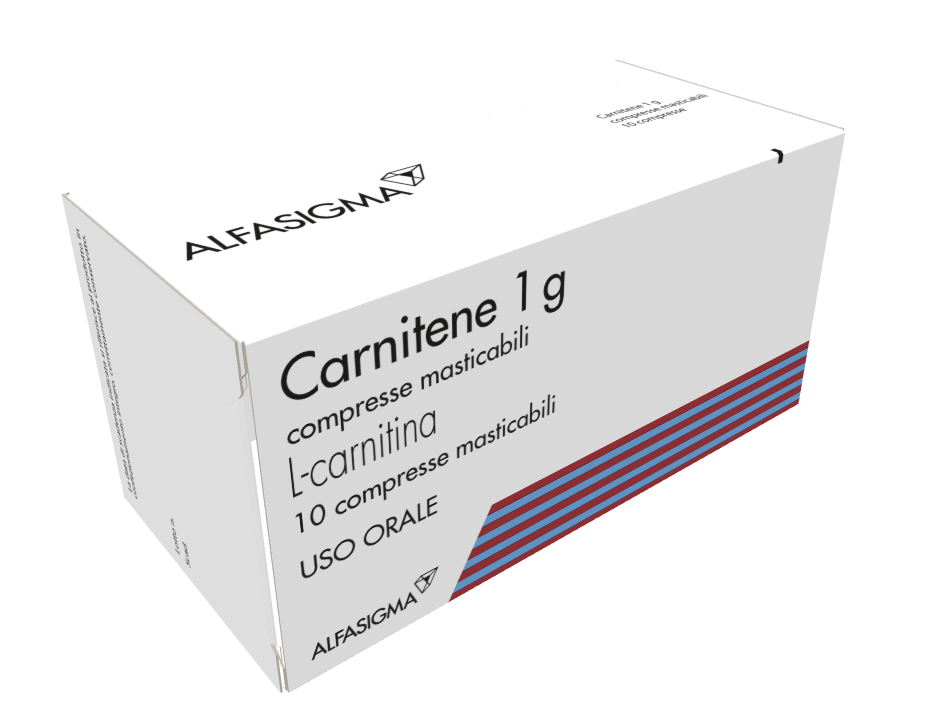
CARNITENE*10CHEW TABS 1G
Regular price
€16,60 EUR
Sale price
€16,60 EUR
Regular price
€17,40 EUR
Unit price
per
Tax included.
SKU
018610067In stock
Vendor
ALFASIGMA SpADelivery time: 48/72 hours
Free Shipping: Orders over €70
This product page, including its Product Information Leaflet, has been automatically translated.
Description
Carnitene 1 g/10 ml oral solution
Carnitene 1.5 g/5 ml oral solution
Carnitene 1 g chewable tablets
L-carnitine
What it is and what it is used for
Carnitene contains the active ingredient L-carnitine. Carnitine is a natural constituent of human body cells and plays a fundamental role in energy production and transport.
Carnitene is indicated for the treatment of carnitine deficiencies.
Consult your doctor if you do not feel better or if you feel worse after a short period of treatment.
What you need to know before taking this medicine
Do not take Carnitene
• if you are allergic to L-carnitine or any of the other ingredients of this medicine (listed in section 6).
Warnings and precautions
Talk to your doctor or pharmacist before taking Carnitene.
Tell your doctor, who will keep you under close observation:
• if you have diabetes and use insulin or oral hypoglycemic agents (medicines taken by mouth that lower blood sugar levels) because Carnitene could cause a further reduction in blood sugar. In these cases, your doctor will have you perform frequent checks of your blood sugar levels and may change the dose of insulin or oral hypoglycemic agents (see section "How to take Carnitene")
• if you have a predisposition to seizures, L-carnitine treatment could trigger them; if you already suffer from seizures, L-carnitine administration can increase the number and/or severity of seizures
• if you have severe kidney problems (severe kidney failure or end-stage kidney failure) or if you are on dialysis. In these cases, your doctor will monitor your kidney function during treatment, especially if prolonged over time (see section "How to take Carnitene")
• if you are using medicines that reduce blood clotting (anticoagulants). In these cases, your doctor will prescribe periodic coagulation checks (see section "Other medicines and Carnitene")
Carnitene does not present risks of habituation (loss of efficacy of the medicine over time) and dependence.
Possible side effects
Like all medicines, this medicine can cause side effects, although not everybody gets them.
Common side effects (may affect up to 1 in 10 people)
• vomiting
• nausea
• diarrhea
• abdominal pain
Uncommon side effects (may affect up to 1 in 100 people)
• headache
• increased or high blood pressure
• low blood pressure
• altered taste
• indigestion
• dry mouth
• fishy odor in urine, breath, and sweat*
• sudden and involuntary muscle contraction (muscle spasms)
• chest pain
• feeling strange
• fever
Very rare side effects (may affect up to 1 in 10,000 people)
• blood clotting disorders**
Side effects with unknown frequency (frequency cannot be estimated from the available data)
• seizures***
• dizziness
• irregular heartbeat (palpitations)
• difficulty breathing
• itching
• skin rash
• myasthenia (disease characterized by muscle weakness)****
• muscle tension
* This occurs in patients with severe kidney problems or on dialysis, due to the accumulation of L-carnitine metabolites in the blood
** In patients who are simultaneously using medicines that reduce blood clotting (anticoagulants)
*** In patients with or without previous seizure episodes or predisposition
**** In patients with end-stage kidney failure.
Reporting of side effects
If you get any side effects, including any not listed in this leaflet, talk to your doctor or pharmacist. You can also report side effects directly via the national reporting system at: https://www.aifa.gov.it/content/segnalazionireazioni-avverse.
By reporting side effects, you can help provide more information on the safety of this medicine.
