



You will not be allowed to compare more than 4 products at a time
View compareVICKS 44 COUGH SYRUP*180ML HONEY
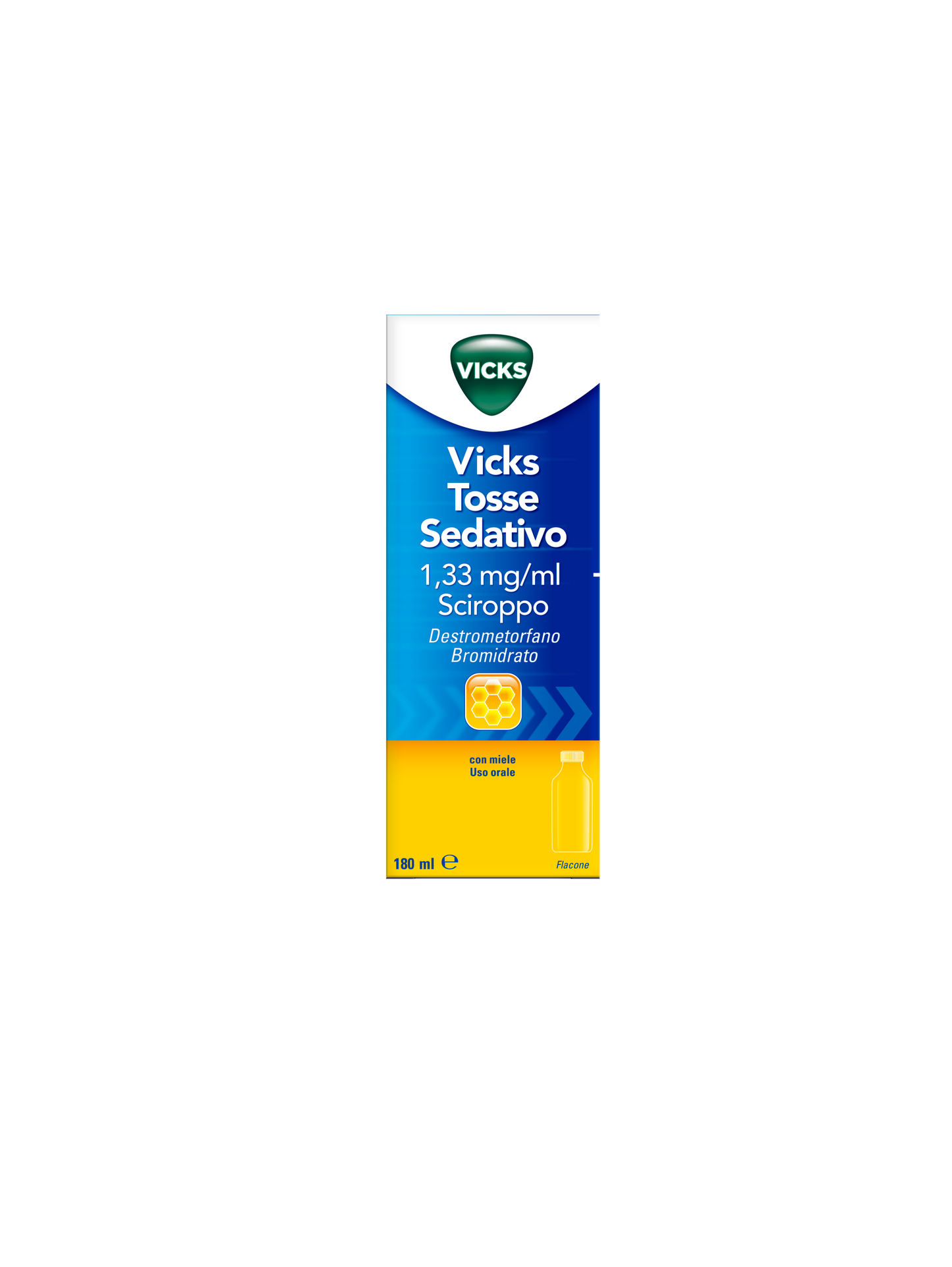
VICKS 44 COUGH SYRUP*180ML HONEY
Regular price
€7,82 EUR
Sale price
€7,82 EUR
Regular price
€13,30 EUR
Unit price
per
Tax included.
SKU
028688024In stock
Vendor
PROCTER & GAMBLE SRLDelivery time: 48/72 hours
Free Shipping: Orders over €70
This product page, including its Product Information Leaflet, has been automatically translated.
Description
Vicks Cough Sedative 1.33 mg/ml syrup
Dextromethorphan hydrobromide
What it is and what it is used for
Vicks Cough Sedative contains dextromethorphan hydrobromide, a substance that helps to calm dry cough.
Consult your doctor if you do not feel better or if you feel worse after 5-7 days.
What you need to know before taking the medicine
This medicine can lead to dependence. Therefore, treatment should be short-term.
Do not take Vicks Cough Sedative
- if you are allergic to the active substance or any of the other ingredients of this medicine (listed in section 6);
- during and within two weeks after therapy with medicines used against depression, called monoamine oxidase inhibitors (MAOIs);
- if you suffer from asthma, chronic obstructive pulmonary disease (COPD - chronic lung disease), pneumonia, breathing difficulties or respiratory depression;
- if you have cardiovascular diseases or suffer from high blood pressure;
- if you suffer from hyperthyroidism (increased thyroid function);
- if you have diabetes;
- if you suffer from increased pressure inside the eye (glaucoma);
- if you suffer from urinary disorders caused by an enlarged prostate or other obstructions of the genital organs or urinary tract;
- if you have obstructions of the esophagus, stomach or intestine;
- if you suffer from severe liver diseases;
- if you suffer from epilepsy;
- if you are pregnant, especially in the first trimester (see the section Pregnancy, breastfeeding and fertility);
- if you are breastfeeding (see the section Pregnancy, breastfeeding and fertility).
Do not give Vicks Cough Sedative to children under 12 years of age.
Talk to your doctor or pharmacist before taking Vicks Cough Sedative:
If you are taking medicines such as certain antidepressants or antipsychotics: Vicks Cough Sedative can interact with these medicines and mental status changes (e.g., agitation, hallucinations, coma) and other effects such as body temperature above 38℃, increased heart rate, unstable blood pressure, exaggerated reflexes, muscle rigidity, lack of coordination and/or gastrointestinal symptoms (e.g., nausea, vomiting, diarrhea) may occur.
Warnings and precautions
Talk to your doctor or pharmacist before taking Vicks Cough Sedative.
Pay particular attention and ask your doctor for advice before taking Vicks Cough Sedative if:
- your kidney and liver function is impaired (especially if severely compromised);
- you have a persistent, irritating cough with significant mucus production (phlegm) or accompanied by fever, rash, headache, nausea and vomiting; you have a reduced ability to metabolize certain drugs, with increased toxicity.
Pay particular attention to prolonged use of the medicine as addiction, tolerance and mental and physical dependence on the medicine may occur (see Possible side effects).
Consult your doctor if you do not obtain appreciable results after a short period of treatment (5-7 days), if the disorder occurs repeatedly or if you have noticed any recent changes in its characteristics.
Possible side effects
Like all medicines, this medicine can cause side effects, although not everybody gets them.
Side effects can be:
Common (may affect up to 1 in 10 people)
• dizziness;
• nausea;
• vomiting;
• gastrointestinal disorders of the stomach and intestine;
• reduced appetite;
• fatigue.
Rare (may affect up to 1 in 1,000 people)
• skin rashes;
• drowsiness.
Very rare (may affect up to 1 in 10,000 people)
• Hallucinations.
Not known (frequency cannot be estimated from the available data)
• hypersensitivity reactions, including anaphylactic reaction;
• swelling of the face, hands and feet, eyes, lips, larynx and/or tongue (angioedema);
• urticaria;
• itching;
• rash;
• erythema;
• diabetes mellitus;
• psychosis;
• very high fever (hyperpyrexia).
Reporting of side effects
If you get any side effects, including any not listed in this leaflet, talk to your doctor or pharmacist. You can also report side effects directly via the national reporting system at: https://www.aifa.gov.it/content/segnalazionireazioni-avverse.
By reporting side effects you can help provide more information on the safety of this medicine.
