


You will not be allowed to compare more than 4 products at a time
View compareRINAZINA DOUBLE ACT*10ML5MG+6MG
RINAZINA DOUBLE ACT*10ML5MG+6MG
Regular price
€13,46 EUR
Sale price
€13,46 EUR
Regular price
€14,40 EUR
Unit price
per
Tax included.
SKU
039064011Low stock
Vendor
HALEON ITALY SrlDelivery time: 48/72 hours
Free Shipping: Orders over €70
This product page, including its Product Information Leaflet, has been automatically translated.
Description
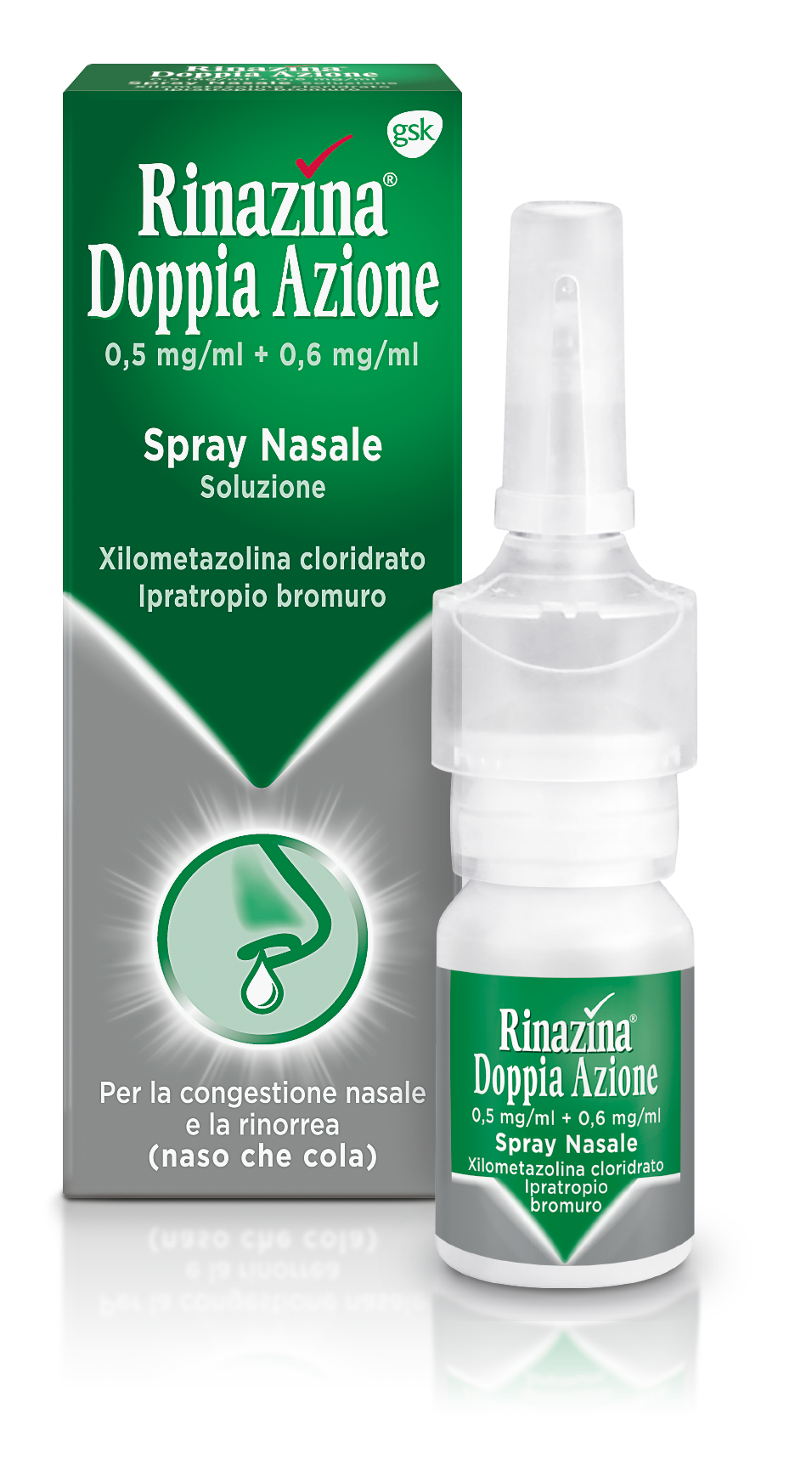
RINAZINA DOPPIA AZIONE 0.5 mg/ml + 0.6 mg/ml nasal spray, solution
Xylometazoline hydrochloride/Ipratropium bromide
What it is and what it is used for
RINAZINA DOPPIA AZIONE is a combination medicine consisting of two different substances.
One of the active substances helps against runny nose, the other has a decongestant effect.
RINAZINA DOPPIA AZIONE is used for the treatment of nasal congestion with runny nose (rhinorrhoea) associated with common colds.
What you need to know before taking the medicine
Do not use RINAZINA DOPPIA AZIONE:
- in children under 18 years of age, as there is insufficient safety and efficacy information available
- if you are allergic to xylometazoline hydrochloride or ipratropium bromide or any of the excipients of this medicine (listed in section 6)
- if you are allergic to atropine or atropine-like substances, such as hyoscyamine and scopolamine
- if your pituitary gland has been surgically removed through the nose
- if you have had brain surgery where the operation was performed through the nose or mouth
- if you suffer from glaucoma (increased pressure in the eyes)
- if you have a very dry nose (inflammatory dry nose, rhinitis sicca or atrophic rhinitis).
Warnings and precautions
RINAZINA DOPPIA AZIONE can cause sleep disturbances, dizziness, tremor, irregular heart rhythm or high blood pressure if you are sensitive to medicines for nasal congestion relief.
Consult your doctor if these symptoms occur and are bothersome.
Contact your doctor or pharmacist before using RINAZINA DOPPIA AZIONE if you suffer from:
- heart disease (e.g., long QT syndrome)
- high blood pressure
- diabetes
- overactive thyroid gland (hyperthyroidism)
- difficulty urinating and/or enlarged prostate
- angle-closure glaucoma
- tendency to have nosebleeds
- intestinal obstruction (paralytic ileus)
- cystic fibrosis
- benign tumour of the adrenal gland that produces large amounts of adrenaline and noradrenaline (phaeochromocytoma) or a particular sensitivity to adrenaline and noradrenaline.
Immediate hypersensitivity (allergic reaction) may occur. This may manifest as an itchy red rash with raised skin inflammation (urticaria), difficulty breathing or speaking, difficulty swallowing due to swelling of the lips, face or throat. These symptoms may appear individually or all combined as a severe allergic reaction. In this case, discontinue use of RINAZINA DOPPIA AZIONE immediately (see section 4).
RINAZINA DOPPIA AZIONE should not be used for more than 7 consecutive days. If symptoms persist, consult your doctor. Prolonged or excessive use can cause a rebound or worsening of nasal congestion and nasal mucosal swelling.
Avoid spraying RINAZINA DOPPIA AZIONE into or around the eyes. If this happens, rinse your eyes thoroughly with cold water. Your vision may become temporarily blurred and your eye may be irritated, painful and red. If this happens, consult your doctor for advice.
Worsening of angle-closure glaucoma may also occur.
Children and adolescents
The use of RINAZINA DOPPIA AZIONE is not recommended in children and adolescents under 18 years of age as there is insufficient safety and efficacy information available.
Possible side effects
Like all medicines, this medicine can cause side effects, although not everybody gets them.
Stop using RINAZINA DOPPIA AZIONE and seek immediate medical attention if you have any of the following symptoms:
- Palpitations and increased heart rate (affects less than 1 in 100 people).
- Signs of an allergic reaction such as difficulty breathing, speaking or swallowing: swelling of the face, lips, tongue or throat; severe itching of the skin, with a red rash or swelling (frequency not known, cannot be estimated from available data).
- Visual disturbances (including blurred vision, worsening of glaucoma or increased pressure in the eye), rainbow-coloured circles/halos around bright lights and/or eye pain (frequency not known, cannot be estimated from available data).
The most common side effects are nosebleeds and nasal dryness. Many of the reported side effects are also symptoms of the common cold.
Very common side effects (may affect more than 1 in 10 people):
• nosebleed (epistaxis)
Common side effects (may affect up to 1 in 10 people):
• nasal discomfort, nasal congestion, dry nose, nasal pain
• dry mouth, dry or irritated throat
• altered sense of taste, headache, dizziness, local burning sensation
• nausea
Uncommon (may affect up to 1 in 100 people):
• nasal ulcer, sneezing, sore throat, cough, hoarseness
• stomach upset
• altered sense of smell, tremors
• discomfort, fatigue
• insomnia
• eye irritation, dry eyes, eye swelling, eye redness
• palpitations, increased heart rate
Rare (may affect up to 1 in 1,000 people):
• runny nose
Very rare (may affect up to 1 in 10,000 people):
• drug reaction such as swelling, rash, itching
• impaired vision
Frequency not known (frequency cannot be estimated from available data):
• urticaria
• discomfort around the nose
• difficulty swallowing
• chest discomfort, thirst
• sudden throat spasm, throat swelling
• irregular heart rhythm
• difficulty focusing with the eyes, pupil dilation, seeing flashes of light, increased eye pressure, glaucoma, blurred vision, halos around bright lights and eye pain
• difficulty emptying the bladder.
To minimise the risk of side effects, it is recommended to stop treatment with RINAZINA DOPPIA AZIONE as soon as your symptoms improve.
Reporting of side effects
If you get any side effects, including any not listed in this leaflet, talk to your doctor or pharmacist. You can also report side effects directly via the national reporting system at: https://www.aifa.gov.it/content/segnalazionireazioni-avverse.
By reporting side effects, you can help provide more information on the safety of this medicine.
