

You will not be allowed to compare more than 4 products at a time
View compareACETAMOL*AD 10 SUPP 1G
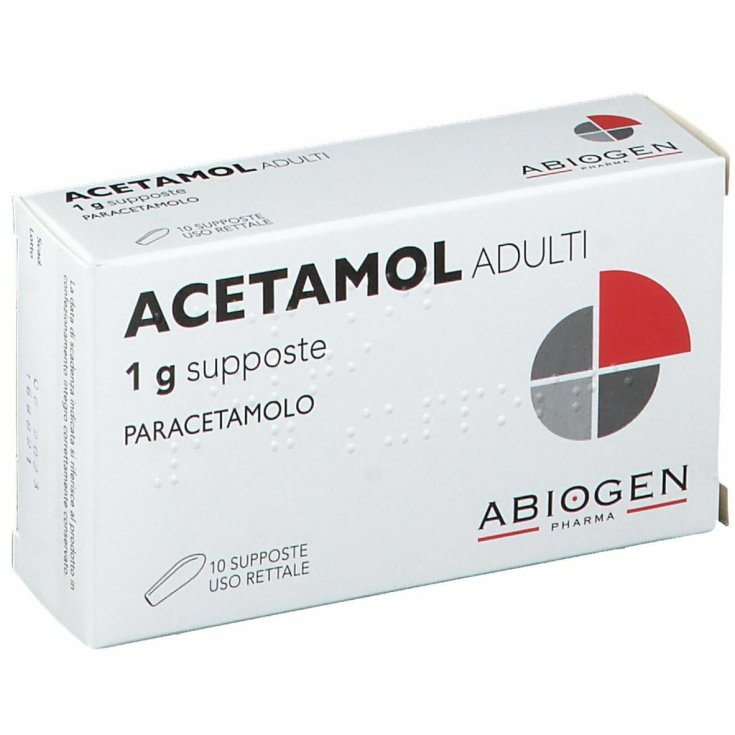
ACETAMOL*AD 10 SUPP 1G
Regular price
€4,08 EUR
Sale price
€4,08 EUR
Regular price
€5,50 EUR
Unit price
per
Tax included.
SKU
023475066In stock
Vendor
ABIOGEN PHARMA SpADelivery time: 48/72 hours
Free Shipping: Orders over €70
This product page, including its Product Information Leaflet, has been automatically translated.
Description
ACETAMOL ADULTI 1 g suppositories
ACETAMOL 500 mg suppositories
ACETAMOL BAMBINI 250 mg suppositories
ACETAMOL PRIMA INFANZIA 125 mg suppositories
Paracetamol
What it is and what it is used for
ACETAMOL is a medicine based on paracetamol
ACETAMOL is used for the treatment of fever symptoms and mild to moderate pain in children (see section “How to use/administer ACETAMOL to children”), adolescents, and adults.
Consult your doctor if you do not feel better or if you feel worse after 3 days.
What you need to know before taking the medicine
This medicine contains paracetamol. Do not take in combination with other medicines containing paracetamol. If paracetamol is taken in high doses, serious side effects can occur, including severe liver disease and alterations to the kidneys and blood.
Do not use/administer ACETAMOL to children
- if you are allergic to paracetamol or any of the other ingredients of this medicine (listed in section 6)
- if you are allergic to other substances similar to paracetamol; in particular to other medicines for the treatment of pain (analgesics) and for lowering fever (antipyretics)
- together with other medicines that contain the same active ingredient because, if paracetamol is taken in high doses, serious side effects can occur (see section “Other medicines and ACETAMOL”)
Warnings and precautions
Consult your doctor or pharmacist before using/administering ACETAMOL to a child.
Consult your doctor if you/the child:
• have pain or fever of unknown cause
• suffer from kidney diseases (renal insufficiency)
• suffer from even severe liver diseases (severe liver failure, acute hepatitis, mild to moderate hepatocellular insufficiency - including Gilbert's syndrome)
• are taking medicines that modify the way the liver works
• suffer from a deficiency of an enzyme called glucose-6-phosphate dehydrogenase (an inherited disease that leads to a decrease in red blood cell count)
• suffer from a disease due to the destruction of certain blood cells, red blood cells (haemolytic anaemia)
• suffer from a chronic inflammatory disease with difficulty breathing (asthma)
• fast, eat little or abuse alcohol. In this case, the proposed dosages must be reduced to avoid toxicity even at normal recommended doses (see section “ACETAMOL with food, beverages and alcohol”)
• are taking other medicines to treat pain (analgesics) and to lower fever (antipyretics) or to treat inflammation (non-steroidal anti-inflammatory drugs) (see section “Other medicines and ACETAMOL”)
• have suffered from respiratory difficulty due to narrowing of the airways (bronchospasm) following the intake of acetylsalicylic acid or anti-inflammatory medicines (aspirin, NSAIDs)
• are taking other medicines (see section “Other medicines and ACETAMOL”)
Prolonged use or excessive doses of this medicine can cause liver diseases, kidney or blood problems, even serious ones.
In case of allergic reactions, stop treatment and consult your doctor immediately.
Children and adolescents
Consult your doctor before administering the medicine to a child.
Possible side effects
Like all medicines, this medicine can cause side effects, although not everyone experiences them.
If you/the child experience allergic reactions during treatment, even severe ones, such as:
• swelling of the face, lips, eyelids, tongue and/or throat, hands, feet, ankles (angioedema)
• swelling of the larynx
• anaphylactic shock
• bronchospasm
STOP treatment and contact your doctor immediately.
The following side effects have been observed during treatment with paracetamol with unknown frequency (frequency cannot be estimated from the available data):
• reduction in the number of platelets in the blood (thrombocytopenia)
• reduction in haemoglobin, a substance that carries oxygen in the blood (anaemia)
• reduction in the number of blood granulocytes, a type of white blood cell (agranulocytosis)
• alterations in liver function
• inflammation of the liver (hepatitis)
• kidney disease (acute renal failure)
• inflammation of the kidneys (interstitial nephritis)
• presence of blood in the urine (haematuria)
• absence of urine production (anuria)
• haemorrhage (bleeding)
• abdominal pain
• diarrhoea
• nausea
• vomiting
• dizziness
Very rare side effects:
• condition characterized by the appearance of red spots on the skin with a bullseye appearance associated with itching (erythema multiforme)
• severe skin disease characterized by erythema, blistering lesions with areas of skin detachment (Stevens-Johnson syndrome)
• severe skin disease characterized by redness, blistering lesions with areas of detachment and death of the skin (epidermal necrolysis); the lesions are accompanied by fever and the appearance of blisters on the mucous membranes
• reduction in the number of white blood cells in the blood (leukopenia).
Reporting of side effects
If you get any side effects, including those not listed in this leaflet, talk to your doctor or pharmacist. You can also report side effects directly via the national reporting system at: https://www.aifa.gov.it/content/segnalazionireazioni-avverse.
By reporting side effects you can help provide more information on the safety of this medicine.