

You will not be allowed to compare more than 4 products at a time
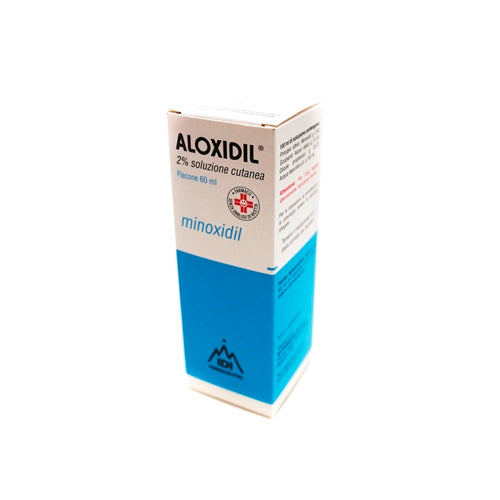
View compareALOXIDIL*SOLUTION 60ML 20MG/ML
ALOXIDIL*SOLUTION 60ML 20MG/ML
Regular price
€18,10 EUR
Sale price
€18,10 EUR
Regular price
€21,50 EUR
Unit price
per
Tax included.
SKU
027261015In stock
Vendor
IDI FARMACEUTICI SrlDelivery time: 48/72 hours
Free Shipping: Orders over €70
This product page, including its Product Information Leaflet, has been automatically translated.
Description
ALOXIDIL 20 mg/ml cutaneous solution
Minoxidil
What it is and what it is used for
ALOXIDIL contains the active ingredient minoxidil, belonging to the group of dermatological drugs.
ALOXIDIL is indicated for the symptomatic treatment of androgenetic alopecia (excessive hair loss in men).
What you need to know before taking the medicine
Do not take ALOXIDIL
- If you are allergic to minoxidil or any of the other ingredients of this medicine (listed in section 6);
- If you suffer from coronary artery disease (problems with the coronary arteries), arrhythmias (abnormal heart rhythm), congestive heart failure (a condition in which the heart cannot supply enough blood to the body) or valvular heart disease (diseases affecting the heart valves). In the presence of other cardiovascular disorders, the use of ALOXIDIL is subject to medical judgment.
If you suffer from hypertension (high blood pressure), your doctor will assess whether treatment with this medicine is suitable for you and will keep you under close observation.
Warnings and precautions
Talk to your doctor or pharmacist before taking ALOXIDIL.
Pay particular attention with ALOXIDIL:
- in case of accidental contact with sensitive surfaces (eyes, skin abrasions, mucous membranes), ALOXIDIL can cause burning and irritation. Therefore, the affected area should be washed with plenty of fresh water;
- in case of accidental ingestion of the solution: accidental ingestion can cause serious side effects;
- if you experience systemic effects, as minoxidil may be absorbed through the scalp and cause effects on all organs such as tachycardia (increased heart rate), angina (chest pain due to narrowing of the heart arteries), edema (swelling due to fluid accumulation), pericarditis (inflammation of the membrane lining the outside of the heart), pericardial effusion, cardiac tamponade (compression of the heart by this fluid) or increased orthostatic hypotension (drop in blood pressure when standing up) from antihypertensive drugs such as guanethidine and derivatives. You should be regularly monitored to detect any suspicion of systemic effects caused by minoxidil;
- if you suffer from latent heart conditions, ALOXIDIL may worsen these conditions;
- if you have concomitant skin diseases, or if you are undergoing topical corticosteroid therapy (local cortisone, cortisone creams) or other dermatological preparations. If you experience systemic side effects (general) or dermatological reactions, stop administering the medicine and consult your doctor;
- if you suffer from localized congenital alopecia (congenital local lack of hair) or generalized (lack of hair all over the body); cicatricial alopecia (from disease or other cause healed with a scar) of various nature (post-traumatic, of psychic or infectious origin); acute diffuse alopecia from toxic substances, from drugs in which hair regrowth is conditioned by the suppression of the specific cause (discontinuation of the drug); area celsi (hair loss on the nape, which can spread to the entire scalp), as the efficacy of ALOXIDIL has not been established for these forms of alopecia.
Cases of excessive hair growth on the body of young children have been reported following contact with the minoxidil application sites of patients (caregivers) using topical minoxidil. Hair growth returns to normal within a few months when young children are no longer exposed to minoxidil. Care should be taken to ensure that children do not come into contact with the areas of the body where topical minoxidil has been applied.
Consult a doctor if you notice excessive hair growth on your child's body while using topical minoxidil products.
Children and adolescents
The safety and efficacy of ALOXIDIL in children and adolescents under 18 years of age have not been studied.
Possible side effects
Like all medicines, this medicine can cause side effects, although not everybody gets them.
If you notice any of the following symptoms, contact your doctor immediately as urgent medical treatment may be necessary.
• Swelling of the face, lips or throat which may cause difficulty in swallowing or breathing. This could be a sign of a severe allergic reaction (frequency unknown, cannot be estimated from the available data).
The most frequent side effects are minor dermatological skin reactions.
The most frequent side effect is local irritation, consisting of desquamation, erythema (skin redness), dermatitis (skin inflammation), dry skin, hypertrichosis (excessive hair growth) (in areas other than those treated with ALOXIDIL), burning sensation and skin rash.
Other side effects that have occurred infrequently include: allergic reactions (sensitization, urticaria, generalized erythema and facial swelling), dizziness, tingling, headache, weakness, neuritis (inflammation of the nerves), edema (swelling due to fluid retention), eye irritation, altered taste, ear infections (particularly otitis externa, inflammation of the outer ear) and vision disturbances.
Side effects that have occurred rarely include hair abnormalities, chest pain, changes in blood pressure, changes in heart rate, hepatitis (inflammation of the liver) and kidney stones.