

You will not be allowed to compare more than 4 products at a time
View compareBECOZYM*20 Tablets Gastro-resistant
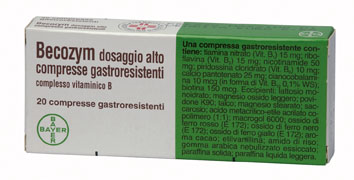
BECOZYM*20 Tablets Gastro-resistant
Regular price
€14,20 EUR
Sale price
€14,20 EUR
Regular price
€15,00 EUR
Unit price
per
Tax included.
SKU
005647033Low stock
Vendor
BAYER SpADelivery time: 48/72 hours
Free Shipping: Orders over €70
This product page, including its Product Information Leaflet, has been automatically translated.
Description
Becozym gastro-resistant tablets
What it is and what it is used for
Becozym belongs to the therapeutic category of vitamins, based on the B complex.
Becozym is used to prevent vitamin B deficiency:
- in cases of increased vitamin B requirements (for example, during pregnancy or breastfeeding),
- in cases of insufficient vitamin B absorption (digestive disorders),
- in cases of dietary imbalances (uniform diets),
It is also used in the treatment of:
- glossitis (inflammation of the tongue),
- cheilitis (inflammation of the lips),
- anorexia – loss of appetite – (for example, during febrile illnesses) with weight loss,
- retarded growth in children,
- asthenia (weakness),
- in cases of prolonged antibiotic therapy,
- intestinal absorption disorders during gastrointestinal affections,
- as an adjunct in hepatopathies (liver diseases) and neuritis (inflammation of nerves, accompanied by pain and numbness),
- treatment of the after-effects of chronic alcoholism attributable to a vitamin deficiency.
What you need to know before taking this medicine
Do not take Becozym
- if you are allergic to the active substance or to any of the other ingredients of this medicine (listed in section 6).
Warnings and precautions
Talk to your doctor or pharmacist before taking Becozym.
Do not exceed the recommended doses as an overdose may increase the risk of side effects. Pay particular attention to the intake of the same vitamins from all other possible sources, including fortified foods, food supplements, and concomitant medicines (see section 3).
Becozym should only be used for the treatment of vitamin B12 deficiency if it is of dietary origin and not in patients with atrophic gastritis (inflammation of the stomach lining), ileum (intestinal) or pancreatic disorders, gastrointestinal malabsorption of vitamin B12 or intrinsic factor deficiency (a substance produced by the stomach essential for vitamin B12 absorption).
The yellow coloration of urine after Becozym administration is due to vitamin B2 (riboflavin).
Patients with severe renal insufficiency should consult their doctor before taking Becozym as a dosage adjustment may be necessary.
Particular attention should be paid to the daily dosage of vitamin B6.
Inform your doctor if you are taking Becozym and need to undergo diagnostic laboratory tests, as Vitamin B1 and Vitamin B6 contained in the medicine can interfere with the laboratory test for the determination of urobilinogen in urine.
Becozym contains 150 mcg of biotin per tablet. If you plan to undergo laboratory tests, you must inform your doctor or laboratory staff that you are taking or have recently taken Becozym, as biotin can affect the results of these tests. Depending on the test used, results may be falsely high or falsely low due to biotin. Your doctor may ask you to stop taking Becozym before performing laboratory tests. You should also be aware that other products you may be taking, such as multivitamin complexes or supplements for hair, skin, and nails, may contain biotin and affect laboratory test results. Inform your doctor or laboratory staff if you take such products.
Possible side effects
Like all medicines, this medicine can cause side effects, although not everyone experiences them.
The adverse reactions listed below are derived from spontaneous reports and therefore their frequency cannot be estimated.
Gastrointestinal disorders
Gastrointestinal and abdominal pain, constipation, vomiting, diarrhea, nausea.
Immune system disorders
Allergic reactions, anaphylactic reaction (severe and potentially life-threatening allergic reaction), anaphylactic shock (particularly severe and potentially life-threatening allergic reaction).
Allergic reactions include asthmatic syndrome, mild to moderate reactions affecting the skin, respiratory tract, gastrointestinal tract, and/or cardiovascular system. Symptoms may include rash, hives, facial edema (fluid accumulation), erythema (skin redness), itching, wheezing, cardio-respiratory distress (difficulty breathing and rapid heartbeat), and severe reactions including anaphylactic shock (severe allergic reaction typically presenting with itchy rash with throat swelling, difficulty breathing, and drop in blood pressure). If an allergic reaction occurs, discontinue treatment and consult a doctor.
Nervous system disorders
Headache.
Renal and urinary disorders
Chromaturia (urine discoloration).
Following the instructions in the package leaflet reduces the risk of side effects.
Reporting of side effects
If you get any side effects, including any not listed in this leaflet, talk to your doctor or pharmacist. You can also report side effects directly via the national reporting system at: https://www.aifa.gov.it/content/segnalazionireazioni-avverse.
By reporting side effects you can help provide more information on the safety of this medicine.
