

You will not be allowed to compare more than 4 products at a time
View compareBISOLSEC*OS FL 190ML 2.13MG/ML
BISOLSEC*OS FL 190ML 2.13MG/ML
Regular price
€9,61 EUR
Sale price
€9,61 EUR
Regular price
€13,90 EUR
Unit price
per
Tax included.
SKU
043933023In stock
Vendor
OPELLA HEALTHCARE ITALY SrlDelivery time: 48/72 hours
Free Shipping: Orders over €70
This product page, including its Product Information Leaflet, has been automatically translated.
Description
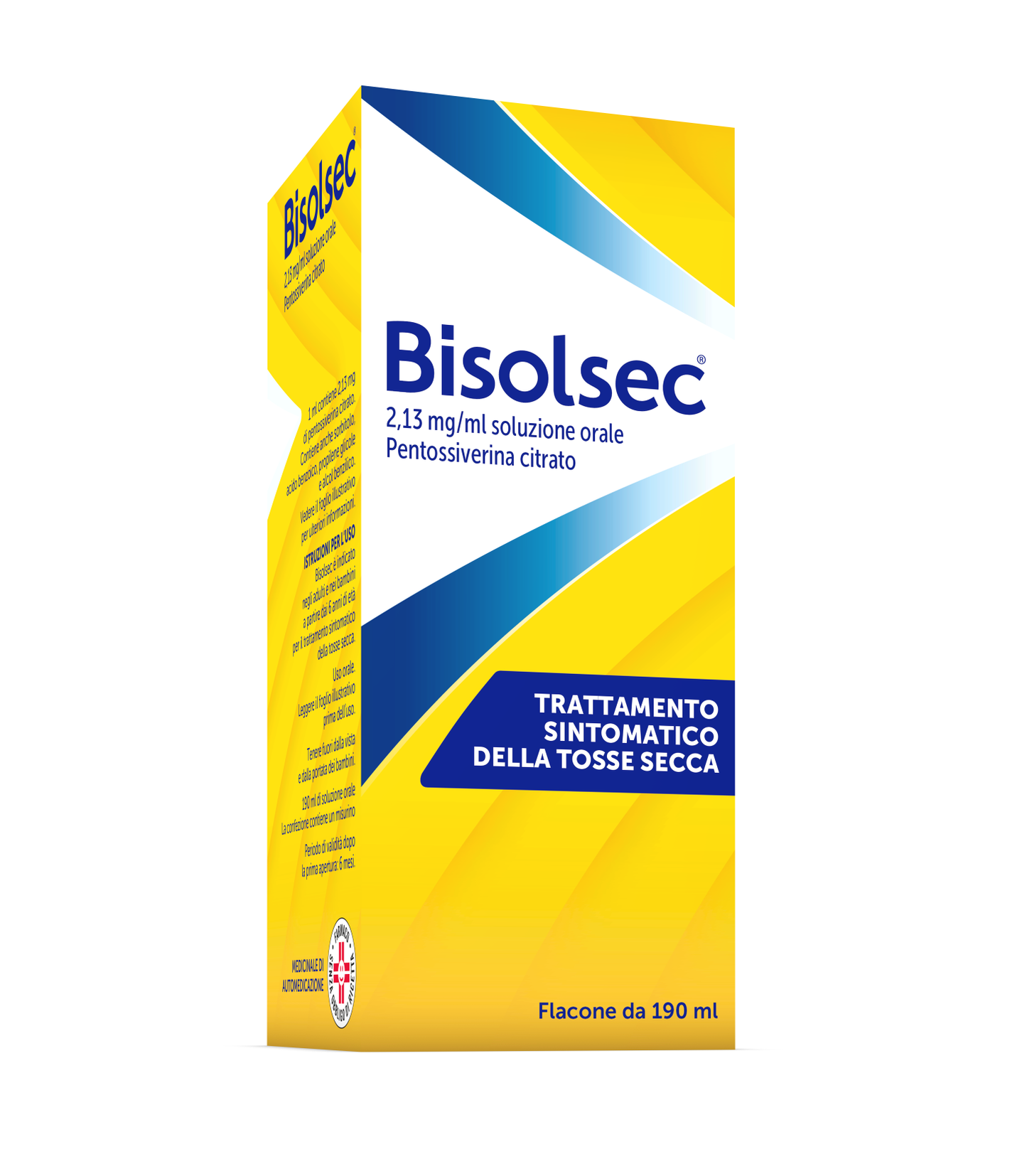
Bisolsec 2.13 mg/ml oral solution
Pentoxyverine citrate
What it is and what it is used for
Bisolsec is indicated for the symptomatic treatment of dry cough (non-productive cough) in adults and children from 6 years of age. The medicine is an antitussive, which acts by reducing the overstimulation of the cough center, thus normalizing the cough reflex.
Contact your doctor if your cough symptoms worsen, if you experience chest pain, or if your cough persists for more than one week. Bisolsec is indicated for occasional use and should not be used continuously for more than 2 weeks.
What you need to know before taking the medicine
Do not take Bisolsec:
- if you are allergic to pentoxyverine or any of the other ingredients of this medicine (listed in section 6)
- if you suffer from breathing difficulties
- if you have symptoms of central nervous system depression such as drowsiness, low muscle tone, depression of your awareness of the environment, and reduced reactivity to external stimulation, etc.
- if you are pregnant or breastfeeding
- the product must not be taken by children under 6 years of age.
Warnings and precautions
The use of Bisolsec is not recommended in cases of reduced liver function. Do not take this product unless your doctor has decided it is safe for you.
Talk to your doctor or pharmacist before taking Bisolsec if you have:
- reduced kidney function,
- long-lasting cough (due, for example, to asthma, reduced lung capacity, or smoking) or if the cough causes very abundant mucus production,
- increased intraocular pressure (glaucoma), enlarged prostate gland (benign prostatic hyperplasia), blocked urinary flow, intestinal obstruction, or stomach or duodenal ulcer,
- high blood pressure or irregular heartbeat,
- a disease called myasthenia gravis.
Children and adolescents
Bisolsec must not be used in children under 6 years of age. Bisolsec is not recommended for children when the cough causes very abundant mucus production.
In particular, children prone to seizures should be monitored during treatment.
Possible side effects
Like all medicines, this medicine can cause side effects, although not everybody gets them.
Allergic reactions that can be serious:
• Very rare (may affect up to 1 in 10,000 people)
These include the following symptoms: difficulty breathing or dizziness (anaphylactic shock), hypersensitivity, localized swelling of the skin, hives, rash with blistering, itching, skin rash.
• If you experience any of these symptoms, stop using the medicine and consult a doctor immediately.
Other possible side effects:
Common (may affect up to 1 in 10 people): upper abdominal pain, diarrhea, dry mouth, nausea, vomiting.
Uncommon (may affect up to 1 in 100 people): drowsiness, fatigue.
Very rare (may affect up to 1 in 10,000 people): decreased blood pressure, seizures (especially in young children), apnea, shortness of breath, respiratory depression (especially in young children), difficulty breathing, decreased white blood cell count.
Frequency unknown: restlessness, hallucinations, confusional state, blurred vision, transient rash.
Reporting of side effects
If you get any side effects, including any not listed in this leaflet, talk to your doctor or pharmacist. You can also report side effects directly via the national reporting system at: https://www.aifa.gov.it/content/segnalazionireazioni-avverse.
By reporting side effects you can help provide more information on the safety of this medicine.
