

You will not be allowed to compare more than 4 products at a time
View compareBRUFENLIK*20SACHETS 400MG 10ML
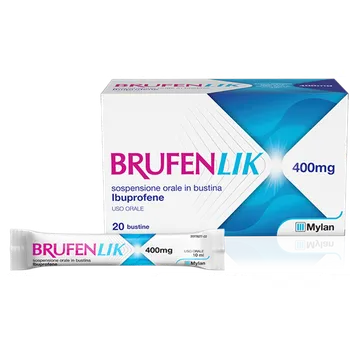
BRUFENLIK*20SACHETS 400MG 10ML
Regular price
€4,42 EUR
Sale price
€4,42 EUR
Regular price
€12,90 EUR
Unit price
per
Tax included.
SKU
048424042Low stock
Vendor
MYLAN SpADelivery time: 48/72 hours
Free Shipping: Orders over €70
This product page, including its Product Information Leaflet, has been automatically translated.
Description
Brufenlik 400 mg oral suspension in sachet
Ibuprofen
What it is and what it is used for
The active ingredient in this medicine is ibuprofen. It belongs to a group of medicines called non-steroidal anti-inflammatory drugs (NSAIDs). Brufenlik reduces fever and relieves pain.
Brufenlik is used for the short-term treatment of mild to moderate pain such as
- Headache and migraine
- Toothache
- Dysmenorrhea (painful periods)
- Muscle, joint and back pain
- Fever associated with the common cold.
Brufenlik 400 mg is used in adults and adolescents over 12 years of age (weighing more than 40 kg).
What you need to know before taking the medicine
Do not take Brufenlik
• if you are allergic to ibuprofen or any of the other ingredients of this medicine (listed in section 6);
• if you have ever had an allergic reaction (such as asthma, rash, swollen face or lips or shortness of breath) after taking ibuprofen, acetylsalicylic acid or other NSAIDs;
• severe heart failure;
• severe liver or kidney failure;
• active bleeding or an increased tendency to bleed;
• have (or have had two or more episodes of) stomach ulcer, duodenal ulcer or bleeding;
• have or have ever had an ulcer or bleeding in the stomach or small intestine while taking NSAIDs;
• after the sixth month of pregnancy.
Warnings and precautions
Always administer the lowest effective dose for the shortest possible treatment duration to reduce the risk of side effects. Doses higher than recommended may lead to risks. This also means that taking multiple NSAIDs simultaneously should be avoided.
Talk to your doctor or pharmacist before taking Brufenlik:
- if you have certain immune system disorders (mixed connective tissue disorders and systemic lupus erythematosus (SLE), immune system conditions affecting connective tissue resulting in joint pain, skin changes and disorders of other organs) as there may be an increased risk of aseptic meningitis;
- if you suffer from kidney or liver failure;
- if you have heart problems including heart attack, angina (chest pain) or if you have a history of heart attack, coronary bypass surgery, peripheral arterial disease (poor circulation in the legs or feet due to narrowing or obstruction of the arteries) or any type of stroke (including "mini-stroke" or "TIA", transient ischemic attack);
- if you have high blood pressure, diabetes, high cholesterol, a family history of heart disease or stroke, or if you are a smoker;
- if you suffer from asthma, chronic rhinitis (chronic stuffy and runny nose) or allergic diseases as Brufenlik may cause breathing difficulties, hives or a severe allergic reaction in the presence of one of these conditions;
- if you have inflammatory bowel diseases, previous stomach ulcer or an increased tendency to bleeding of another nature;
- if you have an infection - see section <infections> below.
Ibuprofen can cause severe allergic reactions; especially if you are allergic to acetylsalicylic acid. Symptoms may include hives, swelling of the face, tongue or throat, difficulty swallowing, difficulty breathing. Stop taking Brufenlik and contact a doctor immediately if you experience any of these symptoms (see section 4 Possible side effects).
Skin reactions
Severe skin reactions have been reported in association with Brufenlik treatment. Stop taking Brufenlik and consult your doctor immediately if a rash, mucosal lesions, blisters or other signs of allergy appear, as these may be the first signs of a very severe skin reaction. See section 4.
Ulcers and bleeding in the gastrointestinal tract
• Patients who have previously had problems with the gastrointestinal tract, especially elderly patients, should contact a doctor in case of abdominal symptoms (especially gastrointestinal bleeding), particularly at the start of treatment. Bleeding, ulceration or perforation in the stomach or intestine can occur without warning signs even in patients who have never had such problems before.
• Elderly patients should be aware of their increased risk of adverse events, particularly bleeding and perforation of the digestive tract, which can be fatal.
• Stop treatment and consult a doctor if gastrointestinal bleeding or ulceration occurs during Brufenlik treatment.
Cardiovascular effects
• Anti-inflammatory/pain-relieving medicines such as ibuprofen may be associated with a slight increase in the risk of heart attack or stroke, particularly if used at high doses. Do not exceed the recommended dose or duration of treatment.
Infections
• Brufenlik can mask the symptoms of infections such as fever and pain. It is therefore possible that Brufenlik may delay adequate treatment of the infection, which could increase the risk of complications.
This has been observed in pneumonia caused by bacteria and in bacterial skin infections related to chickenpox. If you take this medicine while you have an infection and the symptoms of the infection persist or worsen, consult your doctor immediately.
• During chickenpox, it is advisable to avoid the use of this medicine.
If you are dehydrated
• Particular caution should be exercised in dehydrated patients, as there is a risk of kidney failure, especially in dehydrated adolescents and the elderly.
Headache
• Prolonged use of any type of painkiller for headaches can worsen the situation. If this situation occurs or is suspected, a doctor should be consulted and treatment should be discontinued.
Children and adolescents
In dehydrated children and adolescents, there is a risk of impaired kidney function.
Brufenlik 400 mg should not be taken by children under 12 years of age (weighing less than 40 kg).
Other dosage forms and strengths are more appropriate for children.
