

You will not be allowed to compare more than 4 products at a time
View compareBUSCOFENACT*20CAPS 400MG
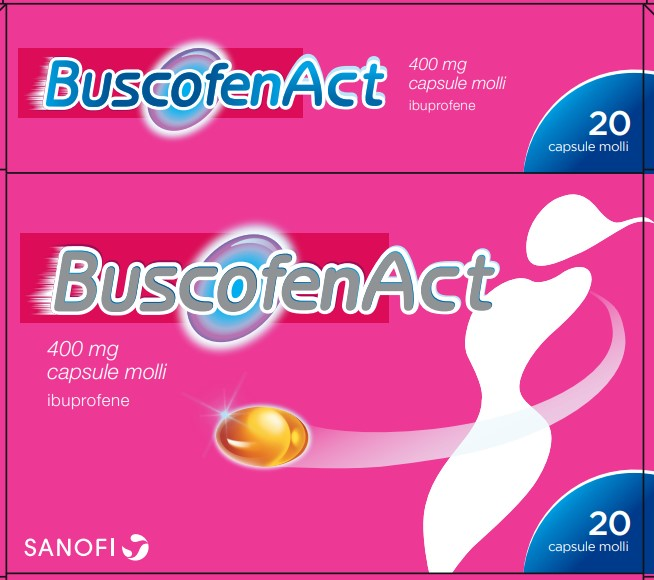
BUSCOFENACT*20CAPS 400MG
Regular price
€11,34 EUR
Sale price
€11,34 EUR
Regular price
€14,90 EUR
Unit price
per
Tax included.
SKU
041631033In stock
Vendor
OPELLA HEALTHCARE ITALY SrlDelivery time: 48/72 hours
Free Shipping: Orders over €70
This product page, including its Product Information Leaflet, has been automatically translated.
Description
BuscofenAct 400 mg soft capsules
Ibuprofen
What it is and what it is used for
BuscofenAct contains the active ingredient ibuprofen, which belongs to a class of medicines called non-steroidal anti-inflammatory drugs (NSAIDs). NSAIDs relieve discomfort by modifying the body's response to pain and fever.
BuscofenAct is indicated for the short-term symptomatic treatment of:
- mild to moderate pain such as headache, toothache, and menstrual pain;
- fever and pain associated with the common cold.
BuscofenAct is indicated for adults and adolescents weighing over 40 kg (12 years and older).
Consult your doctor if you do not feel better or if you feel worse:
- after 3 days in adolescents;
- after 3 days for fever, or after 4 days for pain treatment in adults.
What you need to know before taking the medicine
Do not take BuscofenAct
- if you are allergic to ibuprofen or any of the other ingredients of this medicine (listed in section 6);
- if you have ever suffered from shortness of breath, asthma, runny nose, swelling or hives after taking acetylsalicylic acid or other NSAIDs;
- if you have or have had a history of recurrent stomach/duodenal ulcer (peptic ulcer) or bleeding (two or more distinct episodes of proven ulceration or bleeding);
- if you have had a history of gastrointestinal bleeding or perforation related to previous NSAID therapy;
- if you suffer from severe heart failure;
- if you suffer from severe liver failure or severe kidney failure;
- if you suffer from cerebrovascular haemorrhages or other haemorrhages;
- if you suffer from haematological disorders of unknown origin;
- if you are severely dehydrated (due to vomiting, diarrhoea or insufficient fluid intake);
- if you are in the last trimester of pregnancy.
Do not use BuscofenAct in adolescents weighing < 40 kg and in children under 12 years of age due to the high active ingredient content.
Warnings and precautions
You should discuss therapy with your doctor or pharmacist before taking BuscofenAct:
- if you suffer or have suffered from asthma or allergic diseases, as shortness of breath may occur;
- if you have liver problems;
- if you have reduced kidney function;
- if you have or have ever had intestinal diseases (ulcerative colitis or Crohn's disease);
- if you have heart problems including heart attack, angina (chest pain) or if you have had a heart attack, coronary bypass surgery, peripheral arterial disease (poor circulation in the legs or feet due to narrowing or obstruction of the arteries) or any type of stroke (including mini-stroke or TIA, transient ischemic attack);
- if you have high blood pressure, diabetes, high cholesterol, a family history of heart disease or stroke, or if you are a smoker;
- if you suffer from certain skin diseases (Systemic Lupus Erythematosus (SLE) or mixed connective tissue disease);
- if you have any hereditary diseases related to the production of blood cells (acute intermittent porphyria);
- if you have had high blood pressure and/or heart failure;
- if you have undergone major surgery. In this case, medical supervision is particularly required;
- if you suffer from hay fever, nasal polyps or chronic obstructive respiratory diseases, as in such cases there is an increased risk of allergic reactions. Allergic reactions can manifest as asthma attacks (so-called analgesic asthma), angioedema or hives;
- if you have a chickenpox infection, it is advisable to avoid the use of BuscofenAct;
- if you suffer from coagulation disorders;
- in cases of prolonged administration of BuscofenAct, regular monitoring of liver function, kidney function and blood count is necessary;
- concomitant use of NSAIDs, including specific cyclo-oxygenase-2 inhibitors, increases the risk of adverse reactions (see section Taking BuscofenAct with other medicines) and should be avoided;
- if you have an infection - see section Infections below.
Skin reactions
Severe skin reactions, including exfoliative dermatitis, erythema multiforme, Stevens-Johnson syndrome, toxic epidermal necrolysis, drug reaction with eosinophilia and systemic symptoms (DRESS), acute generalised exanthematous pustulosis (AGEP), have been reported in association with ibuprofen treatment. Stop using BuscofenAct and contact your doctor immediately if you notice any of the symptoms related to these severe skin reactions described in section 4.
Infections
BuscofenAct may mask the symptoms of infections such as fever and pain. It is therefore possible that BuscofenAct may delay adequate treatment of the infection, which could increase the risk of complications. This has been observed in pneumonia caused by bacteria and in bacterial skin infections related to chickenpox. If you take this medicine while you have an infection and the symptoms of the infection persist or worsen, contact your doctor immediately.
Such undesirable effects can be minimized by using the lowest effective dose for the shortest treatment period. The elderly are at higher risk of undesirable effects. In general, habitual use of analgesics can lead to serious permanent kidney problems. This risk may be increased under physical exertion associated with salt loss and dehydration. Therefore, this should be avoided.
Prolonged use of any type of painkiller for headache can lead to its worsening. If this situation occurs or is suspected, you should inform your doctor and stop the treatment.
The diagnosis of medication overuse headache (MOH) should be suspected in patients with frequent or daily headaches despite (or because of) regular use of headache medications.
Anti-inflammatory/painkilling medicines such as ibuprofen may be associated with a small increased risk of heart attack or stroke, especially when administered in high doses. Do not exceed the recommended dose or duration of treatment.
If you think any of the above conditions apply to you, consult your doctor before using BuscofenAct.
Children and adolescents
In dehydrated adolescents, there is a risk of impaired kidney function.
Do not use BuscofenAct in adolescents weighing < 40 kg and in children under 12 years of age due to the high active ingredient content.
Possible side effects
April 2024
