

You will not be allowed to compare more than 4 products at a time
View compareCANESTEN*CREAM 30G 1%
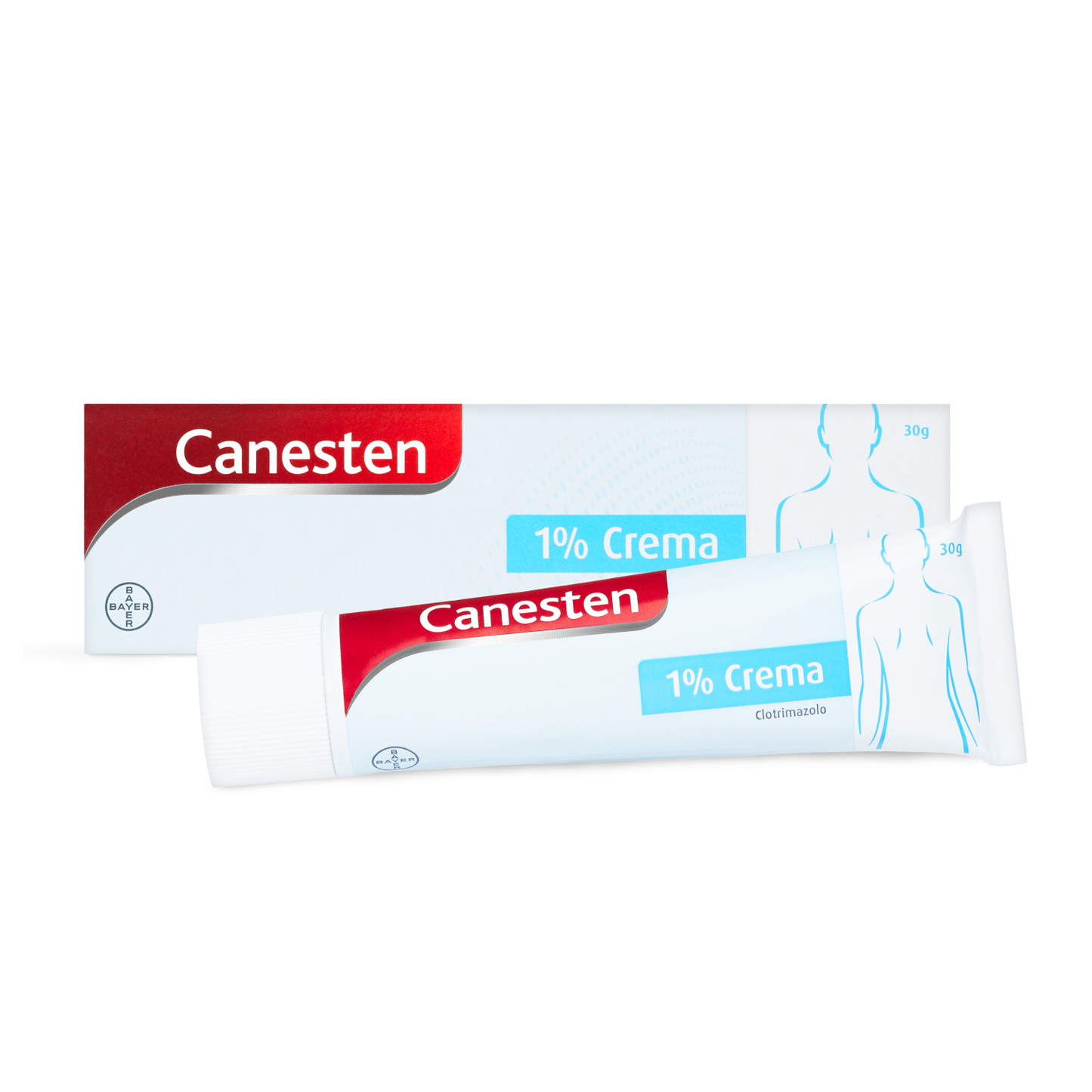
CANESTEN*CREAM 30G 1%
Regular price
€13,09 EUR
Sale price
€13,09 EUR
Regular price
€15,80 EUR
Unit price
per
Tax included.
SKU
050775016In stock
Vendor
NEW PHARMASHOP SrlDelivery time: 48/72 hours
Free Shipping: Orders over €70
This product page, including its Product Information Leaflet, has been automatically translated.
Description
Canesten 1% cream
Clotrimazole
What it is and what it is used for
Canesten contains clotrimazole, which is an antifungal (antimycotic) for dermatological use, meaning it acts locally by eliminating skin fungi.
Canesten is used for the treatment of fungal infections (mycoses) of the skin and skin folds, such as pityriasis versicolor, cutaneous candidiasis, tinea pedis or athlete's foot, tinea corporis.
What you need to know before taking the medicine
Do not use Canesten
- if you are allergic to clotrimazole, or any of the other ingredients of this medicine (listed in section 6).
Warnings and precautions
Talk to your doctor or pharmacist before using Canesten if you have previously suffered from these disorders (recurrent mycoses). The use of non-breathable diapers is not recommended after applying the medicine for diaper dermatitis. Avoid contact with eyes. Do not swallow. The use, especially if prolonged, of products for cutaneous use (applied to the skin), can give rise to sensitisation phenomena such as erythema (redness localised in the area of the skin where the medicine is applied) and itching. In this case, stop the treatment and consult your doctor or pharmacist.
Possible side effects
Like all medicines, this medicine can cause side effects, although not everybody gets them.
The following side effects have been reported with Canesten, their frequency is not known:
Immune system disorders: angioedema (swelling), anaphylactic reaction, hypersensitivity.
Vascular disorders: hypotension (low blood pressure), syncope.
Respiratory, thoracic and mediastinal disorders: shortness of breath.
Skin and subcutaneous tissue disorders: blisters, contact dermatitis, erythema (skin redness), paraesthesia, skin desquamation (loss of cells from the outermost layer of the skin), itching, rash, urticaria, stinging pain of the skin, burning sensation of the skin.
Systemic disorders and administration site conditions: irritation at the application site, reaction at the application site, oedema, pain.
Following the instructions in the package leaflet reduces the risk of side effects.
Reporting of side effects
If you get any side effects, including any not listed in this leaflet, talk to your doctor or pharmacist. You can also report side effects directly via the national reporting system at: https://www.aifa.gov.it/content/segnalazionireazioni-avverse.
By reporting side effects you can help provide more information on the safety of this medicine.
