

You will not be allowed to compare more than 4 products at a time
View compareCETIRIZINE SAND*7FC TAB 10MG
CETIRIZINE SAND*7FC TAB 10MG
Regular price
€3,86 EUR
Sale price
€3,86 EUR
Regular price
€5,18 EUR
Unit price
per
Tax included.
SKU
037629019In stock
Vendor
SANDOZ SpADelivery time: 48/72 hours
Free Shipping: Orders over €70
This product page, including its Product Information Leaflet, has been automatically translated.
Description
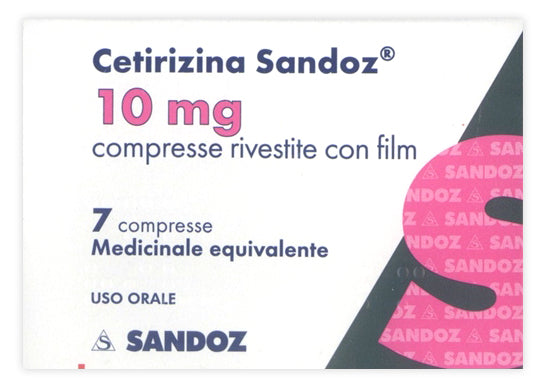
Cetirizine Sandoz 10 mg film-coated tablets
Cetirizine dihydrochloride
What it is and what it is used for
Cetirizine dihydrochloride is the active ingredient in Cetirizine Sandoz.
Cetirizine Sandoz is an antiallergic medicine.
In adults and children aged 6 years and over, Cetirizine Sandoz is indicated:
- for the treatment of nasal and ocular symptoms of seasonal and perennial allergic rhinitis;
- for the treatment of chronic urticaria (chronic idiopathic urticaria).
What you need to know before taking the medicine
Do not take Cetirizine Sandoz
- if you have severe kidney disease (severe renal insufficiency with creatinine clearance below 10 ml/min);
- if you are allergic to cetirizine dihydrochloride, hydroxyzine, piperazine derivatives (active ingredients of other closely related medicines) or any of the other ingredients of this medicine (listed in paragraph 6).
Warnings and precautions
Talk to your doctor or pharmacist before taking Cetirizine Sandoz.
If you are a patient with renal insufficiency, ask your doctor for advice; if necessary, you will need to take a lower dose. The new dose will be determined by your doctor.
If you have urination problems (such as spinal cord injury, prostatic hyperplasia, or bladder problems), ask your doctor for advice.
If you are an epileptic patient or a patient at risk of seizures, you should ask your doctor for advice.
If you need to undergo an allergy test, ask your doctor if you should stop taking Cetirizine Sandoz for a few days before the test. This medicine could affect the result of your allergy test.
No clinically significant interactions have been observed between alcohol (at blood levels of 0.5 per mille (g/l) corresponding to one glass of wine) and cetirizine used at recommended doses. However, no safety data are available when higher doses of cetirizine and alcohol are taken simultaneously.
Therefore, as with all antihistamines, it is recommended to avoid the simultaneous intake of Cetirizine Sandoz with alcohol.
Children
Do not give this medicine to children under 6 years of age because the tablet formulation does not allow for the necessary dose adjustment.
Possible side effects
Like all medicines, this medicine can cause side effects, although not everybody gets them.
Stop taking Cetirizine Sandoz and seek immediate medical attention if you experience symptoms such as:
• swelling of the mouth, face and/or throat
• difficulty breathing (chest tightness or wheezing)
• sudden drop in blood pressure resulting in fainting or shock.
The symptoms may be signs of an allergic reaction, anaphylactic shock and angioedema. These reactions can start immediately after taking the medicine or even after taking it.
The following paragraph contains additional side effects listed by frequency:
Common (may affect up to 1 in 10 people):
• fatigue
• dry mouth, nausea, diarrhea
• dizziness, headache
• drowsiness (sleepiness)
• pharyngitis (sore throat), rhinitis (nasal symptoms such as common cold)
Uncommon (may affect up to 1 in 100 people):
• agitation
• abdominal pain
• asthenia (extreme tiredness), feeling weak or general malaise
• paraesthesia (abnormal skin sensation)
• pruritus (itchy skin), rash
Rare (may affect up to 1 in 1,000 people):
• tachycardia (fast heartbeat)
• edema (swelling)
• altered liver function
• weight gain
• convulsions
• aggression, confusion, depression, hallucinations, insomnia
• urticaria (hives)
Very rare (may affect up to 1 in 10,000 people):
• thrombocytopenia (low number of platelets in the blood which manifests as bleeding or bruising more easily than normal)
• accommodation disorder (difficulty focusing), blurred vision, oculogyration (uncontrolled circular eye movements)
• syncope, tremor, dysgeusia (altered taste), dyskinesia (involuntary movements), dystonia (prolonged abnormal muscle contractions)
• tics (habitual spasms)
• abnormal urine elimination (involuntary emptying of the bladder during nocturnal sleep, pain and/or difficulty urinating)
• fixed drug eruption
Not known (frequency cannot be estimated from the available data):
• memory loss, memory impairment
• increased appetite
• vertigo (sensation of spinning or movement)
• urinary retention (inability to completely empty the bladder)
• nightmares
• hepatitis (inflammation of the liver)
• joint pain
• pustular rash
• itching (intense itching) and/or hives after discontinuation
• suicidal ideation (recurrent thoughts of worry or suicide)
If you feel this way, stop taking the tablets and consult your doctor.
Reporting of side effects
If you get any side effects, including those not listed in this leaflet, talk to your doctor or pharmacist. You can also report side effects directly via the national reporting system at: https://www.aifa.gov.it/content/segnalazionireazioni-avverse.
By reporting side effects, you can help provide more information on the safety of this medicine.