

You will not be allowed to compare more than 4 products at a time
View compareFLECTORGO*20 SOFT CAPSULES 12.5MG
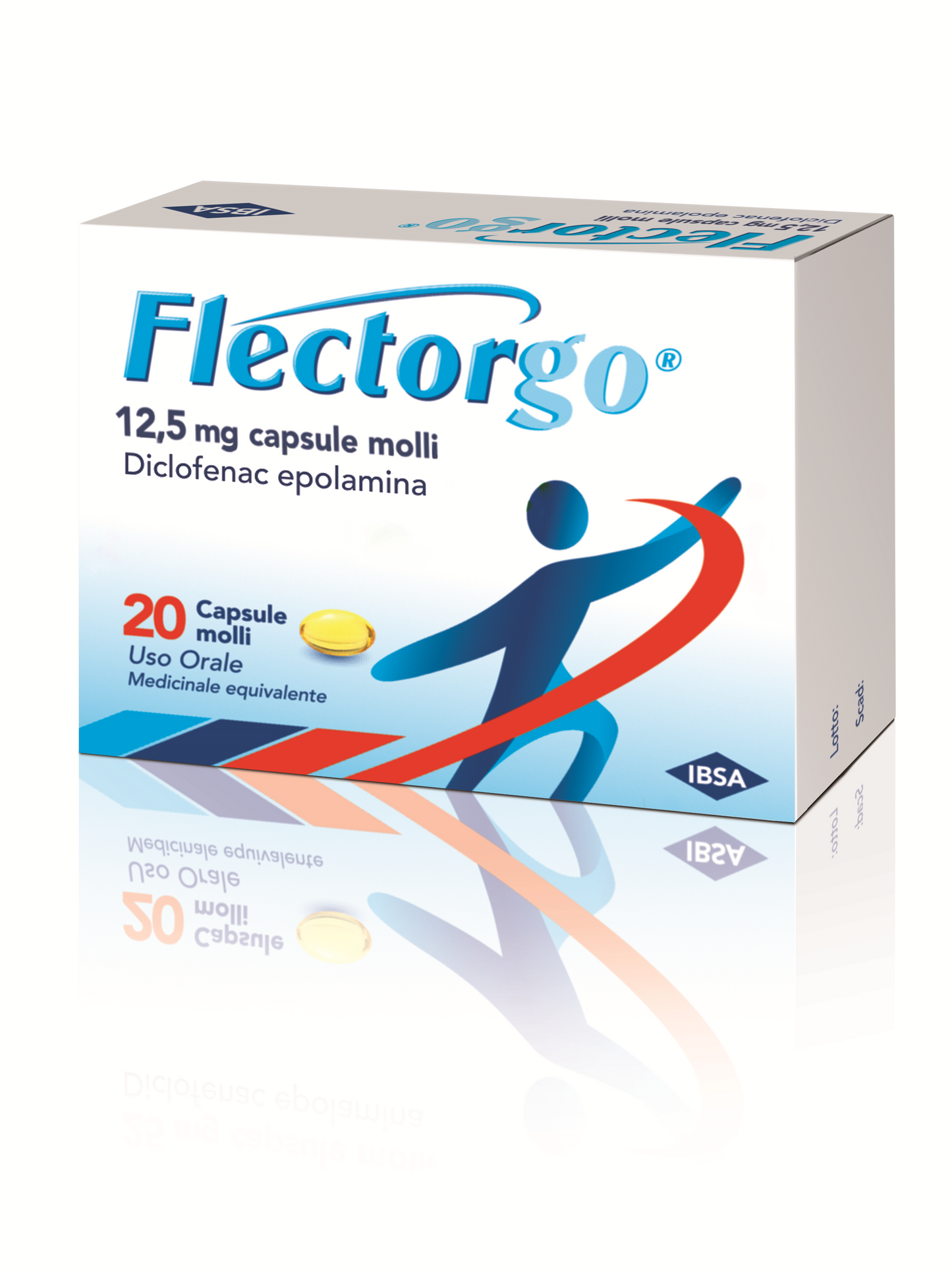
FLECTORGO*20 SOFT CAPSULES 12.5MG
Regular price
€6,63 EUR
Sale price
€6,63 EUR
Regular price
€9,90 EUR
Unit price
per
Tax included.
SKU
044608026In stock
Vendor
IBSA FARMACEUTICI ITALIA SrlDelivery time: 48/72 hours
Free Shipping: Orders over €70
This product page, including its Product Information Leaflet, has been automatically translated.
Description
FLECTORGO 12.5 mg soft capsules
FLECTORGO 25 mg soft capsules
Diclofenac epolamine
Generic medicine
What it is and what it is used for
FLECTORGO contains the active ingredient diclofenac epolamine.
FLECTORGO is a medicine that belongs to the group of non-steroidal anti-inflammatory drugs (NSAIDs). This medicine is a painkiller that can also reduce inflammation and swelling.
FLECTORGO is used for the short-term symptomatic treatment of mild to moderate pain (such as headache, toothache, menstrual pain, rheumatic pain and muscle pain) in adults and adolescents aged 14 years and older.
What you need to know before taking the medicine
Do NOT take FLECTORGO:
• if you are allergic to diclofenac epolamine or any of the other ingredients of this medicine (listed in section 6)
• if you have experienced allergic reactions including swelling of the face and mouth (angioedema), breathing problems, chest pain, runny nose, rash or any other allergic-type reaction after using acetylsalicylic acid or any other non-steroidal anti-inflammatory drug (NSAID)
• if you currently have a gastric (stomach) or duodenal (intestinal) ulcer, bleeding or perforation
• if you have unknown alterations in blood cell production
• if you have a history of bleeding or perforation in the digestive tract, related to previous NSAID therapy
• if you have had two or more episodes of gastric (stomach) or duodenal (intestinal) ulcer or bleeding in the digestive tract (including blood in vomit, bleeding during bowel movements, fresh blood in stools or black, tarry stools)
• if you suffer from a diagnosed heart disease and/or cerebral vasculopathy, for example, you have had a heart attack, a stroke, a mini-stroke (transient ischemic attack - TIA) or an obstruction of the blood vessels leading to the heart or brain or surgery to eliminate or prevent such obstructions
• if you suffer or have suffered from blood circulation problems (peripheral artery disease)
• if you have severe kidney or liver failure
• if you are in the last three months of pregnancy (see also Pregnancy, breastfeeding and fertility)
Warnings and precautions
Talk to your doctor or pharmacist before taking FLECTORGO if:
• you suffer or have suffered from any stomach or intestinal disorder, including ulcerative colitis or Crohn's disease
• you are elderly
• you have kidney or liver problems
• you have a condition called porphyria
• you suffer from any blood disorder or bleeding
• you have ever had asthma
• you are breastfeeding
• you suffer from angina pectoris, blood clots, high blood pressure, high cholesterol or triglycerides
• you have diabetes
• you are a smoker
• you have recently undergone surgery
• you are at risk of dehydration (e.g. due to illness or diarrhoea)
• you have undergone or are about to undergo surgery to the stomach or intestinal tract before taking Flectorgo, as Flectorgo may sometimes worsen wound healing in the intestine after surgery.
• Since FLECTORGO is an anti-inflammatory medicine, the active ingredient may mask the signs and symptoms of an infection. If you feel unwell and need to see a doctor, remember to tell them that you are taking FLECTORGO.
Cardiovascular disease
Medicines like FLECTORGO may be associated with a slight increase in the risk of heart attack (myocardial infarction) or stroke. Any risk is more likely with high doses and prolonged treatment. Do not exceed the recommended dose or duration of treatment.
Make sure your doctor knows, before you are given FLECTORGO:
• if you smoke
• if you suffer from diabetes
• if you suffer from angina pectoris, blood clots, high blood pressure, increased cholesterol or increased triglycerides
Side effects can be minimized by using the lowest effective dose for the shortest duration necessary to control symptoms.
Children and adolescents
FLECTORGO is not recommended for children and adolescents under 14 years of age.
Possible side effects
Like all medicines, this medicine can cause side effects, although not everybody gets them.
Some side effects can be serious.
Stop taking FLECTORGO and tell your doctor immediately if you notice any of the following side effects:
• acute pain in the upper abdomen, feeling sick, feeling unwell
• vomiting blood or black particles, black stools or blood in the stools
• allergic reactions such as rash, itching, bruising, painful red areas, peeling or blistering
• wheezing or shortness of breath (bronchospasm), difficulty swallowing, collapse
• swelling of the face, lips, hands or fingers
• yellowing of the skin or eyes
• persistent sore throat or high temperature, unusual bleeding or bruising
• unexpected change in the amount of urine produced and/or its appearance
• mild cramps and tenderness in the abdomen, which begin shortly after starting treatment with FLECTORGO and are followed by rectal bleeding or bloody diarrhoea, usually within 24 hours of the onset of abdominal pain (frequency unknown, frequency cannot be estimated from the available data).
Tell your doctor immediately if you notice any of the following reactions:
• chest pain, which may be a sign of a potentially severe allergic reaction called Kounis syndrome
Medicines like FLECTORGO may be associated with an increased risk of heart attack (myocardial infarction) or stroke.
The following side effects have also been reported:
Common (may affect up to 1 in 10 people)
• Headache, dizziness, vertigo
• Nausea, vomiting, diarrhoea, digestive disorders (dyspepsia), abdominal pain, flatulence, loss of appetite
• Rash and itching
Uncommon (may affect up to 1 in 100 people)
• Increase in liver enzyme values in the blood
Rare (may affect up to 1 in 1,000 people)
• Hypersensitivity, anaphylactic and anaphylactoid reactions (severe allergic reactions, including drop in blood pressure and shock)
• Allergic swelling including facial edema (angioneurotic edema)
• Drowsiness
• Feeling of tightness in the airways (asthma) including shortness of breath (dyspnea)
• Inflammation of the stomach (gastritis), gastric (stomach) or duodenal (intestinal) ulcer (with or without bleeding or perforation)
• Hepatitis (inflammation of the liver), jaundice
• Hives
• Edema (fluid retention in the body)
Very rare (may affect up to 1 in 10,000 people)
• Disorders of red and white blood cell formation
• Disorientation, depression, insomnia, nightmares, irritability, psychotic reactions
• Sensory disturbances (paresthesia), memory impairment, seizures or spasms, anxiety, tremor, meningitis not associated with an infection, altered taste
• Visual disturbance, blurred or double vision
• Ringing in the ears (tinnitus), impaired hearing
• Palpitations, chest pain, weakness of the heart muscle (heart failure)
• High blood pressure (hypertension), inflammation of blood vessels (vasculitis)
• Inflammation of the lungs (pneumonia)
• Inflammation of the colon (colitis), including bleeding and worsening of Crohn's disease or ulcerative colitis, constipation
• Inflammation of the oral mucosa (stomatitis), inflammation of the tongue, esophageal lesions (damage to the esophagus), formation of membranous strictures in the intestine, inflammation of the pancreas (pancreatitis)
• Liver failure
• Rash (including eczema and blisters), sensitivity to light, small areas of bleeding in the skin, severe skin reactions such as rash with blistering (e.g. Stevens-Johnson syndrome, toxic epidermal necrolysis/Lyell's syndrome), hair loss
• Acute kidney dysfunction (renal failure), blood in the urine (hematuria), protein in the urine (proteinuria), nephrotic syndrome (fluid retention in the body and high levels of protein passing into the urine), damage to kidney tissue (interstitial nephritis, papillary necrosis)
Reporting of side effects
If you get any side effects, including any not listed in this leaflet, talk to your doctor or pharmacist. You can also report side effects directly via the national reporting system at: https://www.aifa.gov.it/content/segnalazionireazioni-avverse.
By reporting side effects you can help provide more information on the safety of this medicine.
